


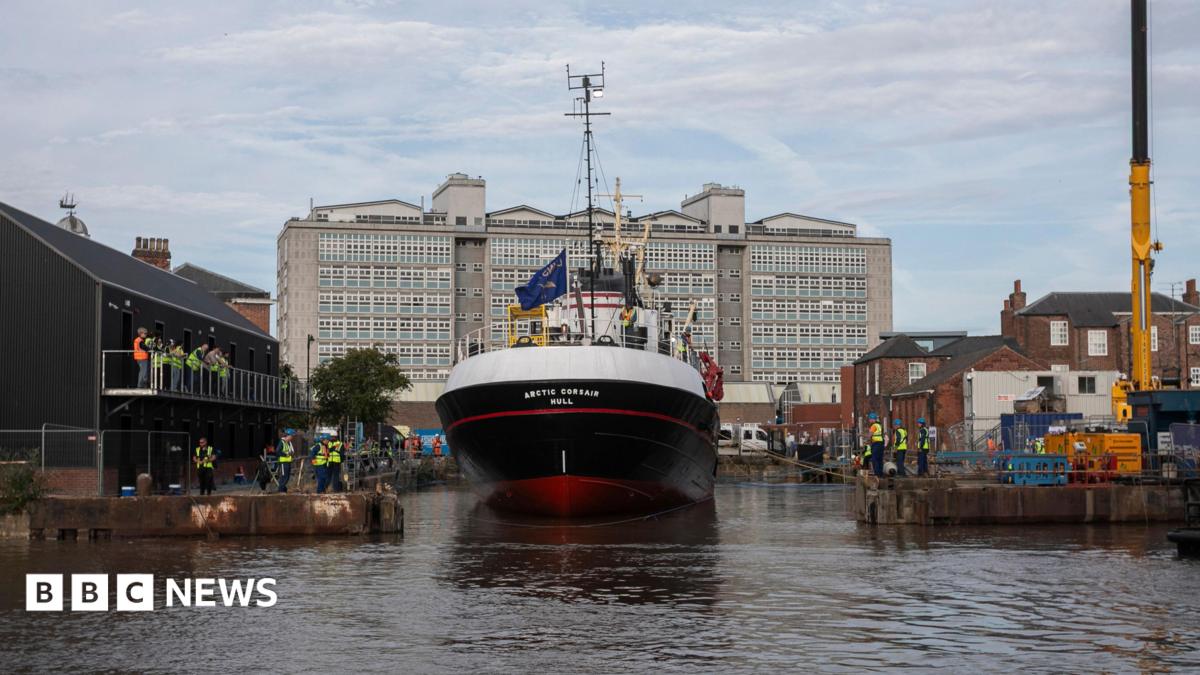
Further to the west, along the A63 dual-carriageway, relics of the old fishing industry also survive.
“Fish played a major part in this port’s history,” Robinson explains.
“In the middle of the 19th Century, we have the building of the railways.
“Railways provided fast transport to the interior. And that really benefited a commodity like fish.
“Fresh fish could be transported to places like Manchester within the day.
“We’ve got this railway network, we’ve got fishing vessels coming in here. And sometime between 1840 and 1860, some genius, we don’t know who, put fish with chips.
“So you saw fish and chip shops on every corner. And that led to the building of the fishing industry.
“It started off actually in Humber Dock down here, and then moved down to St Andrew’s Dock.
“And then at the very end, as we know, it was in Albert Dock. So lots of stories like that are linked to our docks.
“If you think about in the age when Britain ruled the waves, Hull was its third port. And that’s saying something in terms of its global reach.
“This port punched at a global weight.”
Listen to more episodes of Hidden East Yorkshire on BBC Sounds
Listen to highlights from Hull and East Yorkshire on BBC Sounds, watch the latest episode of Look North.