


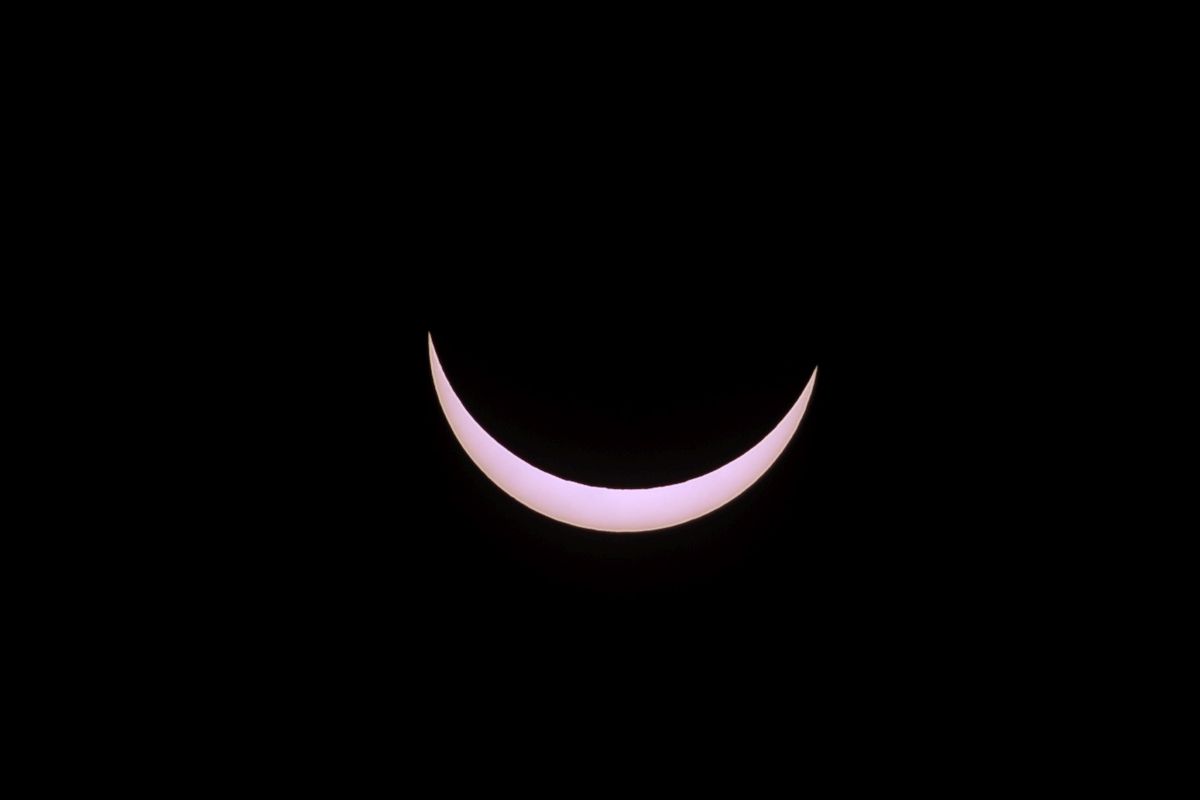
A deep partial eclipse will be visible on August 12 that will see more than 90% of the Sun obscured by the Moon
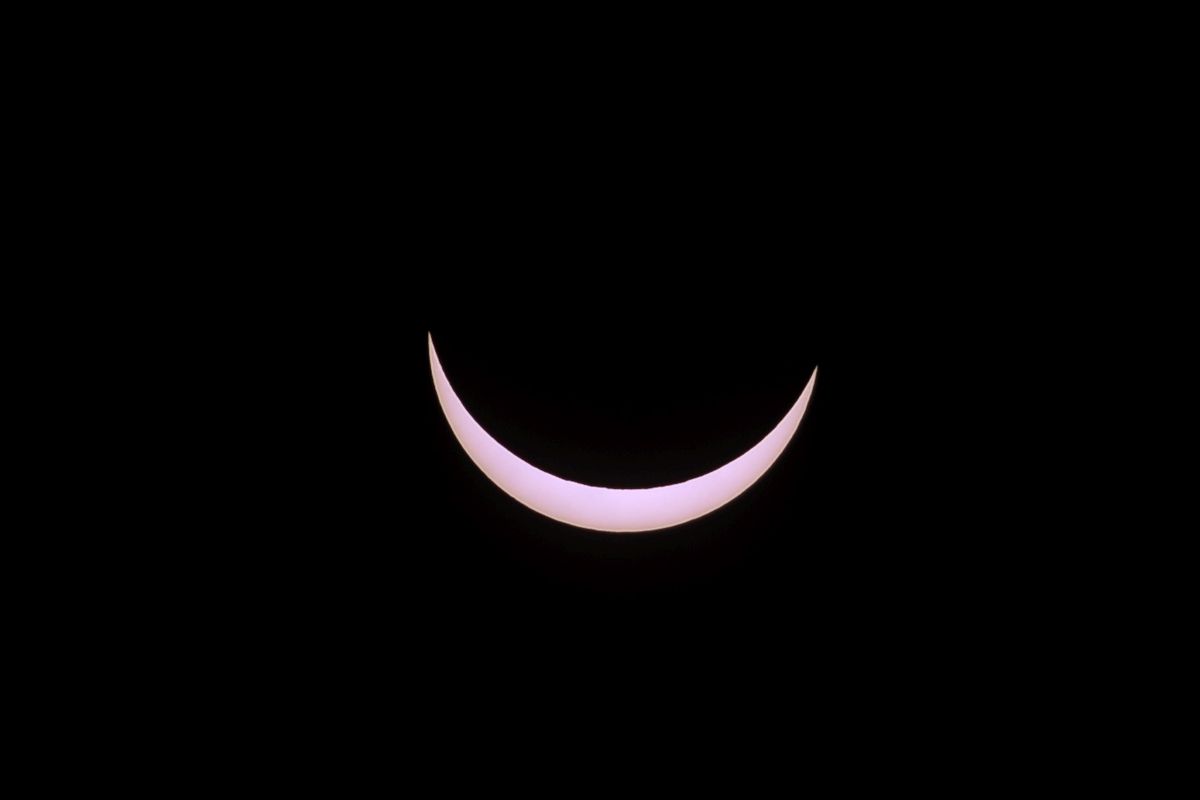
The solar eclipse of March 20, 2015, as seen from the banks of the Humber(Image: Jon Corken)
The most impressive solar eclipse visible from East Yorkshire since similar events in 2015 and 1999 will offer an incredibly rare celestial spectacle this month. In the evening of Wednesday, August 12, the Moon will obscure more than 90 per cent of the Sun.
In Hull, the eclipse will begin at 6.13pm before reaching maximum at 7.09pm. It will end just after 8pm. Timings will vary slightly depending on your location. At its peak, around 91 per cent of the Sun will be covered by the Moon with the sky possibly dimming slightly at this time.
A solar eclipse takes place when the Moon passes between the Sun and Earth resulting in it casting a shadow on part of our planet.
This will be one of the deepest eclipses as seen from our region since June 1927 when more than 98 per cent of the Sun was obscured in East Yorkshire. That event was seen as a total solar eclipse in more northern parts of England including areas of North Yorkshire and Lancashire. The one on August 11, 1999, was more similar to this year’s, reaching around 89-90 per cent of eclipse in our region while, more recently, the event on March 20, 2015, reached around 88 per cent.
Though the skies were mostly clear during the 2015 eclipse, those who tried to watch the 1999 event from our area may remember large amounts of cloud making it difficult to see.
The event on August 12 this year will be seen as a total eclipse in parts of Greenland, Iceland, Spain and Portugal.
Total solar eclipses – where the Sun is completely obscured by the Moon – are incredibly rare at any one point on the globe. The last one visible directly from the East Yorkshire area was in 1715. The next won’t be until June 2151.
How to watch the eclipse safely
Looking at the Sun, even when it is mostly obscured by the Moon during an eclipse, can permanently damage your eyesight. The risk of eye damage is increased because the lower brightness during this time limits the eyes’ natural aversion to looking at the Sun. This has the potential to allow a dangerous amount of UV light to damage the retina.
Kyla Black, Boots Opticians director of optical practice, has issued advice do people avoid damaging their eyes during the eclipse while busting some common myths.
Can I look directly at the solar eclipse?
“No. Even when most of the Sun is covered, it is never safe to look directly at it with the naked eye during a partial solar eclipse. Looking at the sun without the correct protection can damage the retina, which may lead to permanent vision loss.”
How can I watch the solar eclipse safely?
“There are several safe ways to enjoy the eclipse such as wearing certified eclipse glasses that meet the international ISO 12312-2 safety standard. Another option would be to watch the solar eclipse from the comfort of your own home on a livestream.
“Those that are looking to use a camera and take some photos can use specially designed solar filters. The same filters can also be used for the secret astronomers amongst us who own a telescope or simply a pair of binoculars.”
Are sunglasses safe to use?
“No. Regular sunglasses, even very dark ones, do not provide enough protection to safely view a solar eclipse. Only specially designed eclipse glasses or solar viewers should be used.”
What are some tips for protecting your eyes during the eclipse?
“You should never look directly at the sun without certified eye protection. As a result, parents should be particularly careful if they are going to let their children view the eclipse and ensure they supervise them closely.
“If you’re purchasing specially made eclipse glasses, make sure to double check that they are undamaged before use as even a glimpse of damage could have an impact on your eyesight.
“It’s a common myth that wearing multiple pairs of sunglasses can protect you from any harmful UV light – this is untrue and should be avoided at all costs as only purpose-built eclipse glasses can allow you to watch an eclipse.
“Although a fun idea for many may be to make DIY filters and pinhole projectors out of cereal boxes, this can also be dangerous. Objects such as smoked glass, colour film, floppy disks, X-ray film, and dark sunglasses are unable to block invisible infrared and ultraviolet rays, potentially leading to damage to your eyesight.
“Budding astronomers who will be looking through cameras, binoculars or telescopes at the eclipse must make sure they have approved solar filters attached. If you’re not sure your telescope does, then contact the maker of the product to ensure you know you’ll be safe.”
Did you know you can make Hull Live a preferred source of Hull news in Google, which will mean you get more of our breaking news, exclusives, and must-read stories straight away? Here’s more information about what this means and how to do it – you can also do it straight away by clicking here.