


‘Sometimes, the species most in need of our help are the ones we have never heard of’
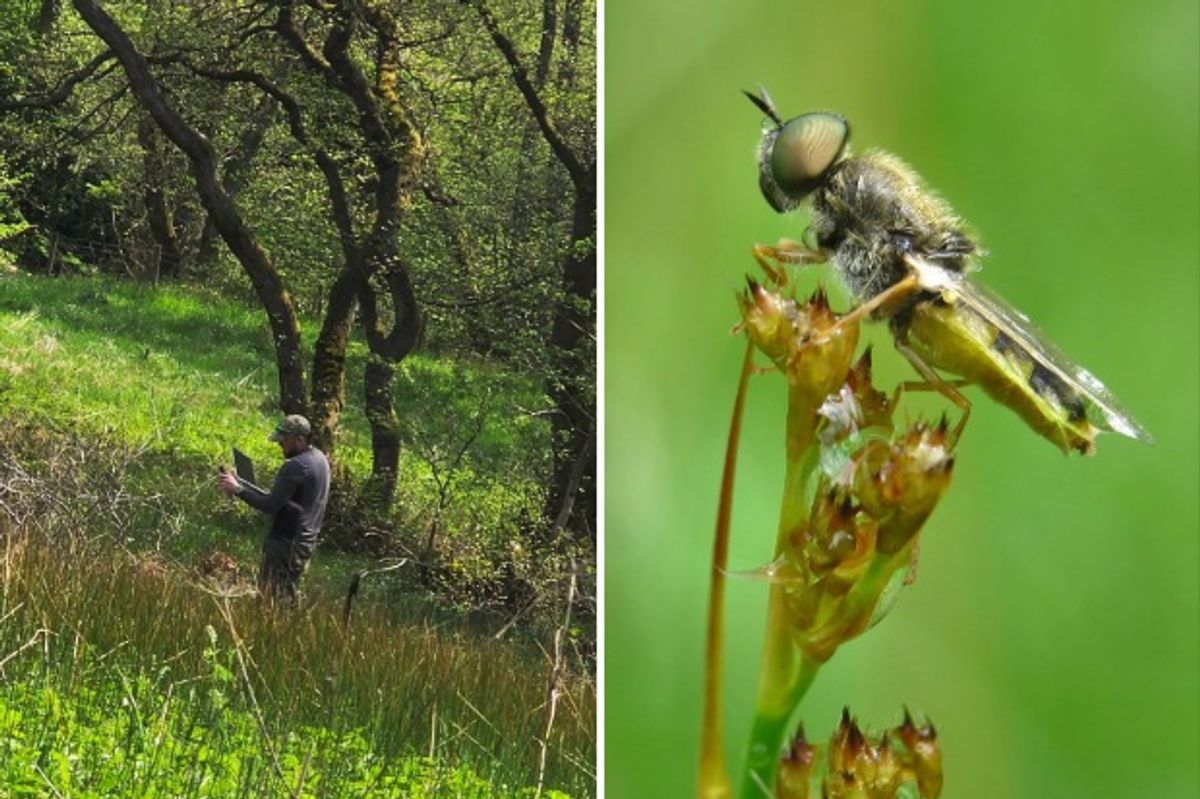
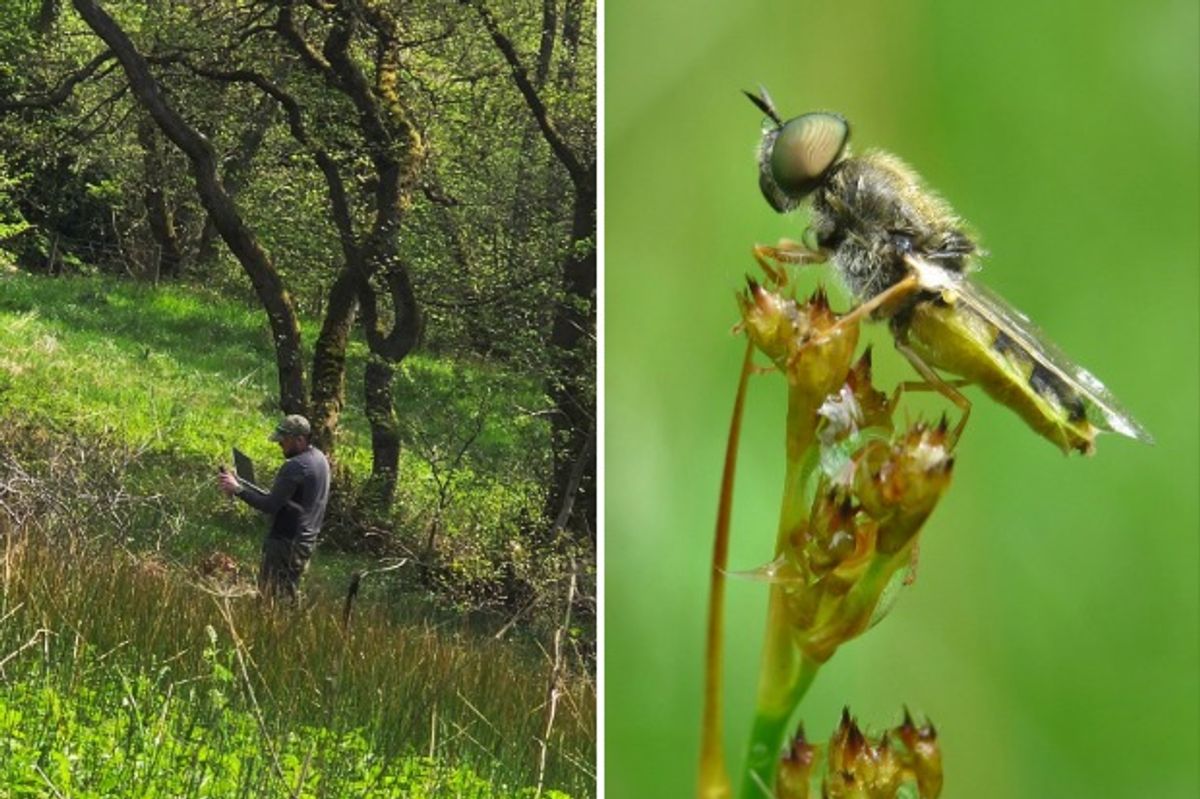
Phill Robinson, senior aquarist at The Deep, setting up the larval survey; a male Barred Green Colonel soldierfly (Image: thedeep.co.uk/Ian Andrews)
Conservationists at The Deep in Hull have extended their attention from marine life to a rare and threatened insect in the hope of helping its recovery. They are collaborating in a project to save an invertebrate known as a Barred Green Colonel soldierfly.
Listed as critically threatened, this bright green soldierfly is a Section 41 (top priority) conservation species that is isolated to a single site in the UK, in Dalby Forest, situated in the North York Moors National Park. The Deep is supporting the project – ongoing since 2024 – by carrying out water level and water quality monitoring to get a clearer idea of the habitat ecology of the site in Dalby Forest, which is managed by Forestry England.
Also partnering in the project are the Species Recovery Trust and surveyors from the Dipterist Forum. Cath Bashforth, species recovery officer at Forestry England, said: “We have worked closely with species experts to create ideal conditions for this very rare soldierfly through targeted management, including cattle grazing, scrub control and rush cutting.
“We are delighted to be working with the Species Recovery Trust and The Deep on this project to learn more about the Barred Green Colonel and help secure the future of its last known UK stronghold.” Declining populations of the insect have been caused by the loss of this species’ incredibly unique habitat across the UK, relying on certain types of natural water springs and seepages, which are becoming increasingly rare and require very specific management.
This year has seen the project develop, with one of The Deep’s crew helping to carry out weekly surveying to monitor the larvae of the species. The surveys involve pinning out grapefruit skins and replacing the oldest ones every third week; each week, these skins are checked for larvae and anything that is present is identified and recorded using a hand lens.
Rob Bullock, head of conservation at The Deep, said: “Sometimes, the species most in need of our help are the ones we have never heard of. This project is a great example of conservationists coming together to help forge a brighter future for an underdog species.
“The success the project is already seeing is remarkable and a testament to the dedication of the teams involved.” Within the past month alone, not only have multiple larvae been spotted each week on the grapefruit skins, but adults of this species have been emerging too.
Phill Robinson, senior aquarist at The Deep, said: “It has been amazing to be able to plan and carry out these surveys each week and not only see increasing numbers of the larvae over the course of the surveys, but also to be able to build up a picture of their microhabitat. This has helped us to start putting together valuable data to help give us get a better understanding of the larval stage of this species, which is something that there is currently very little literature on.”
Vicky Wilkins, programme manager at the Species Recovery Trust, said: “This work has made a really important contribution to understanding one of Britain’s most threatened insects, helping us to kickstart its recovery.” Thanks to recent funding secured from Natural England’s Species Recovery Fund, further surveying work and conservation action for this threatened species will be taking place throughout the remainder of 2026.
In future, it is hoped there will be potential to rear Barred Green Colonel soldierfly larvae for translocation at other suitable sites.
Did you know you can make Hull Live a preferred source of Hull news in Google, which will mean you get more of our breaking news, exclusives, and must-read stories straight away? Here’s more information about what this means and how to do it – you can also do it straight away by clicking here .