


A run-through of the biggest solar farm proposals in East Riding, and arguments for and against solar farms
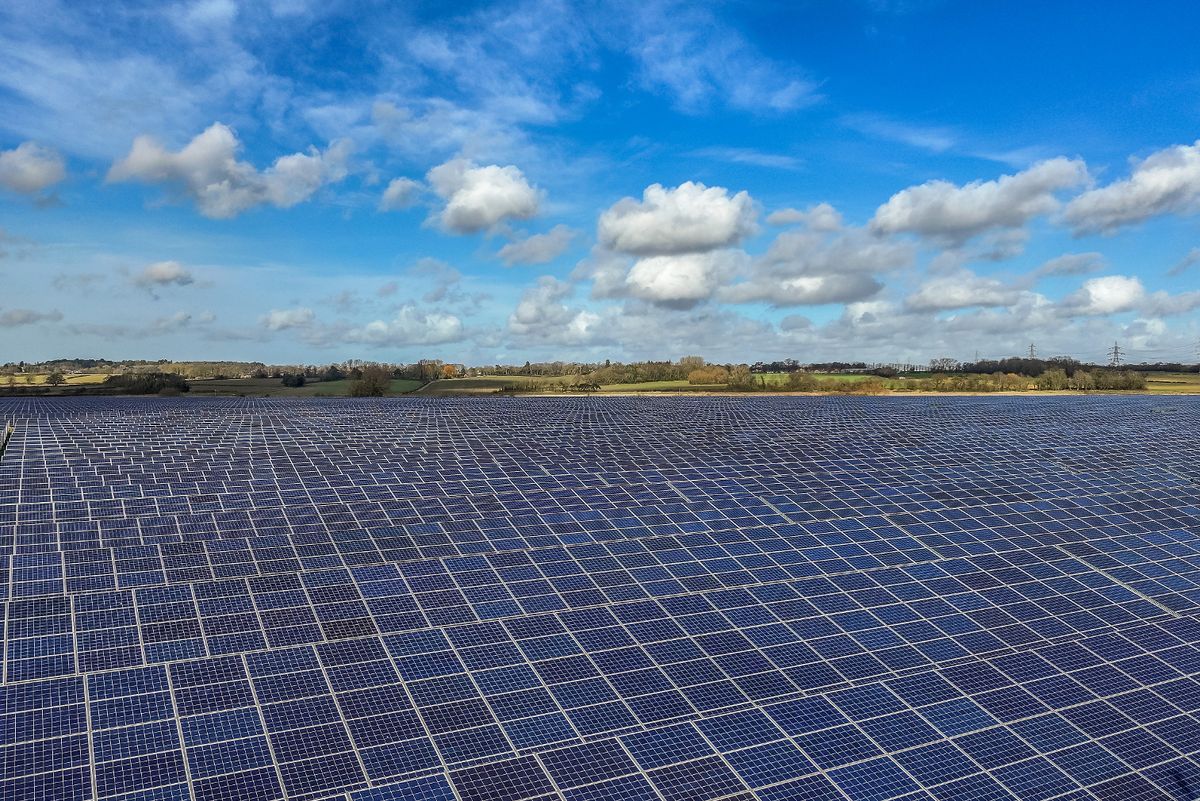
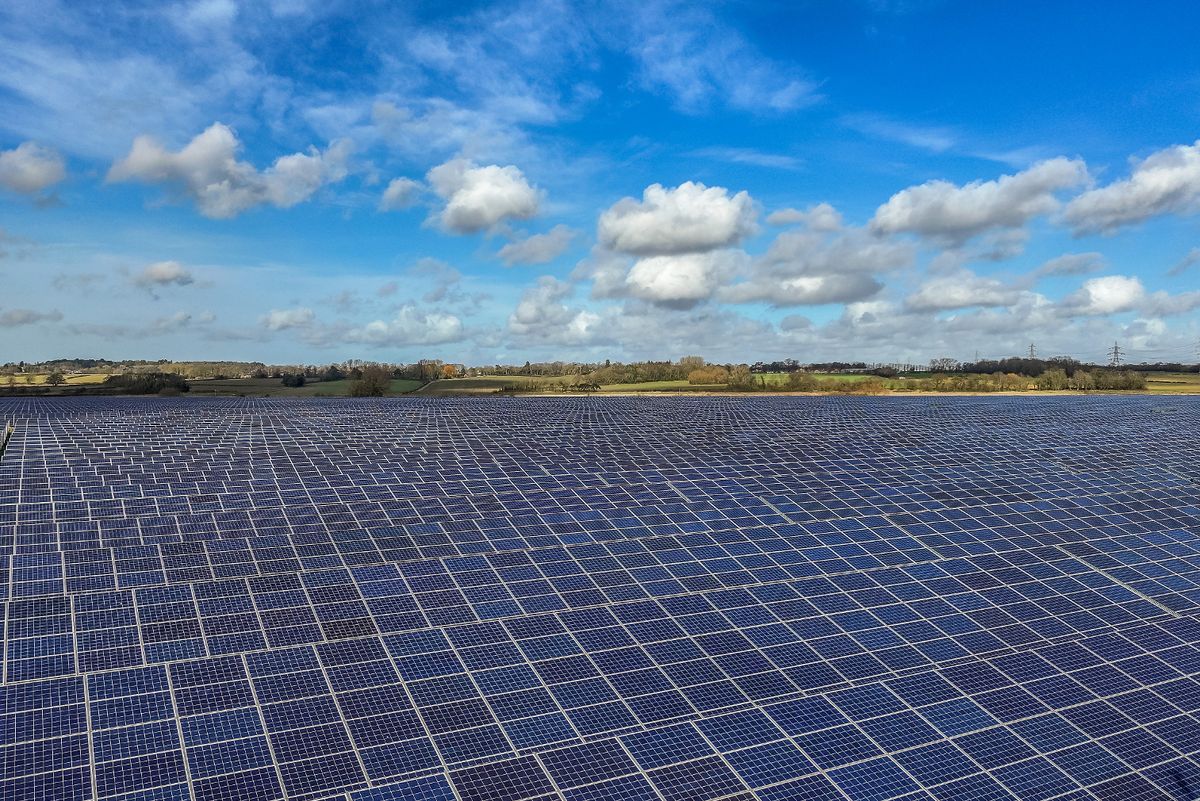
An aerial view of a solar energy park in the UK, pictured this February(Image: Christopher Furlong/Getty Images)
A solar farm that will cover 891 hectares of land to the east of Beverley and be capable of providing power to meet the equivalent needs of 230,000 homes recently got the green light. But just what are the major solar farm schemes in East Riding?
Last month, East Riding Council passed a motion on the topic, making clear councillors’ frustration with the sheer amount of interest in developing large solar farms in the local authority. It also instructed council officers to produce a guide to help residents more effectively engage with development consent order (DCO) applications.
These go through the planning inspectorate with the final decision resting with a Government Secretary of State. They pass up to this level and are not dealt with by a council or councillors because they are deemed nationally significant infrastructure projects (NSIPs).
In the case of solar farms, the tipping point is if a project would have capacity to produce power greater than 50MW. It was the emergence of five DCO solar farm proposals in East Riding in recent years that councillors last month pointed to for the need to ensure a guide to the process for DCOs for residents. Below is a brief summary of each of the solar farm DCOs in East Riding, and core arguments made for and against such developments.
East Riding Council has a map that shows energy projects in its geographical area, and it can be filtered by type to solar. Viewable here, this also helps place context on cumulative impact concerns about the number of solar farms.
Peartree Hill
Peartree Hill Solar Farm was the project near Beverley that recently gained planning consent. This is a 320MW solar farm site divided between several land parcels near the settlements of Tickton, Meaux, and Weel.
A battery energy storage system (BESS) is also in the plans. RWE are behind the scheme.
East Yorkshire Solar Farm
BOOM Power got planning consent for this 400MW solar farm in May 2025. It will be located between the hamlet of Gribthorpe, the villages of Spaldington and Wressle, and the town of Howden
In February, BOOM sold the land for this project to Ampyr Solar Europe. The plan is for the solar farm to be up and running by 2029.
Humberhead Solar
Island Green Power (IGP) has brought forward this proposal, which would cover four parcels of land about 3km to the south-west of Market Weighton and 1km to the south-east of Pocklington. Underground cables would link the sites to each other and the existing National Grid Thornton Substation.
It would have 500MW capacity and an operational life of 60 years. A public consultation is expected later this year, but the actual application would be submitted in 2027.
Clean Air Solar Farm
This represents a revision of the Kingfisher Solar Farm, which was announced last year. It would be a 500MW solar farm and has been put forward by joint partners, PS Renewables and Ørsted Onshore.
It would be located primarily in two sites. A northern site would be around three miles north of Beverley and south of Hutton Cranswick, to the east of the A164.
A southern site would be located southwest of the A1079, effectively between Walkington, Little Weighton and Skidby. A planning decision is expected in 2028, with a target of 2033 to be operational by, should it gain planning consent.
Mylen Leah
This is a proposed 500MW solar farm, which would be located north of the A163, to the west of Market Weighton, between Foggarthorpe and the hamlet of Melbourne. Statkraft is behind the proposal with a DCO application expected later this year. It has a target of 2030 to be operational by, should it gain planning consent.
Did you know you can make Hull Live a preferred source of Hull news in Google, which will mean you get more of our breaking news, exclusives, and must-read stories straight away? Here’s more information about what this means and how to do it – you can also do it straight away by clicking here .
Concerns against solar farms
The reasons behind opposition to solar farm of course vary depending on specific cases. But there are some core themes that regularly recur.
Loss of agricultural land is a typical major concern, especially where a solar farm involves taking good-quality arable land out of production. National planning policy discourages, but does not necessarily, prohibit this.
Safety risks are also sometimes raised, with fire concerns over associated BESSs such an example. Fire services are not legally required consultees for this, but developers are strongly encouraged by National Fire Chiefs Council guidance to consult them.
The visual impact of solar farms on open countryside is another regular thread in objections to such developments, as is production of the solar panels being from abroad. China dominates the market.
George McManus, spokesperson for East Riding Against Solar Expansion (ERASE), explained the group’s stance. “These proposals raise a number of concerns.
“Fundamental is the character change that will result from the cumulative impact of so many large and small schemes across a relatively small area.
24 schemes have been built or are in development,” he said, with most smaller schemes, but five so large they have been or will be decided at central Government level.
“The impact will be to industrialise a rural county,” said Mr McManus. “With 20,000 acres being lost to food production there are serious concerns around food security, flood risk, damage to wildlife and fire risk.
“ERASE was formed to act as a county wide umbrella for a number of local campaigns. We provide advice, admin and media support.”
To find planning applications, traffic diversions, road layout changes, alcohol licence applications and more, visit the Public Notices Portal .
The argument for solar farms
Conversely, there are some regular reasons cited by solar farm developers when arguing the case for planning permission to be granted. It is argued the projects provide energy security, with a homegrown source of energy and accompanying BESS infrastructure aiding energy supply when the sun is not shining.
They are also a source of green renewable energy and the UK’s target to achieve net-zero carbon emissions by 2050, given climate change, makes this significant. In more recent times, solar farm proponents also contend they are the cheapest form of energy.
In 2025, a University of Surrey study backed this, concluding that in the UK, solar-electricity generation was the cheapest option for large-scale energy generation. Another argument typically put forward for individual solar farm projects will be community benefit funds created alongside them.
These are linked to the electricity power produced by a solar farm, with the larger a site, the bigger the community fund a general principle. For example, it is suggested Mylen Leah could provide an estimated £200,000 annual community fund during its operational life.
Finally, a point frequently cited in defence of removal of land from agricultural use is solar farms have temporary lifespans. 30-40 years is the typical lifespan range. To what extent a 30-40 year lifespan can be regarded as ‘temporary’ is a counter-argument solar farm opponents sometimes make, though.
With three solar farm DCO submissions in the works in East Riding and another two already with planning approval, not to mention the much more numerous 49.9MW or less solar farm proposals, debate over the merits of solar farms is likely to remain a hot topic in coming years.