


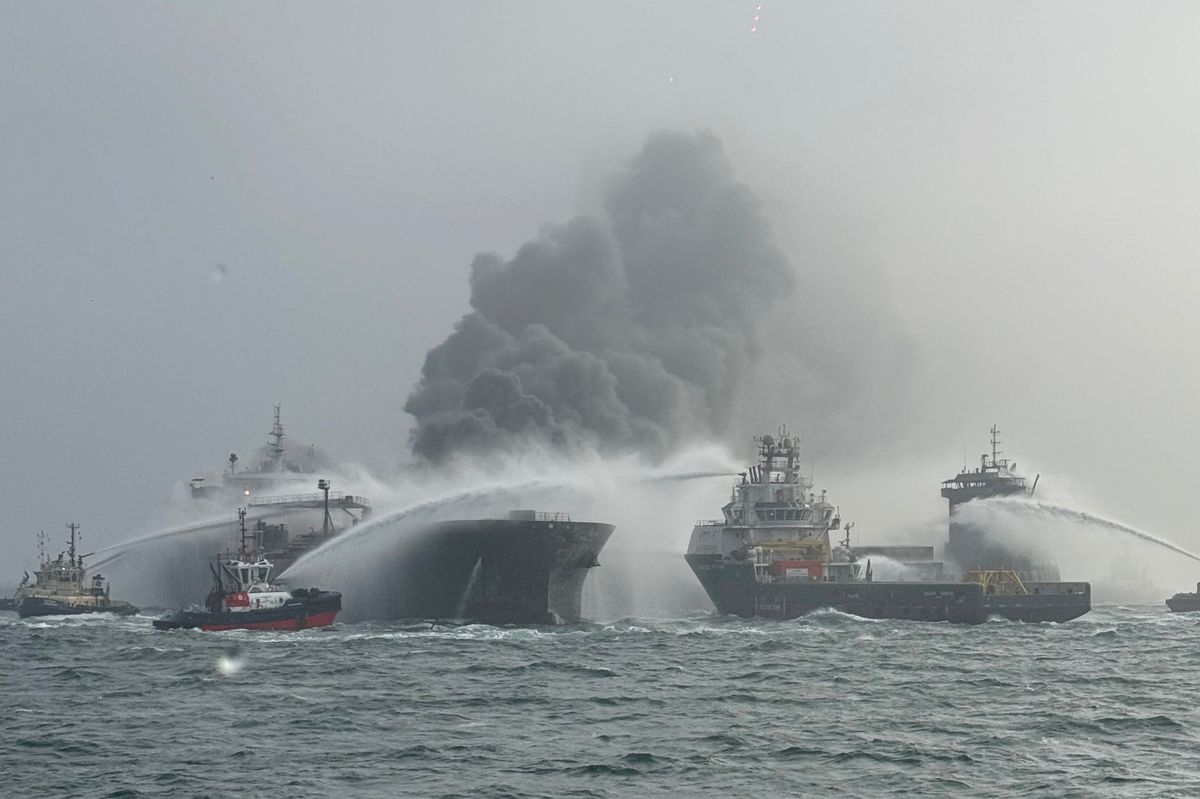
The devastating incident off the East Yorkshire coast has been described as a ‘near-catastrophic miss for Yorkshire’s marine wildlife and coastal habitats’
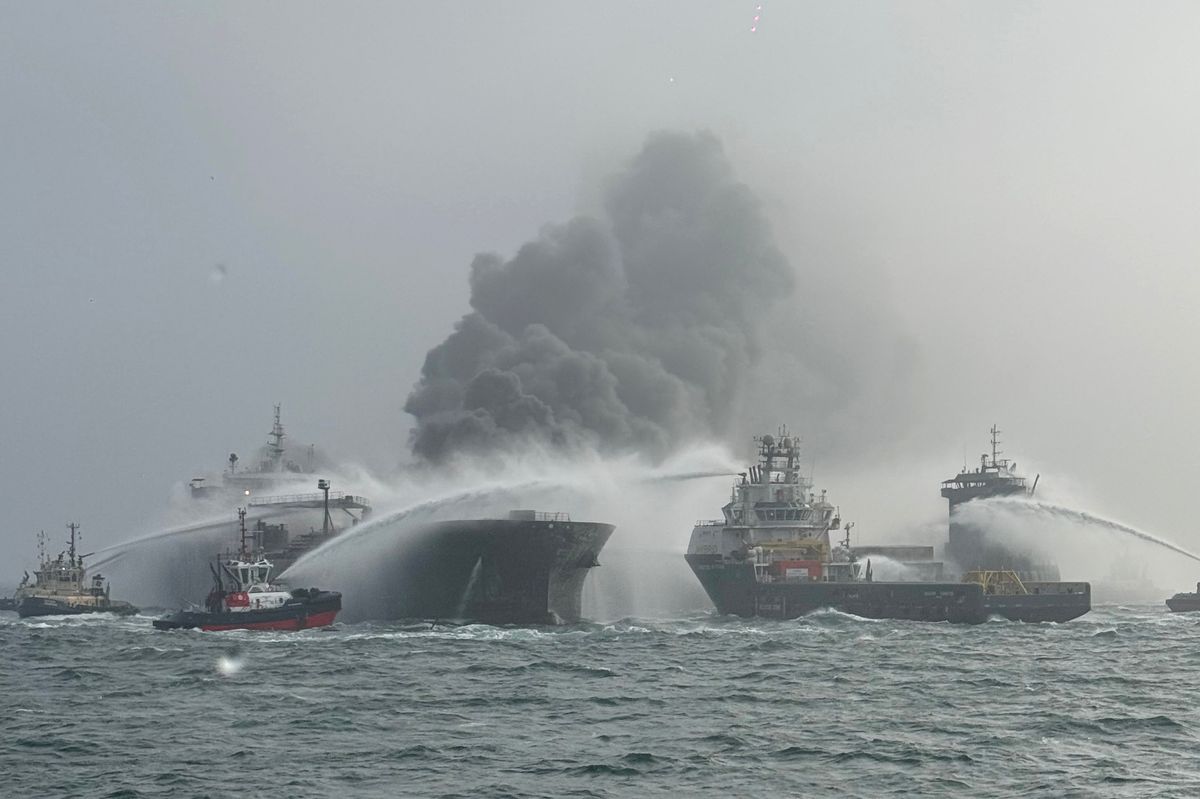
Fire and rescue services attend after a collision between oil tanker MV Stena Immaculate and the cargo vessel MV Solong(Image: Getty Images)
A regional wildlife charity has reflected on the devastating ship crash off the East Yorkshire coast one year on and described it as a “near-catastrophic miss for Yorkshire’s marine wildlife and coastal habitats”. The container ship Solong hit anchored tanker Stena Immaculate shortly before 10am on Monday, March 10, 2025, which tragically caused the death of Solong crew member Mark Angelo Pernia.
The impact immediately led to a huge fireball erupting and thick black smoke was seen for miles around with blazes continuing for some time. The Stena Immaculate was carrying 220,000 barrels of JetA1 aviation fuel while the Solong had alcohol among its cargo along with empty, but unclean, containers that had been used to transport toxic sodium cyanide.
Meanwhile, thousands of plastic pellets, or nurdles, were released from the Solong, many of which were later washed up on beaches in Lincolnshire and Norfolk. Though not toxic, these could be harmful to animals if ingested.
With the Humber estuary providing vital feeding grounds for more than 100,000 birds on migration, the incident could have proven devastating for wildlife in the area. Yorkshire Wildlife Trust says the collision has led the charity to review its readiness for major incidents.
It added major incidents of this nature can potentially “wipe out generations and populations of wildlife and pollute protected places enjoyed by people for years to come”. Martin Slater, director of operations at Yorkshire Wildlife Trust, said: “Spurn is a very well-known Yorkshire Wildlife Trust nature reserve, and has a strategic position for the UK’s security and industry as well as a rich history in protecting our shores, all of which sits alongside the immense natural importance of the site.
“What this incident brutally spotlit was the sheer vulnerability of wildlife and protected places, especially when situated so closely beside development and industry. Our wild habitat is being squeezed into smaller and smaller spaces by an increase in development in industrial and urban places like the outer Humber area, as well as by rising sea levels and an increasingly unpredictable climate.
“It’s vital that we make more space for nature, for its own protection and resilience. The incident also led us to review our readiness for major incidents.
“In the case of Spurn, the Trust reiterates its strong support for the emergency services and planners. We welcome ongoing discussions about how we can be ready to support any future response through local knowledge of the area, as well as with practical support such as storage for equipment and recovery, in the unthinkable event of any future disasters in the Humber.”
In February, captain of the Solong, Russian national Vladimir Motin, was jailed for six years after being found guilty of manslaughter by gross negligence following a trial at the Old Bailey. The court heard he was a “serious accident waiting to happen” and had shown a “blatant disregard for the very high risk of death”.
Motin, 59, had been on sole watch duty with the crash happened. The court heard he was responsible for multiple failures in the lead-up to the tragedy and then lied about what took place on the bridge, the prosecution said. The Stena Immaculate was visible on the Solong’s radar display for 36 minutes before impact, yet Motin did nothing to steer away from the collision course.
Did you know you can make Hull Live a preferred source of Hull news in Google, which will mean you get more of our breaking news, exclusives, and must-read stories straight away? Here’s more information about what this means and how to do it – you can also do it straight away by clicking here.