


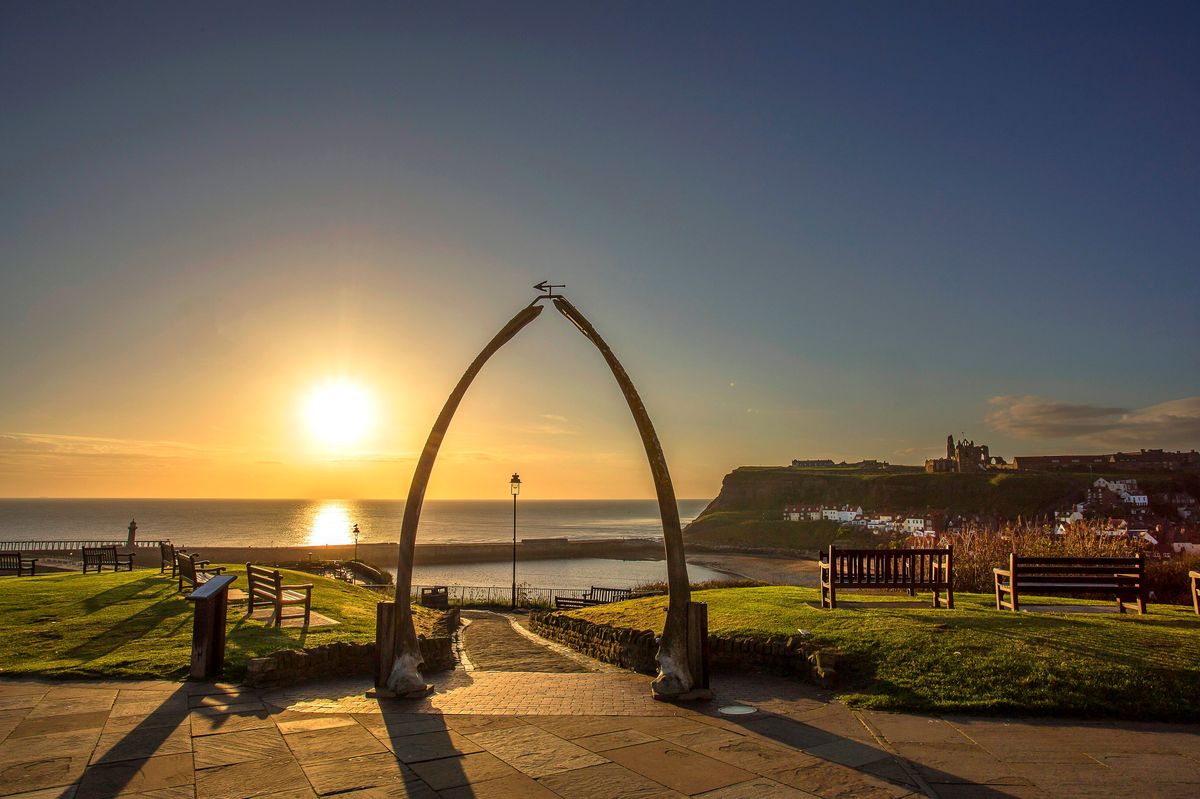
The beautiful monument which overlooks the historic fishing port of Whitby is at the forefront of debate over its restoration.
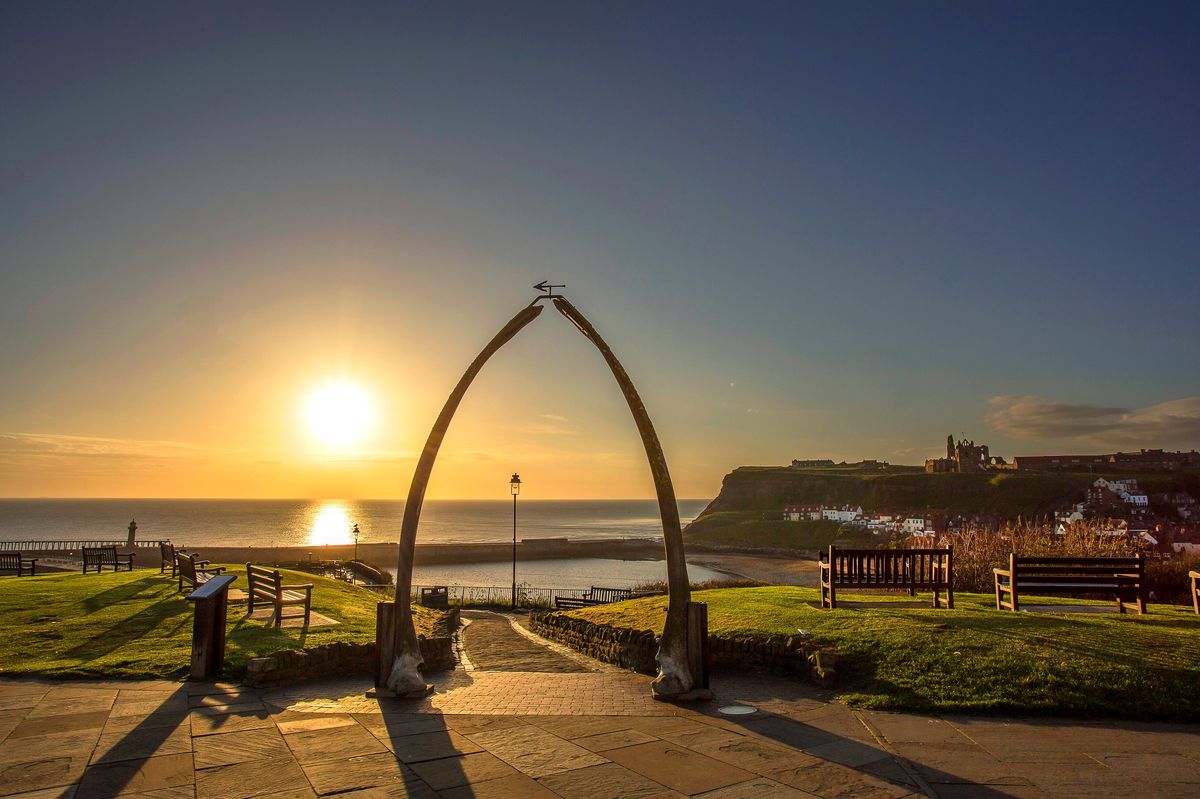
A beautiful sunrise over the North Yorkshire town of Whitby through the famous whale bones(Image: Michiko Smith/SWNS)
An iconic whalebone arch overlooking the historic fishing port of Whitby has become the centre of a growing row. The structure has stood as a symbol of the town’s whaling past for more than a century.
The 12ft-high whale bones are rapidly decaying and are now in urgent need of replacement. Whitby Town Council has asked North Yorkshire Council to carry out urgent investigations into what should happen next.
Council chiefs are exploring several options, including replacing the arch with real whale bones sourced from Alaska. These could come either from a whale legally caught by native Inuit communities or from a whale that has already died.
Another option under consideration is using high-quality replica bones. Officials say this could provide a longer-lasting and more sustainable solution.
However, wildlife conservationists have strongly criticised the idea of using real whale bones. They argue it risks normalising the display of wildlife body parts in public spaces.
Alexandra Smith, manager of Whitby Wildlife Sanctuary, said she would condemn any move to use bones from either a dead or live whale. She said whales are a protected species and using their remains sends the wrong message at a time of global conservation efforts.
The whalebone arch has been part of Whitby’s landscape since 1853. At its peak, the port was one of Britain’s largest whaling centres, with 55 ships sailing from its harbour.
It is estimated more than 2,700 whales were caught by Whitby ships during the 18th and 19th centuries. The current arch was last replaced in 2002 using bones from a Bowhead whale legally killed by native Inuit from Whitby’s twin town of Barrow, Alaska.
North Yorkshire Council has confirmed it is in discussions with Alaskan authorities about accessing real whale bones. However, it has stressed that replica alternatives are also being seriously considered.
Chris Bourne, the council’s head of harbours, said there would be major hurdles even if real bones were sourced. These include transporting them from a remote Arctic location, cleaning them and securing permission to import them into the UK under CITES regulations.
Council leaders say no decision has yet been made. Discussions will continue with local stakeholders to determine the future of one of Whitby’s most recognisable landmarks.