


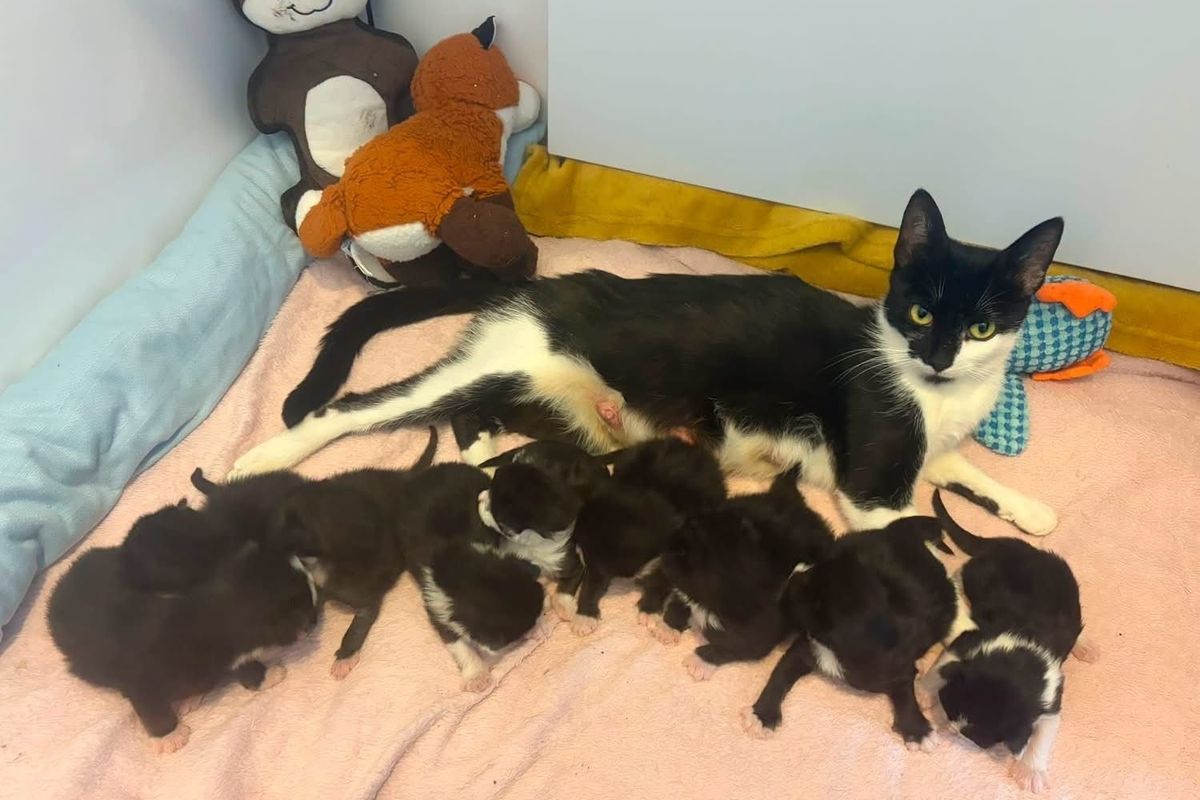
‘It’s incredible watching them grow and seeing their different personalities start to come through’
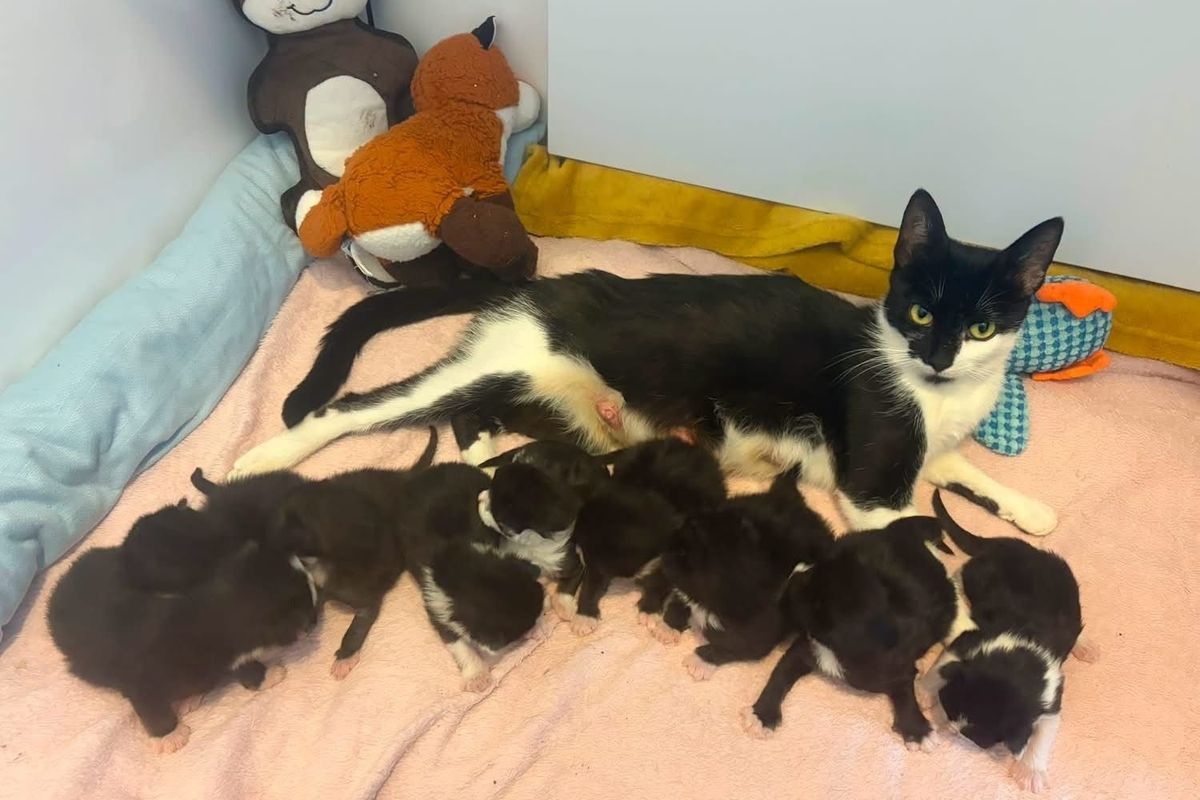
Lottie was found by a member of the public(Image: RSPCA)
Nine newborn kittens are being cared for at RSPCA Bridlington as Lottie, a three-year-old rescue cat, gave birth to one of the biggest litters the cattery has seen in years. Lottie and her nine newborns were found straying, possibly abandoned, by a member of the public in Wold Newton at the end of last month.
The kittens, four girls and five boys, are doing well at the charity’s Bridlington, Driffield & District Branch cattery, and Lottie, who was not microchipped or wearing a collar, has been described as an ‘incredible’ mum. However, not all birthing stories end happily and the RSPCA has seen a rise in very young pregnant cats coming through its doors.
The branch has cared for 127 cats and kittens so far this year. That marks a 41 per cent increase compared to the same time last year and the charity says rising numbers are because people are still not prioritising neutering.
Bridlington Branch Cattery Manager, Sophie Gibbon-Roles, said: “Lottie is one incredibly brave and devoted mum. Bringing nine kittens into the world is no small feat, and pregnancy, birth and feeding such a big litter can take so much out of a mother cat. Yet she’s doing an absolutely amazing job, and her babies are thriving in her care.
“The kittens are now five weeks old and up and running around, although there are plenty of wobbles along the way. With such a large litter, we’re giving Lottie a helping hand and syringe feeding the kittens twice a day, alongside them still nursing from mum. It’s incredible watching them grow and seeing their different personalities start to come through. We’re very grateful to the member of the public who found them and ensured they got the help they needed. For now, Lottie’s whole world is these nine little faces and we’re helping her to keep them warm, clean, fed and safe.”
The branch, which is a separate self-funding charity, is now appealing for supplies of kitten milk and mousse to help feed the family, and has thanked generous supporters who have already donated. On average, a cat has four to six kittens in a single litter, although younger or first-time mums usually give birth to fewer, typically between two and four.
While four to six is a standard size litter, they can occasionally reach nine or more. A cat’s breed, age, health, and diet can also determine the final number of babies born. The cattery said it’s a “juggling act” to keep all the cats that come into their care looked after.
Sophie said: “It’s been an exceptionally busy year for cats and kittens. It’s been a juggling act from the get-go. As soon as one cattery space becomes available, it gets filled up immediately. We are especially seeing a rise in young female cats coming to us pregnant and none of these litters have been small, averaging between four and six kittens, with the exception of Lottie who gave birth to nine.
“Their little bodies go through so much to ensure their kittens are getting all the nutrients they need. Unfortunately, because their mums are so young, and nursing takes everything out of them, there are occasions when not all the babies survive. Even if they do all make it, once they are weaned and adopted mum then spends weeks with us rebuilding herself.
“The more overbreeding we see, the more infections we come across. Kittens are being born with FIV/FeLV, Coronavirus – the list is endless – and a lot of these infections can lead to fading kitten syndrome.” Fading kitten syndrome is the term for when newborn kittens suddenly or gradually stop thriving, become weak, and pass away during their early weeks of life.
“Even if we get a very healthy litter of kittens with no medical problems at all, it still places an enormous physical toll on the mum. Every unwanted litter adds to the growing number of cats needing homes, placing more pressure on already overwhelmed rescues. Neutering isn’t just about stopping unwanted kittens, it’s about preventing a cycle that can lead to suffering.”
The RSPCA currently has around 3,000 cats in its care at centres, branches, foster homes, vet clinics and private boarding facilities across the country. This is the first time ever they’ve had a higher number of cats than dogs. The charity says there is a misconception that cats can only become pregnant when they are older, or that it’s healthy for them to have at least one litter of kittens, but this isn’t the case – female cats can become pregnant from as young as four months old.
Neutering male cats can stop them spraying to mark territory, and from getting injuries while fighting. They are also less likely to wander as far.
Having them snipped can also stop cats from spreading the FIV Virus – which is spread through bites, often between male cats fighting over a mate. To adopt a cat from the Bridlington Branch, or to donate food for Lottie and her kittens, follow their Facebook page or visit their website .
Did you know you can make Hull Live a preferred source of Hull news in Google, which will mean you get more of our breaking news, exclusives, and must-read stories straight away? Here’s more information about what this means and how to do it – you can also do it straight away by clicking here .