


Hull FC reporter Dan Tomlinson sat down with Tony Sutton to discuss a whole range of club topics. Here’s everything he said on their MKM Stadium future, club facilities, time at RFL, voting against Nigel Wood, club grading, and more.
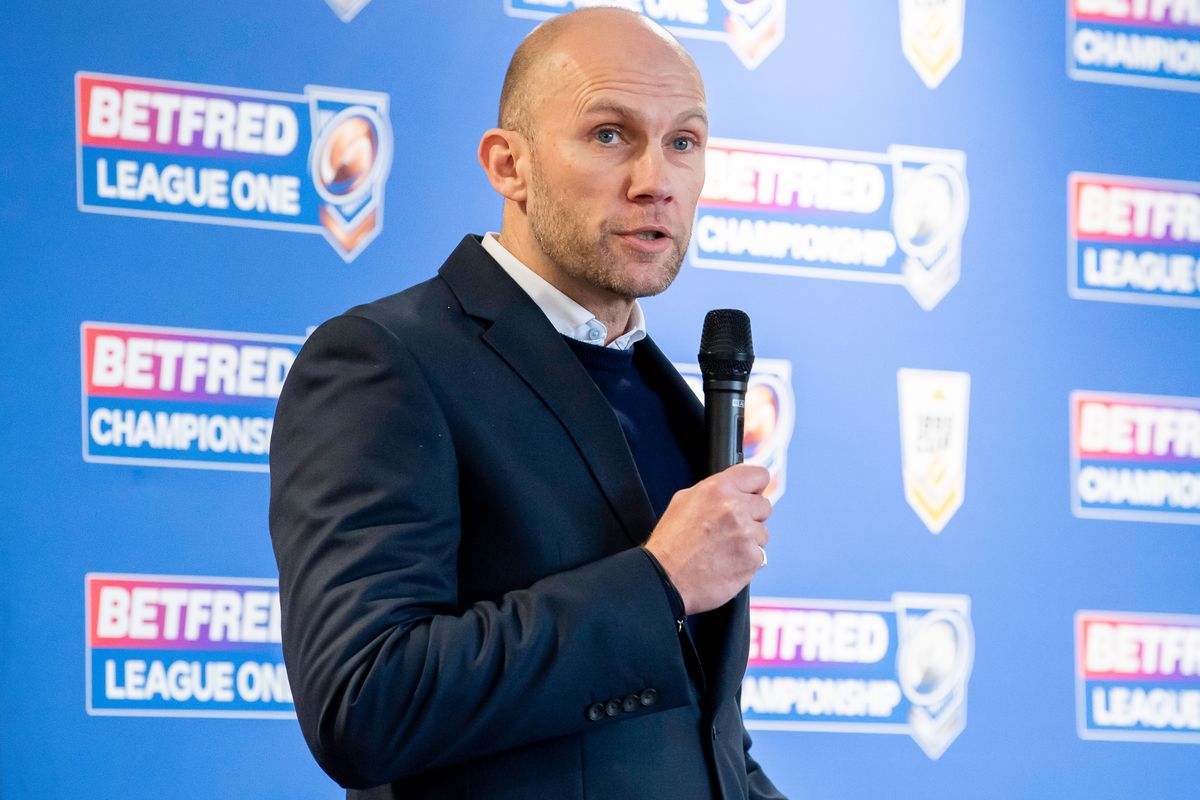
Hull FC Chief Operating Officer, Tony Sutton.(Image: SW PIX)
DT: Tony, thanks for your time. Let’s start with Hull FC’s situation with the SMC and the user agreement. How are things progressing on that front?
TS: Our original user agreement is 25 years and we’re coming up to the end of that original agreement next year. We’re engaged positively in negotiations with the SMC and we are hoping for a positive outcome and one everyone is comfortable with.
As a club, we meet the SMC, particularly Joe (Clutterbrook), pretty regularly. We’ve also had conversations on the ground that have been purely about our user agreement to play here. We’ve engaged really positively with those conversations.
We have also had conversations with the council and again, they have been regular so they understand our position and where we are. They’ve all been in a positive vein.
DT: Hull City owner Acun Ilicali recently spoke about getting a “fair and equal” deal. What does that entail in Hull FC’s eyes?
TS: Naturally, both parties are in negotiation to get a fair deal. I was here at the club when the original user agreement was made, and one of the complexities of the original user agreement was that the stadium hadn’t been built and no one knew what the revenue would be.
I remember trying to forecast our crowds and we had no idea how many people would turn up for that first game, and it ended up turning out very positive. One of the benefits of what will be 25 years’ worth of experience with the current user agreement is that it will be much simpler going forward as we understand so much more now than what we did 25 years ago.
We understand how the stadium has played out for us as a club and we aim to continue with those positive negotiations and get a fair and equitable outcome. It could be a significantly simpler agreement than the current one.
This is what part of the process is for: to understand what the SMC cost base that is attributable to us being here is and what benefit and what amount in their eyes is therefore fair and equitable.
DT: Andrew Thirkill has already brushed off any talk of a new stadium for Hull FC, so a new user agreement to play at the MKM Stadium has to be a formality?
TS: This stadium is a really big part of what we are. Many people will remember the construction of this place. I used to drive down Walton Street on the way to the Boulevard and see with great interest how this stadium was progressing.
We are in those negotiations to negotiate a positive renewal of that user agreement. We’ve been engaged and talking about it for a few months now. We don’t want it to go down to the wire and timing then becomes a massive part of the outcome. We’d much rather have that certainty earlier. That’s what we are working towards now.
DT: On a lighter note, you are back at Hull FC now after over ten years at the RFL. How are you finding it?
TS: I’m really enjoying it. I started on November 1 and it’s been really interesting to see how the club is similar and how the club is different from when I left in summer 2014, finding out what we are, what we’re not, where we’re good, where we need a bit of development and where we are on the journey.
It’s been fascinating, but for me personally, I feel really privileged to get another chance to work, both back in club rugby and also at this club in particular. I feel very lucky and it’s lovely to be back working locally and spending plenty of time in Hull.
DT: What would you say those differences are from your first to second spell at the club?
TS: I think the biggest difference overall is ownership. I first started in 2001 after the Gateshead club came down. There was a lot of movement in players as well as board members and shareholders. That was my first board and ownership group and then Adam Pearson bought the club and I worked for him for three years.
So I think the biggest change is ownership and what’s been really nice to see is the want of the ownership group, the two owners, David (Hood) and Andrew (Thirkill), to push the club forward, whether that be an investment or in how we do things, and challenging us as a management team to make sure our standards are really high.
That’s a really interesting environment to be in and they are pushing standards everywhere across the club. They are really ambitious for the club and there’s a lot of drive and determination behind them.
DT: As Chief Operating Officer, a big part of your role is the club’s finances, are they more settled now? And can they have the club improve their facilities to improve performance?
TS: It feels much more settled, but we’ve not been here in recent history prior to that (the takeover and Hull being on the brink). I couldn’t tell you how it was on a day-to-day basis before, but I think part of their wish for me to come back was to give a view across financial details, reporting to the board and shareholders on a regular basis, both on where we are and what the current situation is and also on where we want to go and how, in both financial and operational terms.
So two things that I’ve spent a lot of time on in particular are obviously finance, and that’s both across the club and the foundation, but equally, what properties do the club and the foundation have? Do they align with what we want to do going forward? If not, what do we need? Facilities, training grounds, resources, staff, etc. And all of those things that are medium and long-term outcomes.
If you look at the most successful clubs, particularly in the men’s Super League, they line these things up well in terms of the short term and the medium term and the long term, all in order to try and get long-term sustained success. It’s important we get all of those things right.
DT: Outside of the club, there’s been a change in RFL leadership again with Nigel Wood back in. The club voted against that reintroduction. Why was that stance taken?
TS: We had quite significant discussions about it. It’s a club stance rather than anyone’s personal stance. And what it was actually about was not necessarily about the person; it was about the process that had led up to it (the strategic review). There were a few points through the year on how the process rolled out that the club didn’t agree with, rather than this being a thought about Nigel.
DT: How do the club see the RFL’s strategic review?
TS: It was really interesting to see the depth of it, the amount of points in that, but I think the important part of the strategic review now will be the action taken against some of those strategic objectives and how those are implemented.
The strategic review clearly came out after a lot of consultation within the game and a lot of stakeholders points of view. I think the important part of it will be those actions that get played out and how they’re implemented within the game to make this game that we all love bigger, better, and stronger, which is what we all want at the end of the day.
DT: The club also voted against the 12 to 14-team expansion, why was that?
TS: The expansion to 14 teams originally came from the feedback from across the game and it’s been pretty consistent that people don’t like loop fixtures. Does the existence of loop fixtures work in an ideal competition structure? Fans, as much as anybody else, have regularly fed back that it’s not their favourite outcome for how our competition is played.
Personally, I like 14 teams as a number as you get to play everybody twice, but I think one of the challenges at this point in time is where the game’s finances are overall and a lot of that is driven by a broadcast contract, but not all. Also, player supply and whether two more teams pushes player values up.
So for me personally, I don’t think 14 is the wrong number, but it was about the timing of such and whether or not those big factors were in the right place for 14 to be the right number at that time. However, the decision was taken, it was implemented, and it’s now reality, so we play on with it, but those are the big considerations that would have been taken into account.
DT: As for an NRL investment, is that something the club welcomes?
TS: I think any potential and positive incoming investment is always worth consideration by clubs, particularly by owners and by the RFL, Rugby League Commercial, and Super League. I think most people would agree that, certainly commercially, the NRL is the best rugby league competition in the world.
I view it really positively. I don’t view it as a takeover. I think when Andrew Abdo visited our game against St Helens and spoke, a word he used was “partnership”, and with the commercial experience and the broadcast experience that they could add to what we already have here, I think it could be really positive.
The finer detail is always where these types of arrangements are made into partnerships, but for a headline position as a direction of travel and from looking at and speaking to Andrew when he was at our game, I think all of the areas that we talked about felt very positive, but we wait to see the final form.
You look at their commercial delivery over 20 or 25 years, the growth of broadcast, the growth of the number of clubs, their expansion of the women’s game, and the huge popularity of some of the additional competitions like State of Origin and the Pacific Nations Cup that they now run each autumn around World Cup cycles – their growth and expansion of the game have been magnificent.
DT: The RFL’s TV deal with Sky expires soon. Has there been any update to clubs on how those talks are progressing?
TS: For a long time now, the broadcast deal has been such a driver of eyeballs on the sport and finances for the sport. It’s a big part of the game’s commercial landscape and the awareness of the game. I like the broadcast mix that we’ve had in recent years; we’ve had some on Channel 4, we’ve had some on BBC, and we have obviously plenty of Sky Sports. And we have Super League Plus.
There’s a really nice mix at the moment. We wait to see with interest the returns from Rugby League Commercial when they bring the headlines of the broadcast contract for 2027 back to the table.
DT: In terms of club grading, Hull FC restored Grade A status last year. There are going to be some changes for next year in terms of catchment. How does that affect the club and what other areas can the club increase their score in?
TS: It’s something that we look up pretty regularly, a lot of the metrics we can track are almost on a weekly or game-by-game basis, so it’s not something we just do at the end of the year and see how it plays out. We keep up-to-date with it and forecast/see how things are moving throughout the year and any changes we think we can make to make sure we are maximising our return under the grading system; we do.
As for catchment, it’s how that’s been played into the other pillars and which pillars you do well on and which pillars you do not so well on, and, as I say, making sure that we’re taking as much advantage of that scoring system as we can to try and ensure the highest score possible.
DT: The big one for Hull FC is performance, really…
Yeah. A lot of the finance measures are based on the previous year or previous two years; the ones that are really live in the year are performance and crowds, some of the digital and social measures and some of the broadcast measures.
There are lots that are current to this year and we all know that a lot of the attendance and digital traffic and website traffic are based on how you perform in that year, so yeah, performance, as it does in a club anyway, let alone for grading purposes, underpins so much of how your year turns out.
DT: Finally, the club has 9,600 members now and is pushing 10,000 members with the new half-season packages; that’s not a bad return…
TS: Absolutely. One thing that was front and centre when Sian (Jones) and I started in that first week of November was memberships and how we could try and deliver more, and on the other side was the prime time for retail turnover, shirt sales and all of those things in the run up to Christmas.
What we’ve achieved on memberships and the response from the people of Hull to come and buy those memberships and to engage in investing in the club in that way have been magnificent.