


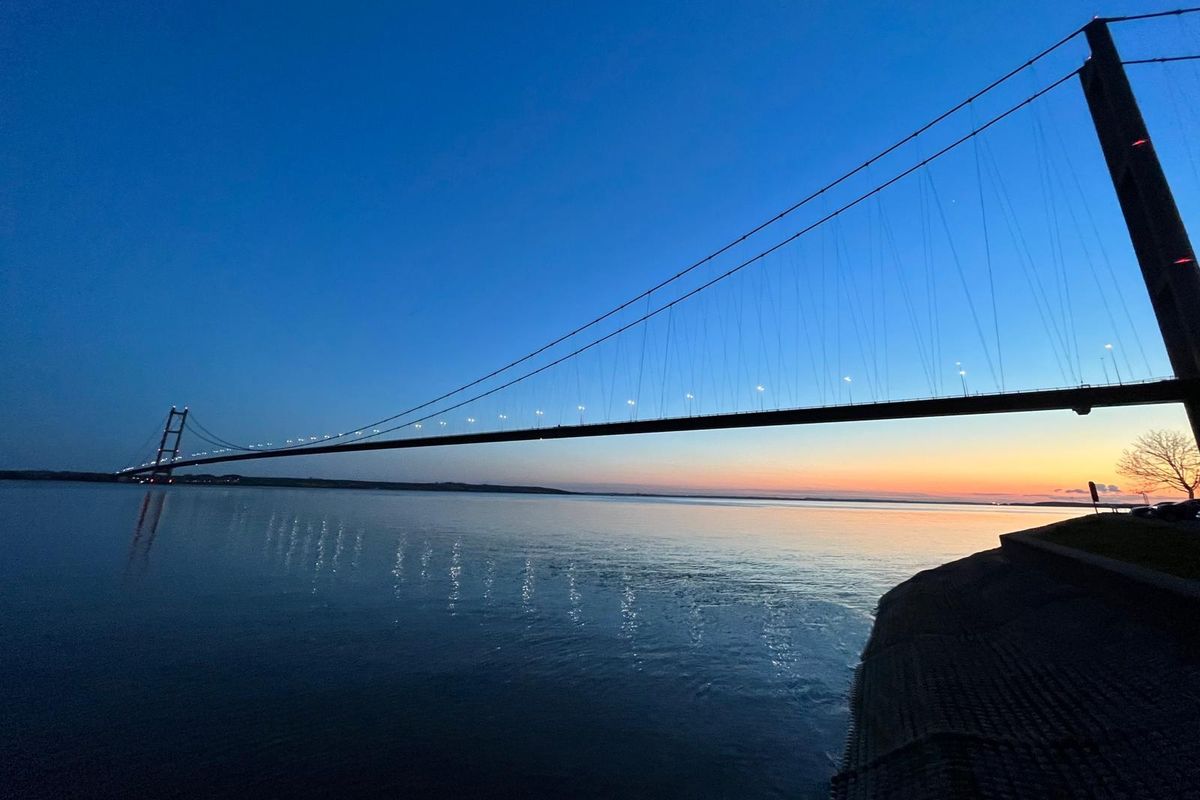
Fixed glass panels are now proposed at limited locations as part of the improved safety barriers
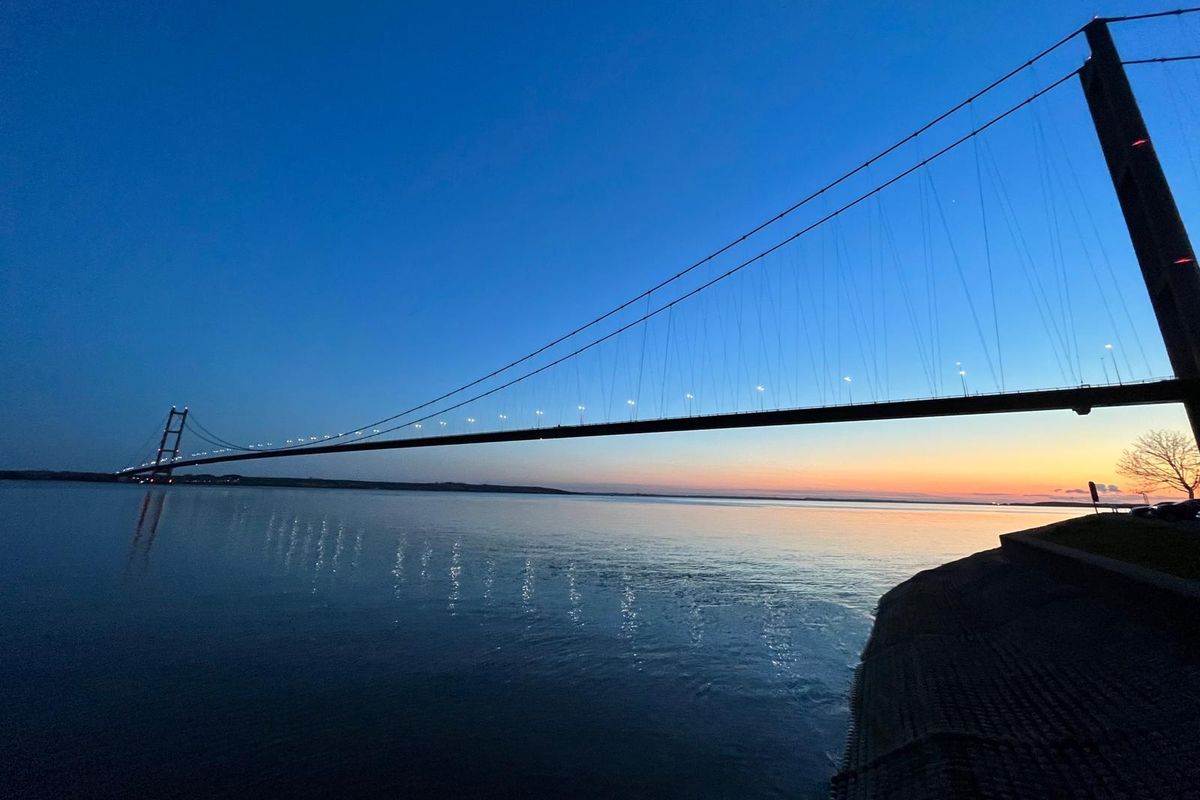
Humber Bridge at sunset one Spring, as seen from Hessle Foreshore(Image: LDR)
Permission has been sought for a revision to improved safety barriers planned on the Humber Bridge. Permission was previously granted for elevated safety barriers on either side of the bridge by the walkways used by pedestrians and cyclists.
A variation has now been sought to this after detailed design work flagged an issue. Essentially, the previously approved design will not work in specific small sections along the bridge, by anchorage points and the bridge towers.
In those areas, the Humber Bridge wants to install glass panels as part of the improved safety barriers. A Humber Bridge spokesperson has said the barrier safety improvement scheme “is an extremely complicated task” that involves a number of challenges. They added the scheme “is moving forward as planned”.
The Humber Bridge applied to East Riding Council earlier this Summer for the design variation and just this week received its planning approval. It applied more recently to North Lincolnshire Council and this application remains pending.
Did you know you can make Hull Live a preferred source of Hull news in Google, which will mean you get more of our breaking news, exclusives, and must-read stories straight away? Here’s more information about what this means and how to do it – you can also do it straight away by clicking here.
What is the new plan for Humber Bridge’s safety barriers?
Permission was previously granted by both councils in February 2025 for improved safety barriers. This involved raising the height of existing barriers to 2.7m tall, or nine feet, with cranked steel posts supporting a horizontal tensioned wire rope system.
A submitted planning document explains why the glass panels have been sought in limited sections. “Detailed design has identified that the tensioned wire system cannot be anchored at certain localised positions, principally at the Barton tower and south anchorage, because the existing structure does not provide sufficient capacity to resist the required wire anchorage forces.”
At localised positions, fixed glass panels acting as bracing are required in place of the tensioned wire system. The change preserves the approved scheme’s lightweight appearance and the open, uninterrupted views from the bridge that were central to the original design. Around 200,000 users a year enjoy the views, a planning document reports.
A technical note on the impact of the safety barrier scheme on birds has been updated. Arbtech Consulting Ltd concludes the glass panels are unlikely to materially affect birds commuting over the bridge.
They will only present a minor, localised collision risk. Mitigation for this in the form of UV marking on the glass panels that birds can see, but will maintain views for bridge users, is proposed.
Humber Bridge ‘working closely with contractor to establish scheme of works
A Humber Bridge spokesperson told Hull Live: “Raising the safety barriers on the Humber Bridge as part of the Barrier Safety Improvement Scheme is an extremely complicated task that requires innovative engineering and design solutions. This is due to a number of challenges including the movement of the bridge, the impact of wind across and along the roadway, and the structure’s Grade I listed status.”
“As a result, it is vital we invest the time required to ensure the final solution achieves the desired outcome of enhancing safety for all users without compromising the structural integrity of the bridge or the visitor experience.
“However, we are pleased to report the Barrier Safety Improvement Scheme is moving forward as planned and we have appointed a contractor to deliver the project. We are working closely with the contractor to finalise the design process, establish the scheme of works, and achieve all required planning consents.”
Work on installing the enhanced safety barrier will not involve disruption to traffic lanes while it is carried out. It will be carried out in two phases with closure of each walkway in turn.
The barrier system is expected to have a working life of 30 years. The Bridge Maintenance Fund is to pay for the works, which have previously had a £3m price tag.
To find planning applications, traffic diversions, road layout changes, alcohol licence applications and more, visit the Public Notices Portal.