


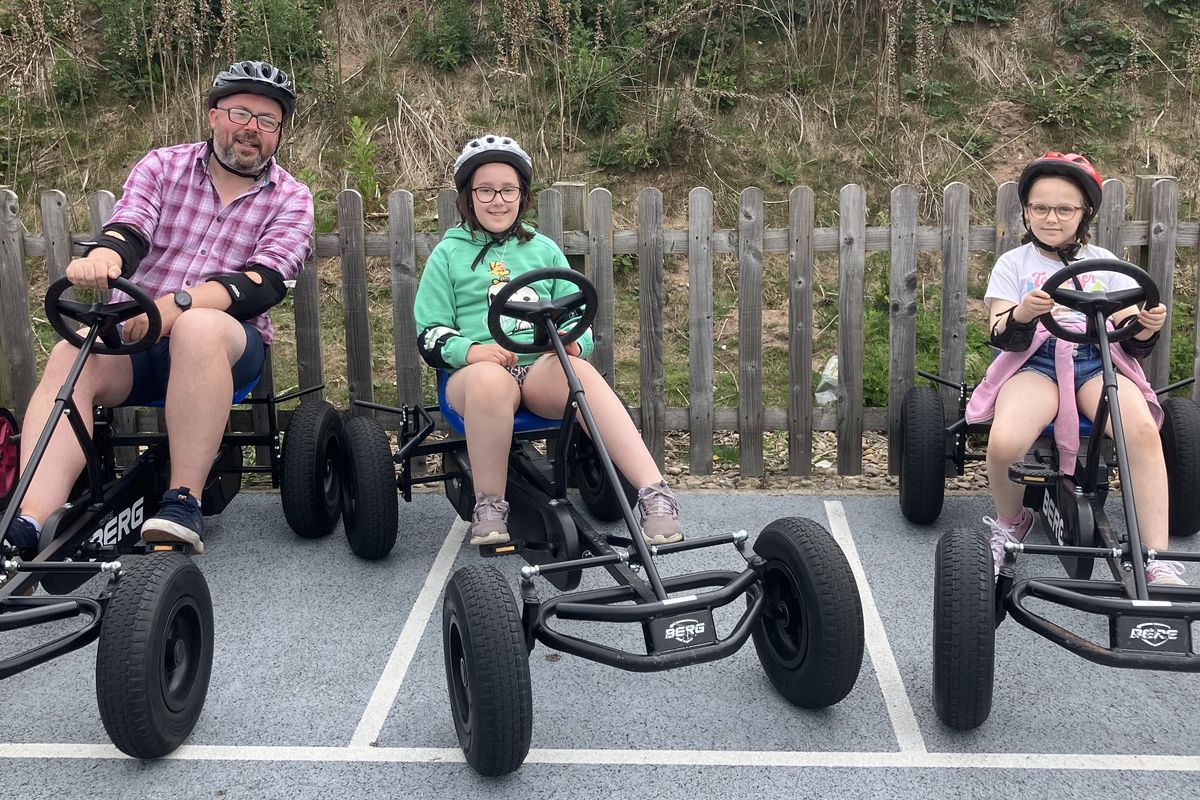
Scott Rorrison has praised his girls’ unwavering resilience during treatment
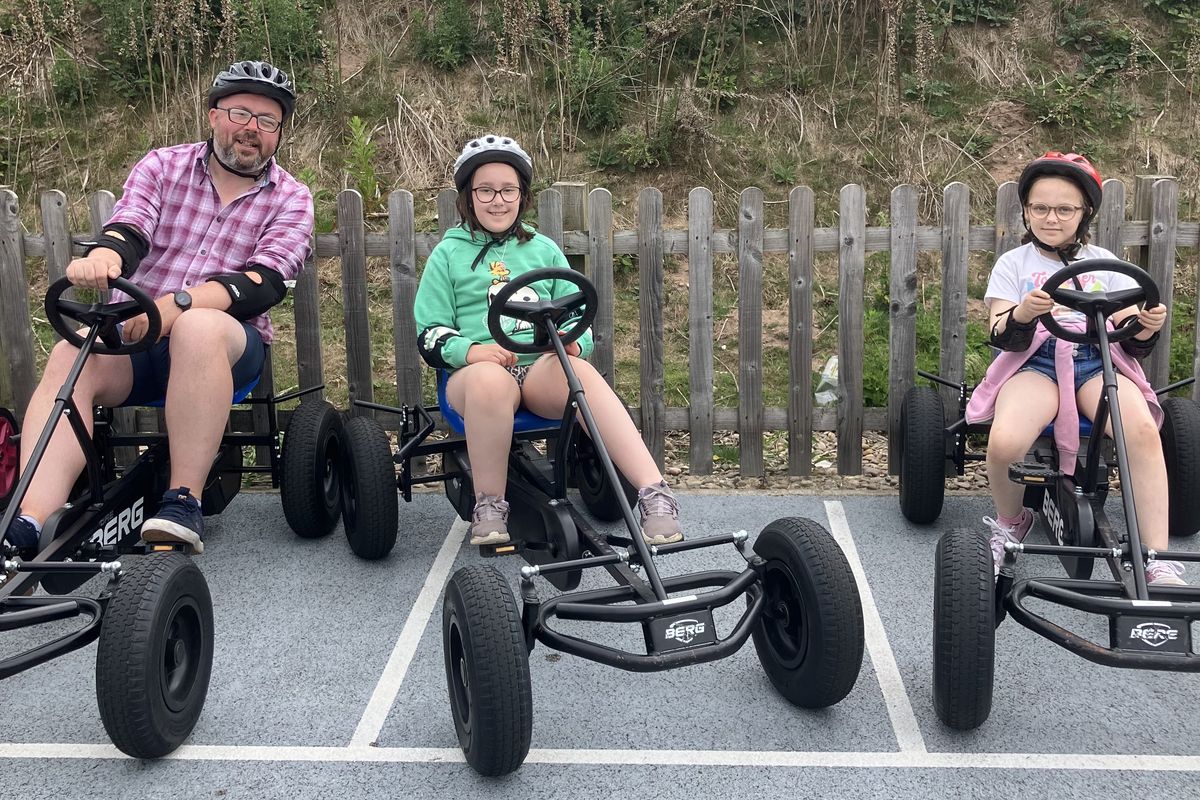
Scott Rorrison with daughters Penny and Daisy(Image: Collect/PA Real Life)
A dad-of-three from East Yorkshire saved two of his daughters’ lives by stepping in as a stem cell donor when matches fell through. Scott Rorrison, 45, has highlighted the importance of families coming together to support each other through challenging times.
The dad, who lives on the outskirts of Hull, said it was “devastating” to learn that not one but two of his daughters, Penny and Daisy, both had a rare genetic disorder called fanconi anaemia, but has praised their unwavering resilience throughout their treatment journeys. Fanconi anaemia is a complex medical condition that may affect many parts of the body, and people with this condition may have bone marrow failure, physical abnormalities, organ defects, and an increased risk of certain cancers, according to The Aplastic Anaemia Trust.
“People just don’t understand what you’re going through. They don’t get what a genetic disorder is and don’t realise that you’ve got to live with it forever,” Scott told PA Real Life.
“Experiences like this makes you realise what’s important and makes you realise how resilient kids are, how they can just get through things. They didn’t question anything; they just trusted the doctors and did what needed to be done.”
Penny, now 11, was diagnosed with fanconi anaemia aged five after experiencing regular nose bleeds and bruises, which are often the first signs of the condition, according to Fanconi Cancer Foundation. Parents Scott and Sam, 36, already knew that Penny had a growth hormone deficiency at the time which meant they had to use an EpiPen to put some growth hormones into her every night, so they thought that must have been what was causing all the bruises.
“She was getting nose bleeds quite regularly, but we thought it was normal because kids get nose bleeds all the time, but then she started getting lots of bruises too,” said Scott. “When we went to see a specialist, he said that she shouldn’t be bruising like that, so they arranged for some blood tests.
“We were super lucky, because we only found out that Penny had it by chance because of the growth hormone deficiency, and it’s good to get the treatment while young.” The parents were advised by the doctors not to Google the rare condition upon diagnosis.
“The doctors said because it’s so rare, they couldn’t even give us any literature on it and told us not to Google it because there’s all sorts of stuff out there that’s not accurate that could just scare us even more. So we have just been learning about it as we’ve been going through it,” said Scott.
Finding out that Daisy, now eight, also had the condition when testing for potential donor matches for Penny just before Christmas in 2021 was an incredibly difficult time. “We were devastated and just felt really unlucky, and were wondering, why has this happened to us? It was really upsetting,” said Scott.
When Sam gave birth to their third daughter Annie, her umbilical cord was also tested to see if she had the condition, but luckily it came back negative. Both Penny and Daisy needed stem cell donors to replace their own faulty bone marrow cells to save their lives in the long-term.
A perfect match was initially found for Penny, in Germany, when she was six years old, but the donor fell through at the last minute because they failed the health check, prompting both parents to be tested. “When it fell through, they tested me and Sam to see who would be the best match, but then we found out Sam was pregnant with our daughter Annie during that time, so that just left me, really,” said Scott.
“You would do anything for your kids. My dad would have done it for me. It’s just the natural thing to do. You don’t think about it, you don’t question it, you just do it.
“I think the people that do it for people they don’t know are the really brave ones, because it’s not as close to them, and they’re still doing it anyway. They’re the people that should be really celebrated more than me.”
When a parent donates their stem cells to a biological child, this is called a haploidentical transplant. This transplant uses stem cells from a family member whose tissue type is half-matched to the patient’s.
Depending on the type of blood cancer or blood disorder a patient has, a haploidentical transplant could be an option if no perfectly matched donor is found through a sibling or the UK and international stem cell registries, according to Anthony Nolan, a charity which saves and transforms the lives of people in need of stem cell transplant. While haploidentical transplants are not suitable for everyone, Scott was able to donate for Penny and the stem cell transplant took place in March 2022 – but it was not straightforward.
Most donors are able to give stem cells through the veins in their arms, but in a small number of cases donation may need to be done using a central line instead, which is what happened to Scott. This is inserted into a large vein in your groin (femoral vein) or neck (jugular vein), according to Anthony Nolan’s website.
“Everything was ridiculously last minute. I was told that I needed to have some injections to get my bone marrow working overtime to produce more cells, which caused some aches and pains.
“Then the actual donation itself wasn’t very nice because they had to go in through my jugular vein in my neck,” said Scott. In August 2025, Scott went through the same process again for Daisy, after another overseas donor match, this time in Brazil, fell through.
Both girls had the transplants at Leeds Children’s Hospital and underwent chemotherapy for a week before the transplants. “With Penny, I remember a night when I had to cut all her hair off in hospital, because it was just like a bird’s nest, and that was really traumatic,” recollected Scott.
“We knew it would fall out, but we were always told that there were people on the ward to cut her hair and make it a gradual thing, but that never materialised. Then one night, at about one o’clock in the morning, I had to cut all her hair off with scissors, which was really upsetting.”
However, the parents said that Daisy did not seem to mind when her hair came out. “Daisy made a joke when her hair came out.
“She made it into a little moustache. She had seen Penny do it so wasn’t bothered about it at all,” shared mum Sam.
Both parents praised their daughters’ resilience throughout their treatments. “It was a long spell in hospital where they were in full isolation and couldn’t leave the room,” said Scott.
“There were bad moments, but for the majority of the time they were still laughing, still playing and still happy to play pranks on the doctors.” Sam said: “They had to be off school for ages, for around six months, which showed how resilient they were, because they were still getting up every day and doing the schoolwork with the teacher and were FaceTiming their friends. They just didn’t give up.”
Penny now only has to go for check ups every six months and Daisy has bi-weekly appointments, and this summer the family will attend the Westfield Health British Transplant Games for the first time. The games are taking place in Sheffield between August 6 and 9, and will feature 2,500 participants, including more than 1,000 transplant recipients, across 26 sports.
“We’ve signed up for the obstacle course, swimming, ball throwing, speed stacking and the donor run,” said Scott. “We wanted to get involved so the kids can meet other kids that have been through similar things, and so we can meet parents who have been through similar things.
“We’ve heard that it’s just a real, upbeat positive experience, because everything’s a celebration of what you’ve been through, a real celebration of how amazing the kids and the donors are.”
Did you know you can make Hull Live a preferred source of Hull news in Google, which will mean you get more of our breaking news, exclusives, and must-read stories straight away? Here’s more information about what this means and how to do it – you can also do it straight away by clicking here .