


Horror elements provide a potent witch’s brew in one of Shakespeare’s most supernatural plays
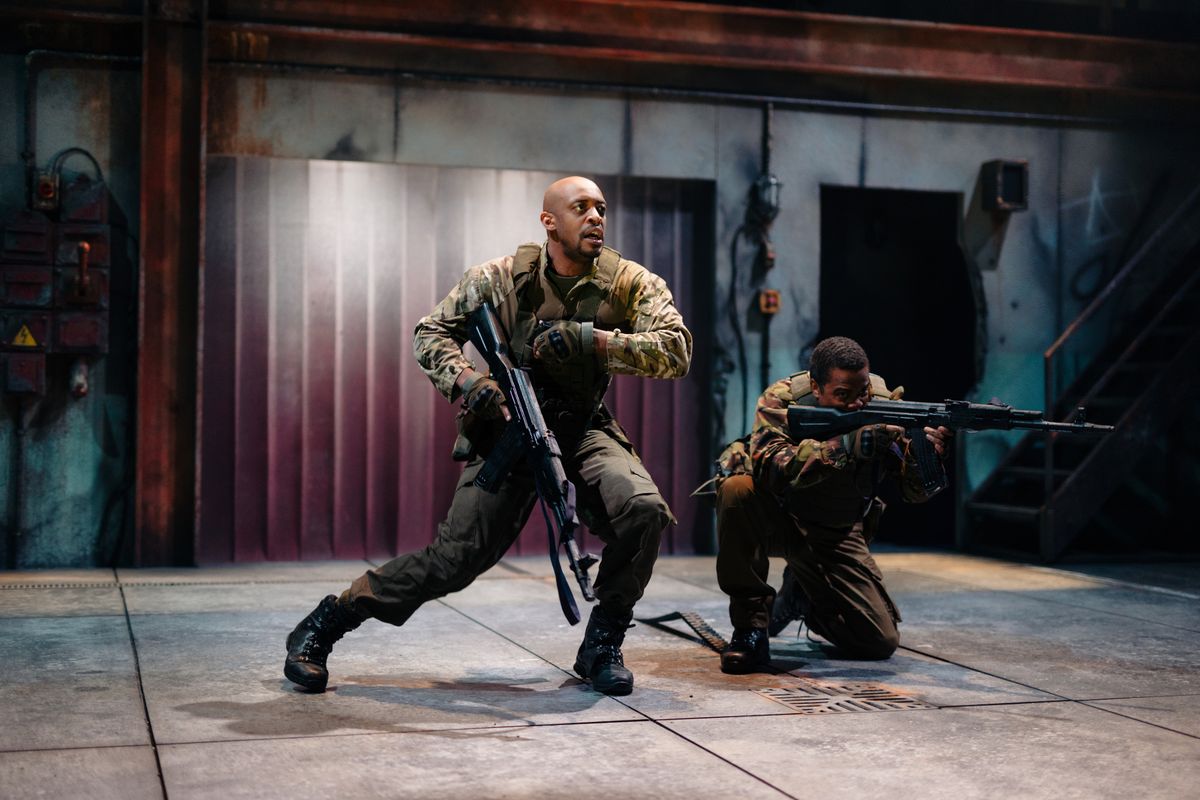
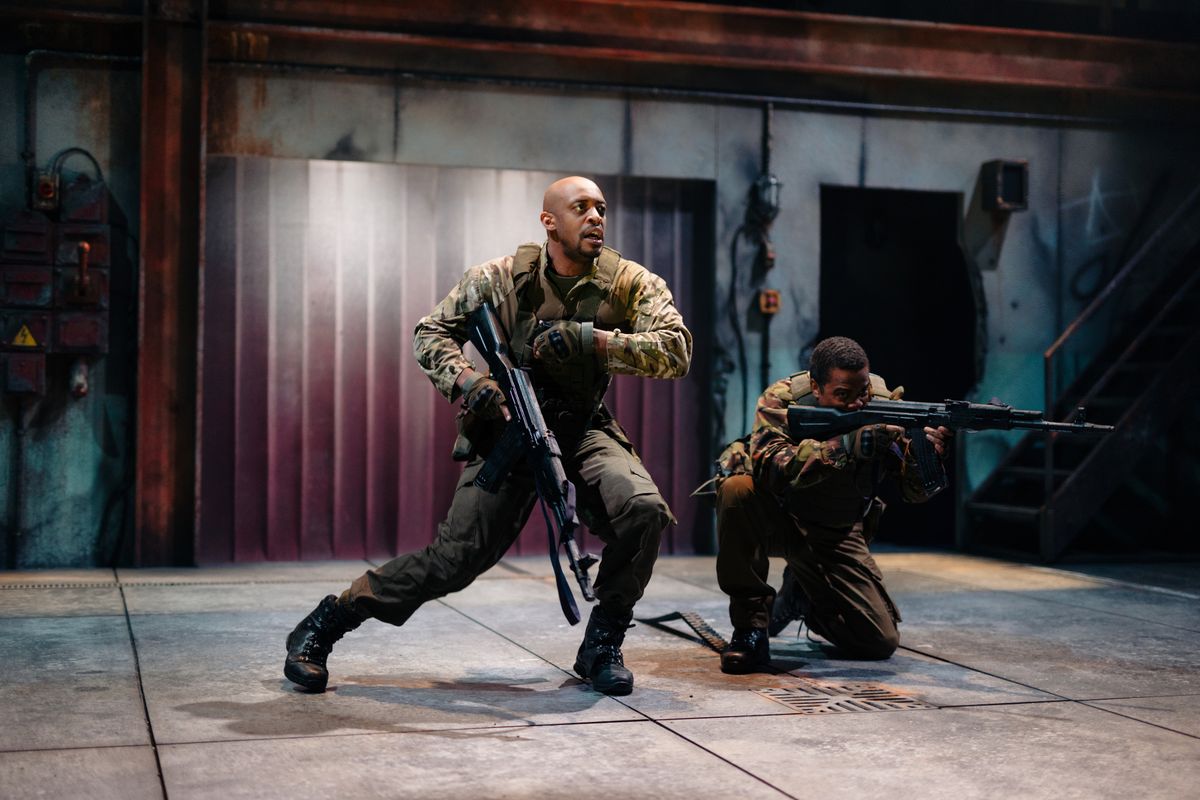
Oliver Alvin-Wilson and Daniel Poyser in Macbeth at Hull Truck Theatre(Image: Hull Truck)
‘Hell is Murky’ is the haunting tagline of Macbeth at Hull Truck Theatre, and this version of the Shakespearean tragedy is heavily infused with elements of horror.
Despite the feudal setting, with a ‘King of Scotland’ and a ‘Thane of Cawdor’, in this reimagining by director Mark Babych, we find ourselves in a vaguely modern world, with camouflage and automatic weapons.
Aside from a few moments, like a switch from guns to a sword duel, I felt this worked and added a disquieting element of science-fiction to the horror. More than once, I found parallels with 20th century fascist regimes.
Visionary set design – an ugly collection of concrete and PVC strip curtains – provided an instant sense of the macabre before the first line had been uttered. My first thought was ‘slaughterhouse’, but it could equally be compared to cold storage, or a dictator’s brutalist fantasy of a castle.
It served as a fitting meeting place for witches, and a fantastically spooky setting for the Porter to launch corrupt souls – imagined as gory meat bags – into the bowels of hell.
Oliver Alvin-Wilson was a compelling Macbeth, at once ambitious and plagued with uncertainty. He was deeply believable, especially in moments of emotional instability where he’d flip from paranoia to laughter in double-quick speed. Each famous soliloquy was delivered as naturally as if it had just formed in his mind, rather than rehearsed over and over.
Jo Mousley convinced as a power-mad Lady Macbeth: exalted at her husband’s promotion, then disgusted at his aversion to treachery. It all felt very real.
The psychological manipulation, rooted in the shared tragedy of their lost child, was a little harder to grasp. But her rendition of ‘Out damn spot’ – almost whispered, yet somehow as clear as a bell – was one of the most remarkable depictions of psychosis I have ever seen on stage.
Other than his scheming wife, Macbeth would be alone in the world if not for Banquo, played by Daniel Poyser as a charismatic and unerringly loyal friend. Thanks to their remarkable on-stage chemistry, Macbeth’s sudden betrayal was extra repulsive, and Banquo’s return as a ghost was extra chilling.
Macbeth’s subsequent mental breakdown felt very well-earned. Both actors were incredible in the tortured banquet scene and the tension leeched into the audience.
Our three Witches – Deb Pugh, Josie Morley, Livie Dalee – were wickedly creepy instruments of fatalism. They jerked around the stage like spiders, crouching and contorting themselves as they chanted their evil spells.
A post-apocalyptic design to their costume, with tattered rags and goggles adorned with horns, added to the sense that they were supernatural beings existing outside of time.
One of my favourite things about this production was the use of lighting and shadow. Key moments of horror were emphasised by silhouettes, enlarged and thrown into sharp relief on the background.
It perfectly echoed the play’s dark themes, and one of Macbeth’s final, most memorable lines: “Life’s but a walking shadow, a poor player / That struts and frets his hour upon the stage / And then is heard no more.”
Macbeth is showing at Hull Truck until Saturday, February 28. Find out more or book tickets on the Hull Truck website.