


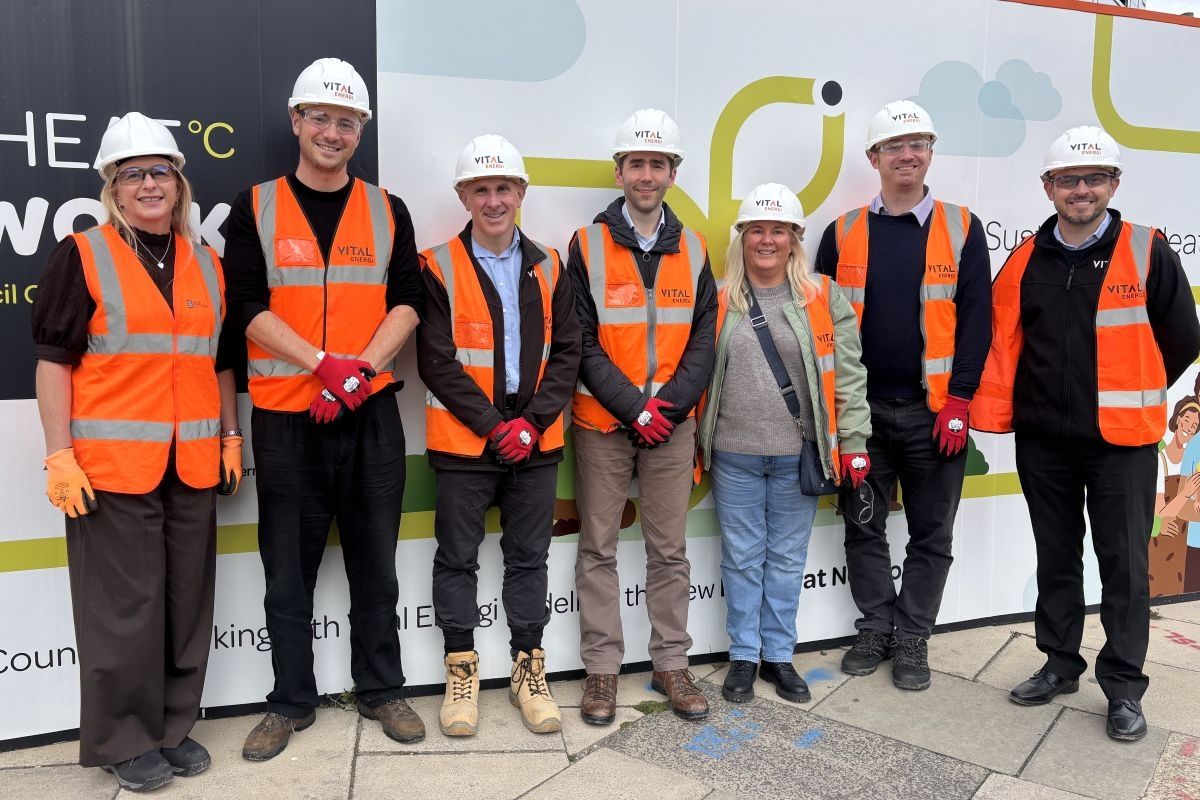
Westminster officials praised the local efforts, highlighting how joint investment between central government and local leadership will soon be delivering cleaner, more efficient power to the region
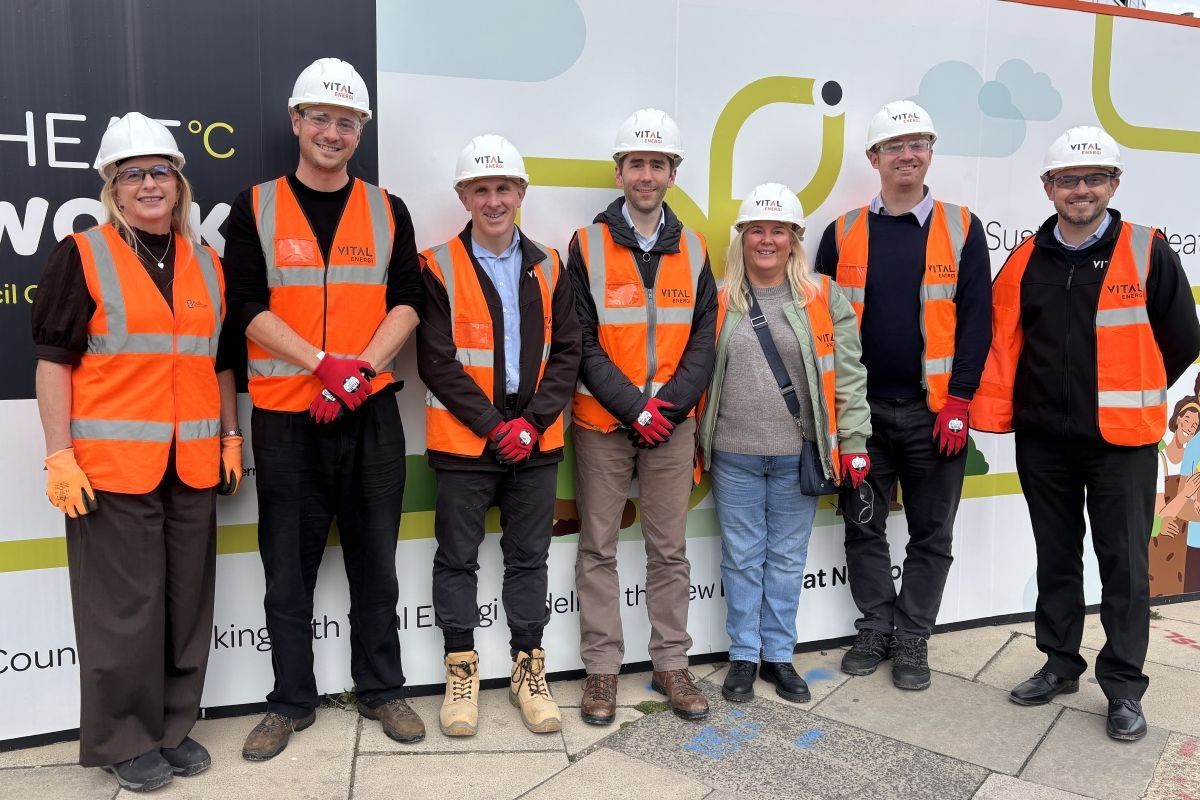
A warm welcome? Government ministers visited the region to survey the progress of the pioneering Hull Heat Network (Image: Hull City Council)
Hull’s ambitious transition towards a greener future took a major step forward this week as government officials visited the city to inspect progress on a groundbreaking energy project. The energy experts were in East Yorkshire to get a first-hand look at the rapid development of the eagerly-anticipated Hull Heat Network.
The delegation from the Department for Energy Security and Net Zero (DESNZ) spent time surveying the ongoing operations, meeting engineers and council officials to understand both the progress and the challenges. The visit marked a key moment for a scheme that is backed by government funding.
During the visit, delegates were taken on a comprehensive guided tour of the main energy centre site to assess physical construction milestones already completed on the ground. Westminster officials praised the local efforts, highlighting how joint investment between central government and local leadership will soon be delivering cleaner, more efficient power to the region.
It is hoped the investment into low-carbon infrastructure will reduce carbon emissions in Hull city centre and will allow businesses to access better value and cleaner energy and heating. The authority’s key delivery partners Vital Energi led the presentation, setting out the significant technical achievements made since breaking ground on the multi-million-pound facility.
Creating long-term benefits for Hull residents
Andrew Wightman, regional director for Vital Energi, expressed his pride in hosting the government team and demonstrating how local workforce initiatives are directly benefiting the wider community. “It was a pleasure to welcome the Department for Energy Security and Net Zero to the Hull Heat Network and share first-hand the progress being made with works on site as well as our ongoing social value initiatives,” he said.
Mr Wightman said the project would leave a positive legacy for future residents and businesses in the city. He added: “We were proud to showcase the collaborative approach that has helped bring this project forward, working closely with partners, stakeholders and government to create infrastructure that will provide long-term benefits for Hull.”
Hull City Council leaders also hailed the visit as a crucial vote of confidence in the city’s broader environmental strategy and economic future. Councillor Charles Quinn, portfolio holder for environment and climate change at Hull City Council, said the government visit was a superb opportunity to highlight innovation in Hull.
He said: “Welcoming representatives from DESNZ to Hull was a valuable opportunity to showcase the progress being made on the Hull Heat Network. By providing a reliable low-carbon source of heating and hot water, the network will play an important role in responding to the climate emergency and creating long-term benefits for businesses and organisations across Hull.”
Cllr Quinn urged local businesses and organisations to get in touch and explore ways to connect to the energy system. He said: “As the network continues to progress, we encourage organisations interested in reducing their carbon emissions and future-proofing their energy supply to explore the opportunities to connect.”
Did you know you can make Hull Live a preferred source of Hull news in Google, which will mean you get more of our breaking news, exclusives, and must-read stories straight away? Here’s more information about what this means and how to do it – you can also do it straight away by clicking here.
The Energy Centre helping Hull transition to a net-zero economy
The centrepiece of the entire transformation is the newly designed Energy Centre, created by renowned global architectural consultancy ARUP, which is currently taking shape on the former Trippett Street Car Park in the heart of the city centre. Once fully operational, the facility will act as the primary engine for the network, generating centralised heat and hot water that will be distributed continuously to key public and commercial buildings across Hull’s city centre.
The energy will be transported via an extensive network of highly insulated underground pipes, engineered to retain thermal efficiency across long distances. Energy experts say this will eliminate the need for individual, gas-hungry boilers in participating sites.
By drastically reducing Hull’s reliance on traditional fossil fuel gas supplies, the overarching scheme aims to significantly lower urban carbon emissions, drive down Hull’s air pollution, and anchor the city’s long-term transition toward a net-zero sustainable economy. In 2025 Hull City Council’s Cabinet approved plans for key council-run city centre buildings to be joined-up to the network – the Guildhall, City Hall, Wilson Centre, and History Centre will each be connected.
The Government-owned National Wealth Fund made the project possible through a £27million loan, which should be repaid through the operation of the network. The network is also funded through a £15m grant from the Green Heat Network Fund, via Triple Point and £1.5m of Levelling Up Partnership funding.
A Hull and East Riding Green Party spokesperson recently welcomed the latest stage of the network, and said: “It is fantastic for our city to be truly committed to a serious decarbonisation project which will be publicly owned. This first phase will hopefully demonstrate the affordable, stable energy needed for our most vulnerable residents as well as businesses.
“We would absolutely like to see this expand through other networks, the use of heat pumps is a proven and low carbon way to produce energy so having a way to expand this technology beyond those who can afford to retrofit units into their homes is an absolute must if we are to break from fossil fuels.”
To find all the planning applications, traffic diversions, road layout changes, alcohol licence applications and more, visit the Public Notices Portal.