


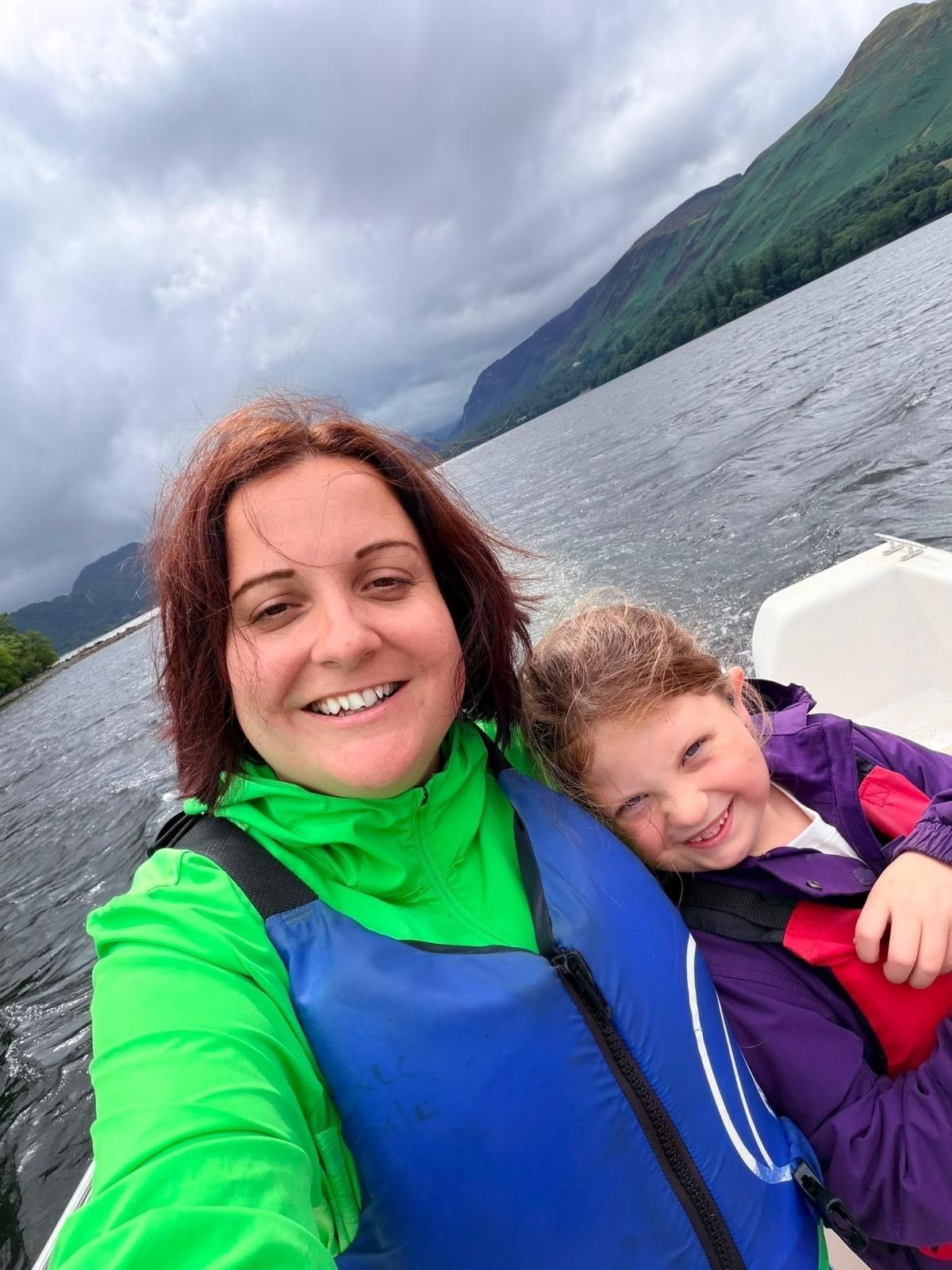
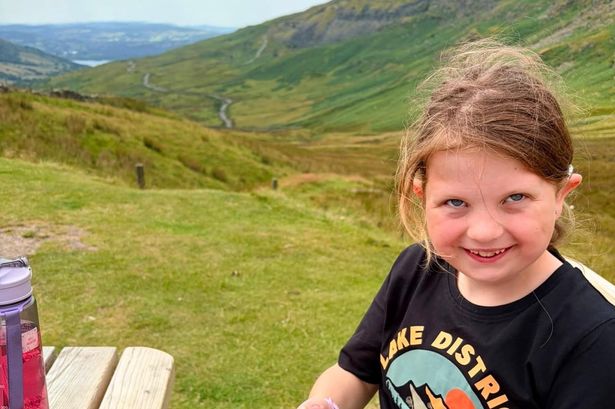
Arlo Jackson, from Cottingham, was diagnosed with single-sided deafness at age four and a half
An eight-year-old girl from Cottingham has not let her experience of single-sided deafness hold her back and even considers it her “super power”. Arlo Jackson loves to sing in front of her classmates and go to concerts with her family.
Arlo’s parents Ali and Marc have spoken of the long road to get their daughter’s hearing loss diagnosed, but says now she has her hearing aid, she lives the life of a normal eight year old. Ali described her daughter as a “great ambassador” for children with hearing loss.
She is learning sign language and is teaching children at her school about how to communicate more effectively. But it was a long road to get the diagnosis that Arlo had moderate hearing loss in one ear.
Ali and Marc first became concerned when Arlo was a toddler because she sometimes didn’t respond when spoken to, particularly with her back turned. But despite raising concerns several times, Ali says she was reassured because Arlo’s speech had developed well.
Ali, also mum to Peggy, six, said: “When she was really little she’d watch the tv and we’d be saying ‘your tea is ready’ and she wouldn’t turn around. We just thought she was choosing to ignore us because she was watching her cartoons. We used to say to each other ‘she must be deaf’ as a joke.”
Ali took Arlo to the doctor, who asked whether her speech was developing properly. “They said it won’t be anything, but I just knew in my heart there was something. I went back three or four times. They referred her to audiology, which at such a young age was really tough.
“It was difficult for her to concentrate, that’s when we knew there was something wrong. We kept going backwards and forwards there for a year before we found out she was deaf, at four and a half years old. But we’d known from her being two really.”
Ali described the moment her little girl was fitted with her hearing aid. “She welled up, and I welled up,” Ali said. “She said ‘I can hear things!’. She looked at me and said what’s that noise, and she could hear the trolley. The first thing she heard was the trolley being wheeled down the corridor – I wouldn’t even think of it.
She used to struggle a bit with hearing her dad because he has a low tone. Now she calls it her super power. We went to the Hull Fair – she takes it out when she gets to the fair because it gets a bit loud. But it doesn’t stop her doing anything. She went on the stage and did a song in front of the whole school.”
The National Deaf Children’s Society said children can appear to be coping well while working much harder to hear, follow conversations and join in, particularly in busy and noisy environments. Mild deafness means a child may hear well in a quiet environment but find it much harder when there is background noise or the person speaking is further away.
Mild deafness means a child may hear well in a quiet environment but find it much harder when there is background noise or the person speaking is further away. Single-sided deafness, which affects children like Arlo, means a child has hearing loss in one ear, which can range from mild to profound.
The National Deaf Children’s Society has launched a new campaign, What You See, What You Don’t, to shine a light on the experiences of children with mild or single-sided Deafness. George Crockford, chief executive of the National Deaf Children’s Society, said: “The word ‘mild’ can make this level of hearing loss seem insignificant, and people may assume that a child with single-sided deafness will use their other ear to compensate. But that may not reflect the child’s experience.
“A child may chat easily with a friend in a quiet room, but in a noisy classroom or playground they may have to work much harder to follow what is happening. They may miss parts of conversations or come home exhausted from the extra effort of listening. That’s what makes mild or single-sided deafness so easy to underestimate.
“A child can look like they’re coping when there’s much more going on underneath. But with the right understanding and support, children can do really well. Simple adjustments, like reducing background noise, making sure a child can see your face when you’re speaking and thinking about where they sit in the classroom, can make a real difference.”
Ali says Arlo is a happy child who does everything her friends do, but other people may not realise the extra effort she sometimes has to make. She said: “Arlo is a happy little girl and she’s thriving. She does everything another child would do, she just takes her hearing aid along with her.
“But people don’t always realise how much harder she sometimes has to concentrate. Little things, like making sure she can see the teacher and speaking directly to her, can make such a difference.”
The National Deaf Children’s Society is encouraging families of children with mild or single-sided deafness to find out more about the support available for their child and the simple adjustments that can make listening, communicating and joining in easier, not just at home, but in education settings, social situations and everyday life. Families looking for information, advice or support can contact the National Deaf Children’s Society Helpline on 0808 800 8880 or visit www.ndcs.org.uk/about-us/helpline. Families can request a call back with an interpreter in their preferred language.
Did you know you can make Hull Live a preferred source of Hull news in Google, which will mean you get more of our breaking news, exclusives, and must-read stories straight away? Here’s more information about what this means and how to do it – you can also do it straight away by clicking here .