


More and more children and families around the region are stepping out of the regular education system and choosing homeschooling instead. This month, the number of Hull children being educated at home instead of in school has risen to more than 1,000 for the first time.
This rapid increase is not down to ‘hippy’ or alternative parenting choices, according to one of the region’s education experts. It is simply because many parents believe that mainstream education no longer ‘meets the needs’ for their children.
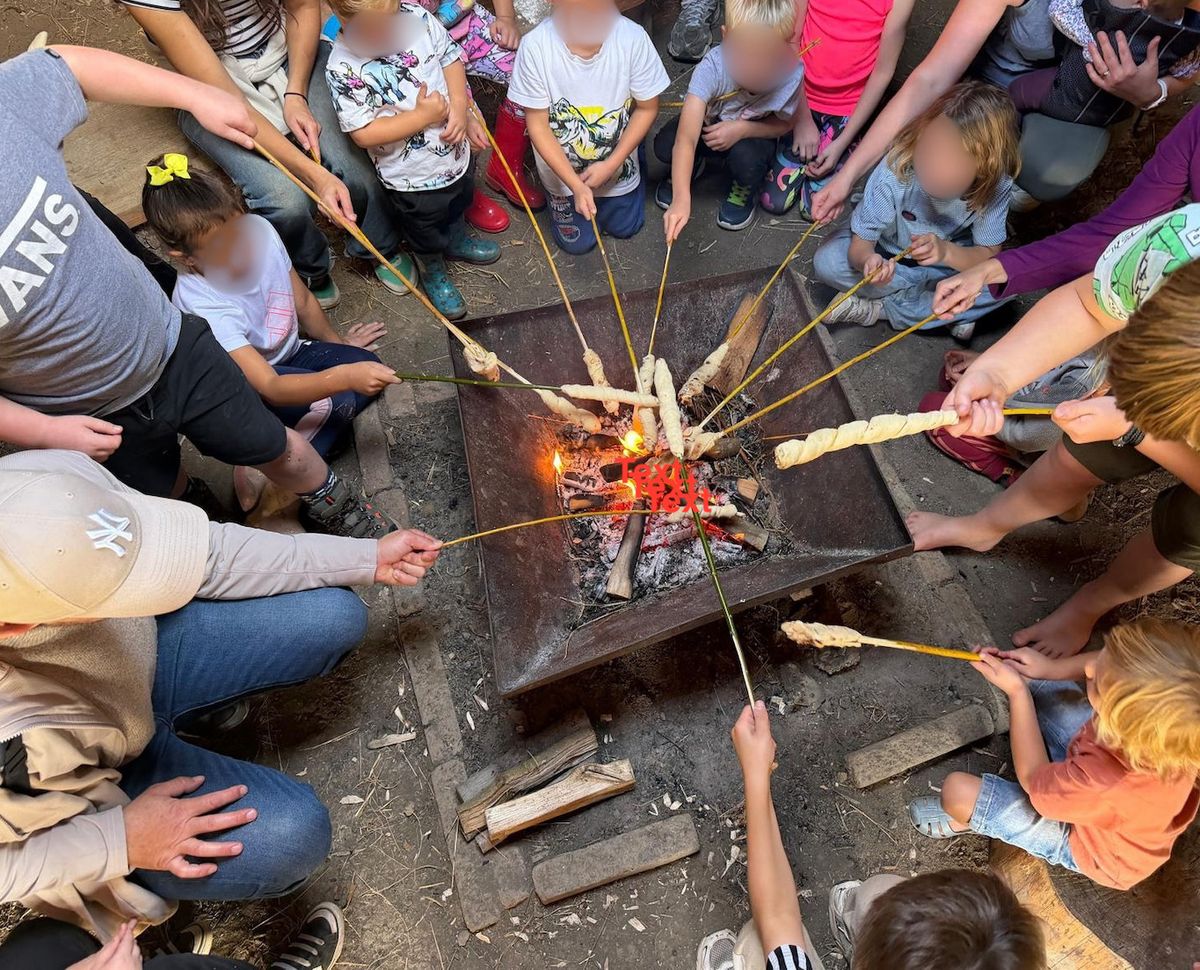
The rise in homeschooling is also leading to an increase in alternative educational provision such as forest schools, with providers of the unconventional outdoors education often struggling to cope with the increased demand from around the region. Parents often combine this with teaching their own children at home or in shared community spaces.
There has been a large increase in homeschooling since the pandemic and lockdowns, a Hull City Council spokesperson confirmed. “When the country first experienced lockdowns due to the Covid 19 pandemic, many families gained experience of educating children at home and became more confident in their ability to do so,” she said.
The spokesperson explained some families subsequently chose to continue homeschooling because they believed this type of education better suited their child’s learning style or family circumstances. But there is no one-reason behind the ever-increasing popularity, she said.
“Some families actively prefer home education because of educational philosophy, flexibility, cultural reasons, religious beliefs, family lifestyle, or a desire for personalised learning. These reasons pre-date the pandemic, but became more prominent as awareness of home education increased.”
But the authority has responded positively to the growth in home education by developing robust systems and strong support networks. “The council has comprehensive tracking systems in place, all families are visited at least annually and all parents have a dedicated assigned worker who can provide further advice and guidance where needed. The council has been awarded the Gold Kit Award* twice, by Education Otherwise, for the support it provides,” the spokesperson added.
There are now more than 1,000 homeschooled children in Hull, the highest number ever
In July 2026 there were 846 children being homeschooled in Hull, across primary and secondary school ages. But by this month (October 2026) the number had risen to 1,006, according to Charlotte Dean, the programme director for Hull-based nature connection and wild therapy organisation Rewilding Youth. She sits on a specialist network that supports voluntary organisations in this space and said she expected the number of homeschooled children to further increase before Christmas.
“Years and years ago home education was seen as a hippy or alternative choice. But that’s not the case anymore. It’s not just what’s happening inside of schools today, it’s what is happening outside of school too. Now parents have the feeling that mainstream schools are not meeting their children’s needs. That means home education is ever increasing,” she said.
Charlotte refuses to criticise the region’s education system and said the area has amazing schools but warned they are increasingly not working for parents, particularly with more and more children being diagnosed with neurodivergence and special educational needs and disabilities (SEND).
“Schools can be so pressurised in terms of outputs and outcomes,” she said. “We are seeing more and more young people diagnosed with aspects of ADHD and autism, for example. Home education and forest schools are well placed to meet those needs because we have that space and the freedom they want.”
The rising numbers and appetite for forest school provision for home educated children is ‘a challenge’ the education expert admitted. Her group in Hull charges £7.50 for a two-hour session, but this only covers resources like firewood, food and natural play activities.
“The pressure on us is now increasing,” Charlotte said. “Because these children are not on a school register, someone has to pick up the services and we’re providing that alternative.”
A ‘massive decision’ for parents with a lasting impact
She urged parents to remember that it is a ‘massive decision’ to take children out of mainstream schooling. Not only will it change the lives of young children, it also often leaves at least one parent unable to work in full-time employment which can have a huge impact on family finances.
Some home educated children struggle to sit exams too. But Charlotte’s organisation is looking to partially address that for East Yorkshire children by offering Level 2 Nature and Wellbeing qualifications, a similar level to a GCSE. Rewilding Youth will be the only organisation in the region offering this qualification once they are set-up.
Many families choosing home education end up paying for a private tutor and can elect to pay for exams and qualifications when their children are ready.
Charlotte agreed that the Covid-19 isolation and lockdowns had a formative impact for many young people. “Parents are more protective since lockdown. Children took two years off school anyway. They lived online and then were expected to jump straight back into school. So how are we meant to be surprised when SEND is increasing?” she said.
Technology is also rewiring childhood for children in Hull and East Yorkshire, with many children using digital devices such as tablets on a daily basis and computers being a big part of many school days. That’s why forest schools are so important, Charlotte explained.
“We are bringing people outside, they are learning in other ways and starting to understand that there are different ways to spend your time off phones. Embracing nature is powerful and really improves children’s mental health.”
Support from local authorities and new safeguarding measures
Cllr Victoria Aitken, East Riding Council’s Cabinet Member for Children, Families and Education said: “East Riding reflects the national picture in that there has been a steady increase, over the last five years, of parents choosing to home educate their children. There are currently around two percent of families choosing to home educate in the East Riding with increases in recent years.”
She explained that both formal and informal support was in place for East Yorkshire families, but highlighted new government powers introduced earlier this year giving local authorities great monitoring and oversight powers. “The council maintains contact with families known to be electively home educating and provides them with information, advice and support, and helps ensure a suitable education is taking place,” added Cllr Aitken.
“There are changes contained within this year’s Children’s Wellbeing and Schools Bill including a greater role for the Council in monitoring home education and safeguarding and we will work with schools, partners and home educating parents to ensure we meet these responsibilities and that children are receiving a suitable education in light of the new law.”
New rules from the government will give councils more power
The Children’s Wellbeing and Schools Act 2026 will soon grant local councils greater statutory powers to monitor elective home education (EHE) and coordinate child safeguarding. Among the powers soon to be introduced by the Labour government:
- Compulsory registers: Local authorities are required to create and maintain local and national registers of every child who is not taught in mainstream or registered formal schools
- Monitoring and oversight: Councils receive explicit powers to monitor home-schooling arrangements to tackle historical ‘blind spots’ where children could otherwise slip out of visibility
- Withdrawal restrictions: The legislation places additional checks, restrictions, and local authority consent requirements on withdrawing vulnerable children or those with special educational needs from school, particularly if they have recent social services or safeguarding involvement
- Intervention powers: Councils gain discretionary powers to intervene or make enquiries if a home learning environment is suspected to be unsuitable or unsafe
Information sharing, multi-agency child protection teams and local safeguarding partnerships are all being developed by the government’s education leaders too, as part of innovative ways to keep home educated children safe. Some organisations are seeing the rise of homeschooling and forest schools as a way to reconnect children and young people to the great outdoors.
Anton Baskerville, a woodland conservation, tree planting, and rewilding expert, said: “We are seeing more families thinking differently about how their children learn. For some, that means home schooling. For others, it means incorporating more outdoor education into their child’s life or even creating their own woodland space where children can explore, learn and develop practical skills.”
His organisation has seen a rise in organisations and families from the region looking to buy nature spaces to help deliver the education their children need, he said.
“We have families who are specifically looking for woodland because they want to give their children somewhere to explore and learn. There is something incredibly powerful about giving a child a place where they can get muddy, make mistakes, ask questions and follow their curiosity.”
The strong link between SEND and homeschooling
The flexibility of home education and forest schooling is so important, especially for parents with SEND children, according to Jaz Hancox, a youth environment outdoor educator, from Aldbrough in East Yorkshire.
“Demand is skyrocketing,” she explained. “Two-years-ago we were struggling to get three or four people in our sessions. Now we are fully-booked with 20 families and we have more turning up each time.”
Jaz said the link between a rise in SEND and homeschooling was undeniable and said a blended approach where parents send their children part-time to school and part-homeschool their children was also becoming popular.
And many parents of children with SEND have to wait a long time for their bespoke Education, Health and Care Plan (EHCP), which maps out specialised approaches – which means forest schools increasingly stepping into the gap.
“The environment plays such a big part in how young people learn. At the end of the day, we’re just doing what we do to help people thrive. People shouldn’t criticise parents, they are just trying to do what’s best for their child’s life. And young people vote with their feet, they are clearly enjoying it,” she said.
Rewilding Youth is based at East Hull Community Farm. It has been running since 2022 and is supported by the National Lottery Climate Action Fund and The RSA’s Playful Green Planet among other funds. The team is currently looking to expand home education sessions to full-day sessions instead of being limited to two hour sessions. Its facilities include a roundhouse built from natural materials, a community cooking area, an outdoor classroom and a den-building area.
According to 2024/25 data from the Department for Education there were 175,900 children in home education in around the country. The department’s statistics note 78,000 children newly started their home educating journey during that school year.
To find planning applications, traffic diversions, road layout changes, alcohol licence applications and more, visit the Public Notices Portal.