


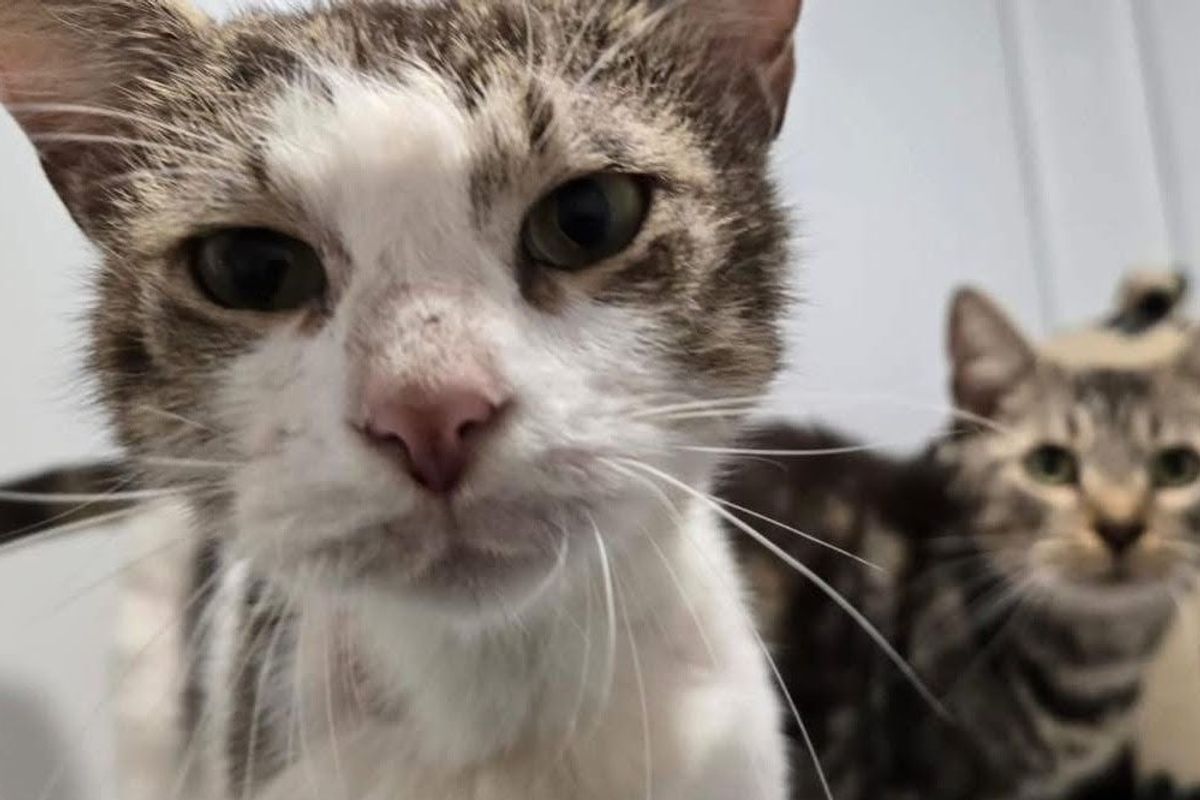
Flea-ridden Basil and Hazel had been abandoned in a park
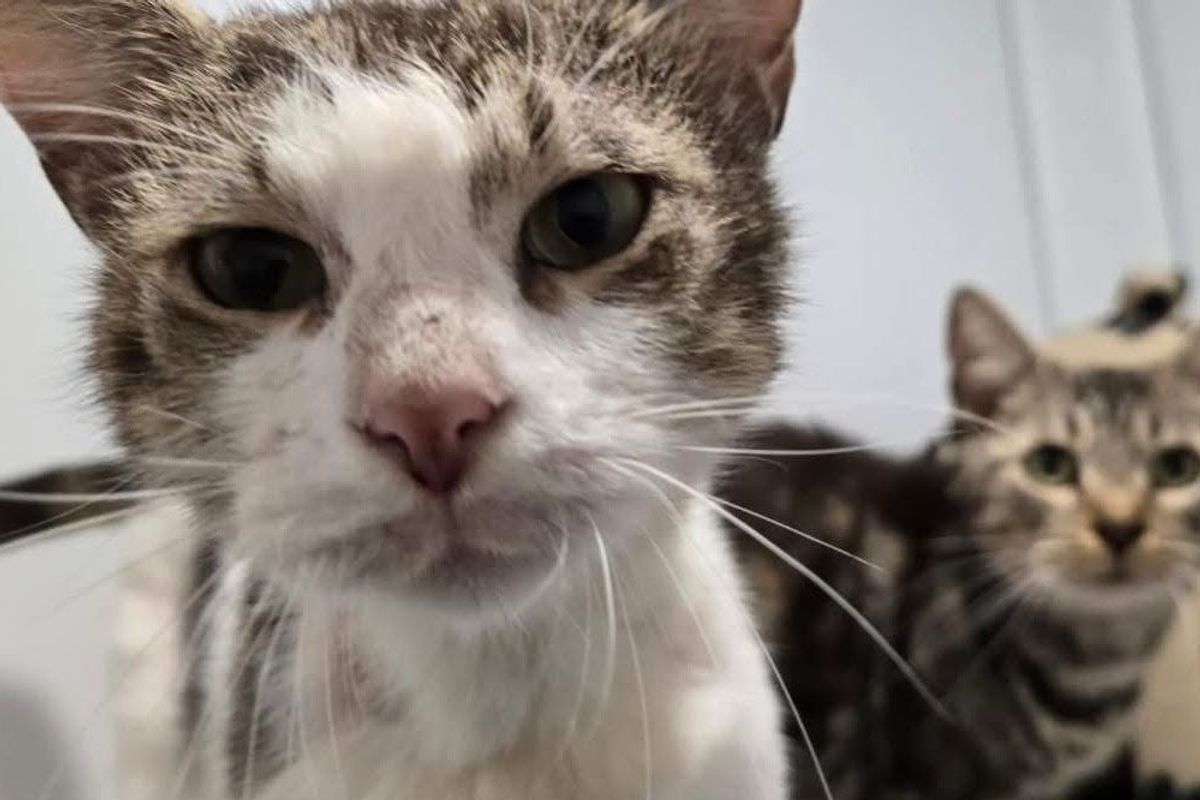
Basil, front, and Hazel (Image: rspca.org.uk)
Two neglected cats abandoned in a taped-up plastic laundry basket are making good progress in the care of the RSPCA in East Yorkshire. Basil and Hazel, as they have been nicknamed, were in poor health when they were found by a member of the public in Weelsby Woods, Grimsby, last month.
The cats were underweight and dealing with untreated flea allergies, which had caused them to itch and turned patches of their skin raw. Neither of them were microchipped or neutered and the RSPCA’s Goole and district branch, which is now looking after the pair, described both as “starving” when they first arrived.
Anyone who recognises the cats or has information about the incident, which happened on August 19, is being urged to contact the RSPCA’s inspectorate appeal line on 0300 123 8018. Georgina Petty, from Goole and district branch, said: “Basil and Hazel arrived in a distressing condition but we’re really heartened by the progress they’ve made with us over these past few weeks, thanks to appropriate veterinary care, regular meals, a comfy place to sleep and lots of fuss.
“End Cottage Veterinary Clinic have been wonderful and we’d like to thank them for everything they’re doing to help us return Basil and Hazel to full health, and to our many supporters who’ve been moved by their story and donated towards their care. They are lovely-natured cats and once they are fully recovered we’ll be looking for a new home for them together.
“Sadly our volunteer-run branch deals with animal abandonments every week and it never gets any less upsetting. We would always urge people to seek support rather than resorting to leaving pets in vulnerable situations.”
Basil, who is between four and five years old, and Hazel, who is approximately three, will both be neutered, microchipped and vaccinated prior to adoption. The RSPCA has also thanked the member of the public who took the cats home and got them to a vet before they were collected by RSPCA animal rescue officer Caitlin Houston.
The charity currently has around 3,000 cats in its care at centres, branches, foster homes, vet clinics and private boarding facilities – a higher number than dogs, which is unprecedented. It is appealing for more adopters and fosterers to come forward so more cats can be rescued from cruelty and neglect and recover in a home environment, which is much better for their overall welfare.
With a peak in cat breeding between May and September, the RSPCA is also reiterating its plea to owners to neuter their pets to help stem a capacity and welfare crisis during the so-called “kitten season”. There is a misconception that cats can only become pregnant when they are older, or that it is healthy for them to have at least one litter of kittens.
This is not the case – female cats can become pregnant from as young as four months old, so neutering at this age is crucial, says the charity. Neutering male cats can stop them spraying to mark territory, and from getting injuries while fighting. They are also less likely to wander as far.
Having them snipped can also stop cats from spreading the FIV Virus – which is spread through bites, often between male cats fighting over a mate. The RSPCA’s Goole and district branch is a separate, self-funding, volunteer-run charity.
To find out more about their animal welfare work locally and how you can get involved, visit their website.
Did you know you can make Hull Live a preferred source of Hull news in Google, which will mean you get more of our breaking news, exclusives, and must-read stories straight away? Here’s more information about what this means and how to do it – you can also do it straight away by clicking here .