


A new project could help change regional inequalities in access to advanced diagnostic imaging
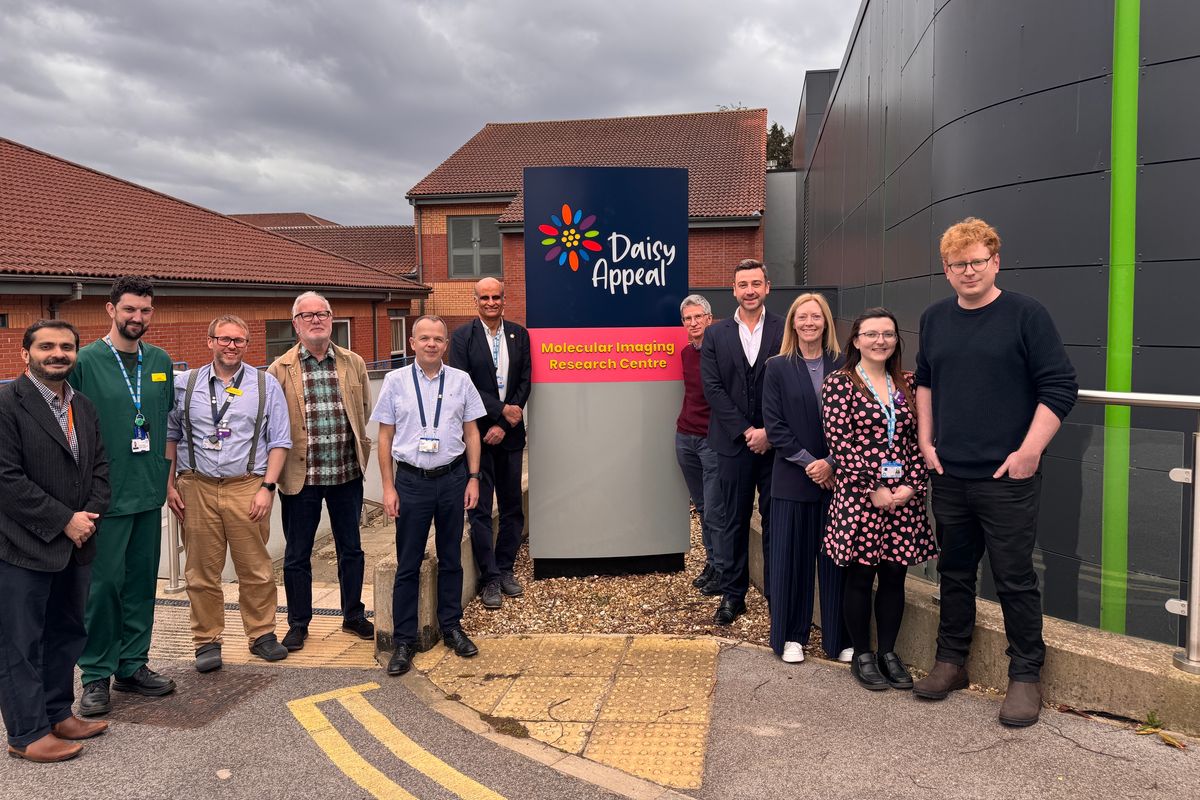
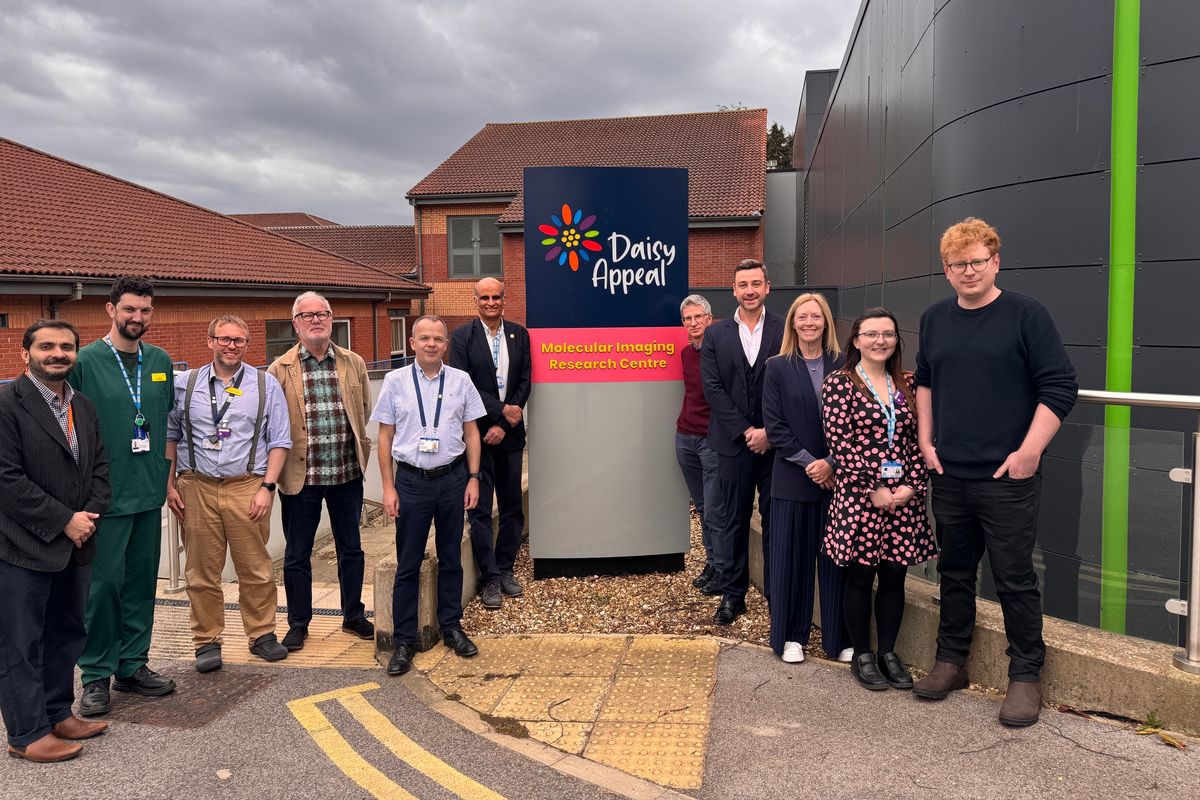
From left: Dr Najeeb Ahmed, consultant radiologist and clinical lead PET/CT and Nuclear Medicine, HUTH; James Hargraves, group associate chief pharmacist, HUTH; Glenn Woolley, principal clinical scientist nuclear medicine physics, HUTH; Prof Nick Stafford, founder and chair of Daisy Appeal Charity; Dr Graham Wright, consultant clinical scientist, lead for nuclear medicine physics, HUTH; Dr Saleem Azeem, clinical and external engagement director, MIRC; Dr Ged Avery, consultant radiologist, HUTH; Oliver Green, service development manager, Novartis; Elaine Jackson, service development lead, Novartis; Rebecca Hargreaves, quality control manager, MIRC; Dr Louis Allott, director of radiochemistry (Fractional), MIRC.
A new partnership to fund a physicist at Castle Hill Hospital is making the Hull area a regional hub for advanced imaging diagnostics. Hull University Teaching Hospitals NHS Trust (HUTH) has joined forces with major medicines company Novartis to support diagnostic molecular imaging services which are considered among the best in the UK.
It coincides with the newly launched Molecular Imaging Research Centre (MIRC) at the Cottingham hospital. The new partnership includes more than two years of funding for a physicist, at Castle Hill Hospital, to support the introduction of a Gallium radiopharmaceutical service and Gallium-Positron Emission Tomography (PET) imaging capability.
Gallium radiopharmaceutical is a form of nuclear medicine that uses a gallium isotope attached to a targeting molecule. It is injected and accumulates in certain tissues and tumours, allowing clinicians to detect diseases such as cancer using scans.
After the initial 27 month funding period, funding will be taken on by HUTH, supported by charity the Daisy Appeal, which has developed and will operate the MIRC facilities. The gallium-68 labelled radio-diagnostic agents are produced using a Gallium generator.
And because the isotope has a short half life of just over an hour, on-site production is essential. With the recent acquisition of a Gallium generator, MIRC will soon begin producing these agents for clinical use in Hull.
Gallium-PET imaging is already widely used in the management of nerve and gland (neuro-endocrine) tumours and prostate cancer, while clinical trials across the world are exploring its use in other cancers to support patient selection and monitor response to new therapies.
Dr Saleem Azeem, clinical director, Molecular Imaging Research Centre, said: “The introduction of Gallium-PET services in Hull is expected to help address regional inequalities in access to advanced diagnostic imaging. Patients from centres without these facilities will be able to access molecular imaging at Hull, supporting clinical trial participation, therapy readiness and more equitable access to specialist scanning closer to home.”
Did you know you can make Hull Live a preferred source of Hull news in Google, which will mean you get more of our breaking news, exclusives, and must-read stories straight away? Here’s more information about what this means and how to do it – you can also do it straight away by clicking here .