


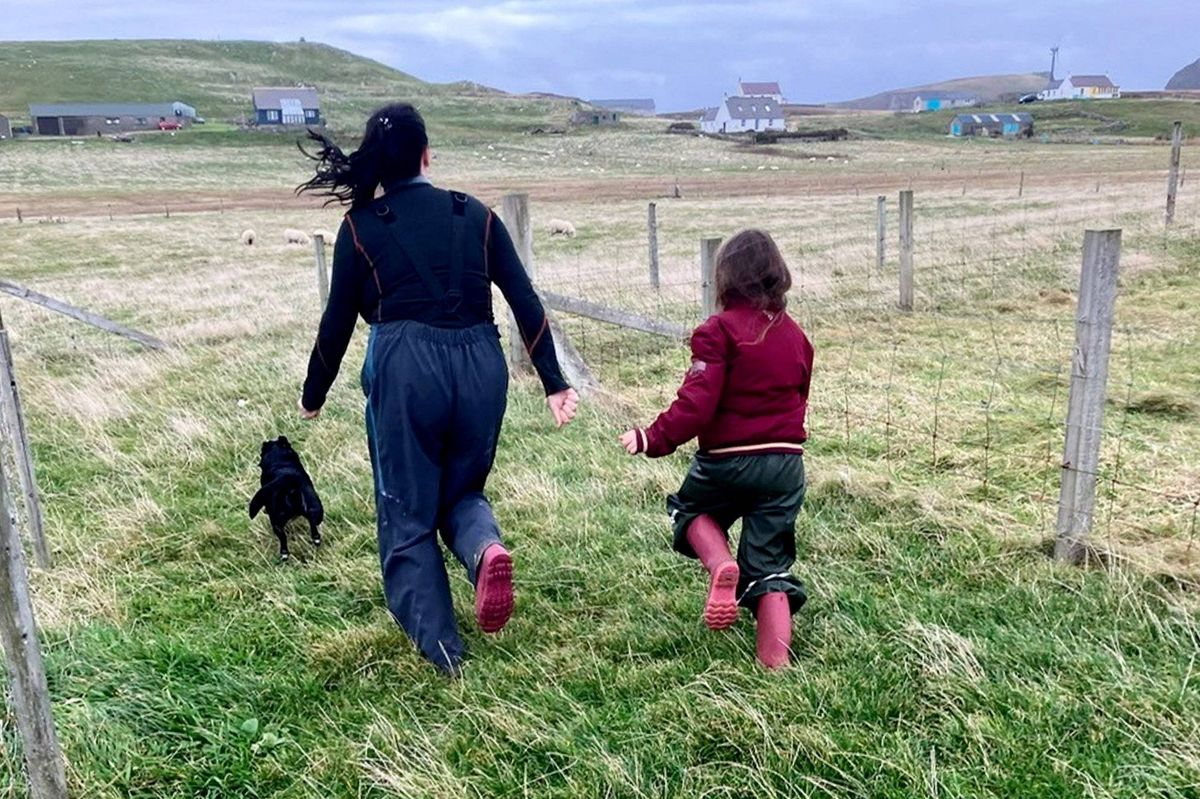
A family who moved to Fair Isle — Britain’s most remote inhabited island where just 50 people live — say it takes seven hours by ferry to get a takeaway curry delivered
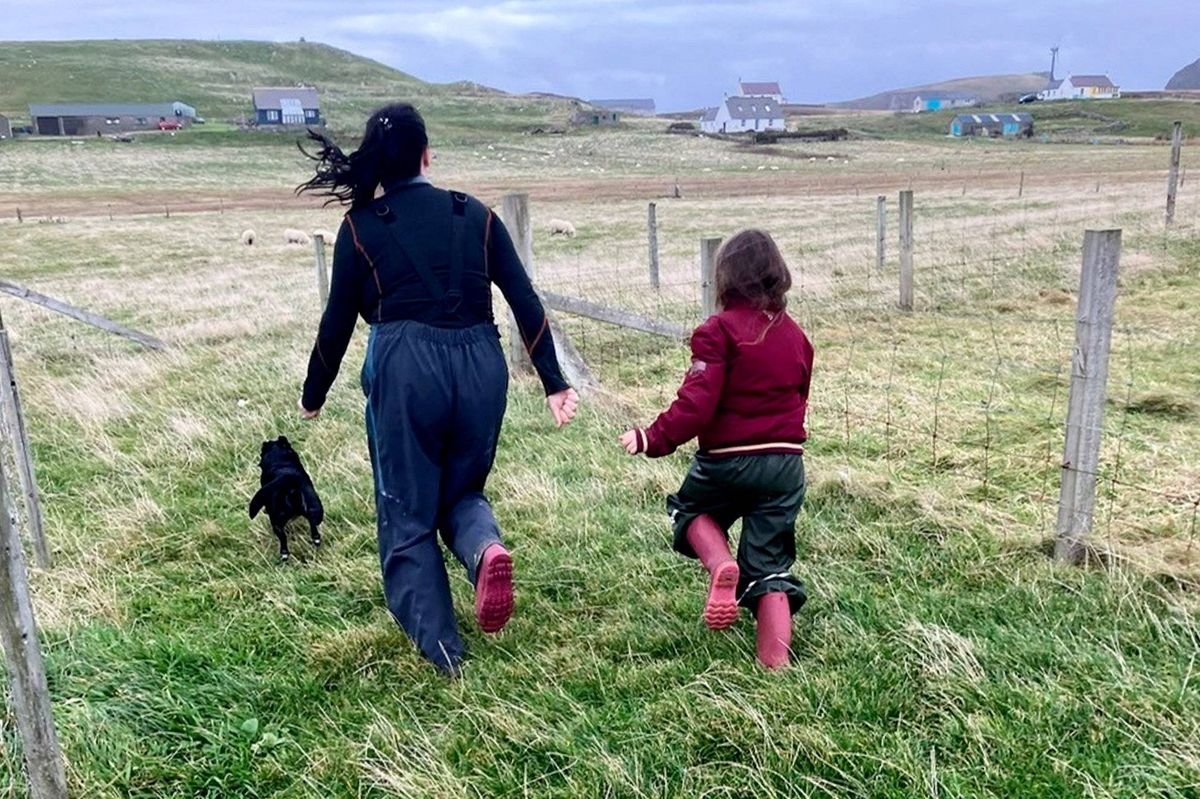
Katy, an early years practitioner, and Josh, an electrician, had almost no work-life balance and ‘lived to work’(Image: Katy Phenix/SWNS)
A family who relocated to Britain’s most remote inhabited island, home to just 50 residents, say it takes seven hours to have a takeaway curry delivered to their door. Katy Phenix, 33, her partner Josh Moore, 35, and their children uprooted their lives to Fair Isle in search of a more peaceful existence, having grown weary of gruelling 12-hour working days.
Katy spotted an Instagram advertisement seeking people to live and work on the Scottish island, situated near Shetland, and signed up “on a whim”. The family applied to move to the isle — where birds outnumber people — despite never having set foot there before. Resident numbers are strictly regulated, with newcomers only permitted when existing inhabitants depart.
Selection interviews
The couple were required to undergo a thorough interview process with both the island’s residents and the National Trust for Scotland to confirm they were a “good fit”. Four months on, Katy and Josh made the move to the UK’s most geographically isolated inhabited island.
They arrived with their children, Hetty, six, and Teddy, 11, along with three dogs and four cats. Despite the dramatic change in lifestyle, the family say they are now living the “absolute dream” — with the only thing the children miss from the mainland being a trip to McDonald’s.
However, they have learnt to be resourceful, once organising an Indian takeaway via the island ferry in what they describe as a “military operation”, taking seven hours to travel from Shetland to their croft. Katy revealed they can place the order with the Indian restaurant at midday, arrange a taxi to collect it and deliver it to the ferry.
The takeaway is collected from the ferry and reheated for dinner upon its arrival. Aside from lacking convenient access to their preferred takeaway, Katy, an early years practitioner, and Josh, an electrician, described the relocation as an absolute dream.
Lack of work-life balance previously
The couple had virtually no work-life balance and “lived to work” when they submitted their application from North Yorkshire in March 2026. They sold their three-bedroom new-build property in Redcar and are currently renting a five-bedroom house with 17 acres of land and five outbuildings from the National Trust.
She said: “We had a really large mortgage in England, but now pay peanuts in comparison to live in one of the most beautiful areas of the UK. It feels like we’ve won the lottery. I don’t think you could get a bigger change of lifestyle – but as a family we are all loving it.
“We were kind of like passing ships in the night before. Neither of us thought there was any chance at all we would hear back from our application, but the more we researched into it the more we were totally hooked.”
Fair Isle is situated approximately 24 miles south of the Shetland Mainland in the North Sea. Following their interview in May 2026, they were offered the chance to relocate to the island.
Massive gamble
Katy, who now works roughly four hours a day Monday to Friday, said: “It was a massive gamble and a long journey. It cost us £8,000 for the move in July.
“The only thing we knew is that there was a five-bedroom house, and it had 17 acres of land and five outbuildings. We saw a floor plan, but that was out of date.”
Departing tenants Deryk and Hollie, along with their four children, have proved invaluable to Katy and Josh, sharing all their crofting expertise through a yearly planner and selling them their sheep to kickstart their own croft. Seven children currently live on the island – five attending school, one in nursery and a baby, with two teenagers studying at secondary school on the mainland.
Hetty and Teddy were able to speak with the school beforehand to help them settle in ahead of the move. Fortunately for them, a six year old girl and an 11 year old boy already lived on the island, providing them with “an immediate best friend”.
Katy said: “The little boy and Teddy are off all the time mushrooming, fishing, they’re in our outbuildings making weird contraptions out of wood. Hetty is such a little animal lover, she’s been out with the sheep and we’ve got hens she’s with all the time. We’ve not had many challenges at all.”
Without a secondary school on site, teenagers attend a school on the mainland with complimentary accommodation and regular trips home. Every half term, the Fair Isle youngsters visit to meet their future classmates and ensure a seamless transition when they start school.
The island boasts a pub within its bird observatory during the summer months, a shop open four days a week, a Post Office and even Amazon Prime delivery. A nurse is also based on the island, and should any medical concern escalate, a helicopter from Shetland can reach them within 15 minutes to airlift patients to the mainland. Josh has kept himself busy as the island’s go-to handyman.
Katy said: “He’s been out today fixing someone’s washing machine. He’s re-plumbed our house, he’s done everything.”
Slower pace of life
For Katy, the greatest reward has been the considerably more relaxed lifestyle and the quality time spent with her family.
She said: “We’re not stressed and overworked, we’re so much more present for the children. I remember Teddy once said ‘oh mum you’re so much nicer in the school holidays’. It was a throwaway comment, he didn’t mean anything by it.
“It stuck with me. I never wanted to be that mum, but it was kind of the way life pans out and you accidentally get there.
“This has just given us that time to breathe and be as a family. We do everything together and that’s made it totally worth it.”
What might ordinarily be a five-minute task can take islanders up to three weeks to complete, as forward planning for deliveries is essential. Residents are equally at the mercy of the weather, with the small aircraft or ferry service frequently unable to run as scheduled.
Mastering the art of shearing and herding 30 sheep and a ram has proved no mean feat at times, but it’s “all hands on deck”, and the children thoroughly enjoy it. Teddy uses his shepherd’s hook to round up the flock, as the family doesn’t own a sheepdog.
Katy said: “I think the massive misconception is that it’s lonely and there’s nothing to do. That couldn’t be further from the truth.
“Our lives haven’t actually changed that much. We’ve got something on every day.
“Everybody is here to help you out. I have a really good group of mum friends here. I do pilates and yoga. This is the most social I’ve ever been and Josh is quite an introvert, so he’s really come out of his shell now.”
Full calendar
Their schedule is perpetually packed with fancy dress parties and harvest festivals. Katy is even picking up the traditional craft of Fair Isle knitting from a fellow resident, helping to preserve the local culture — a skill warmly embraced by the National Trust to uphold heritage.
Crofting and fishing were once the island’s primary livelihoods, yet today its economy is considerably more varied. Remarkably, the island is home to significantly more bird species than people, with upwards of 350 different varieties recorded.
To relocate to the island, you must wait for an existing family to depart. The National Trust for Scotland then examines all applications to verify suitable skills, before shortlisting and interviewing candidates.
Additional sought-after abilities include hands-on experience in crofting and land management, trade expertise such as plumbing knowledge, joinery, or maritime skills.