


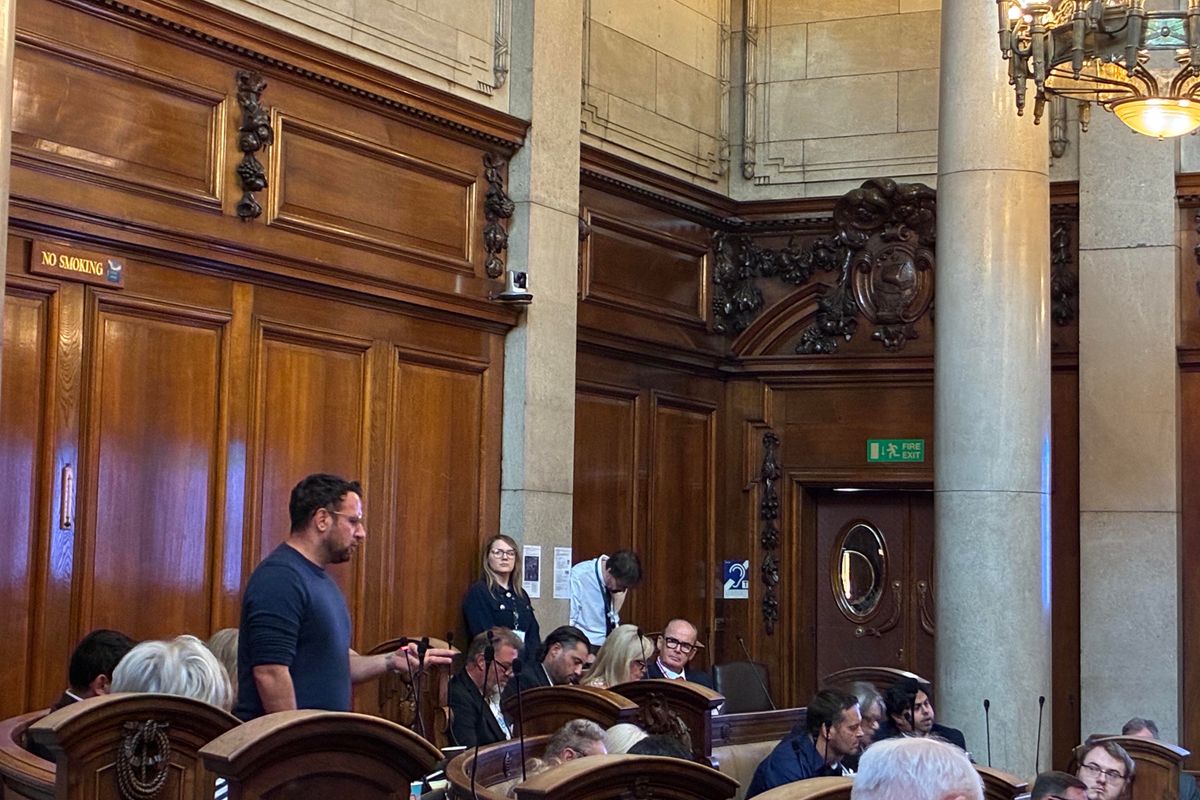
Reform’s comments in the council chamber were nothing more than an ‘outrage’, according to the leader of Hull’s Labour group
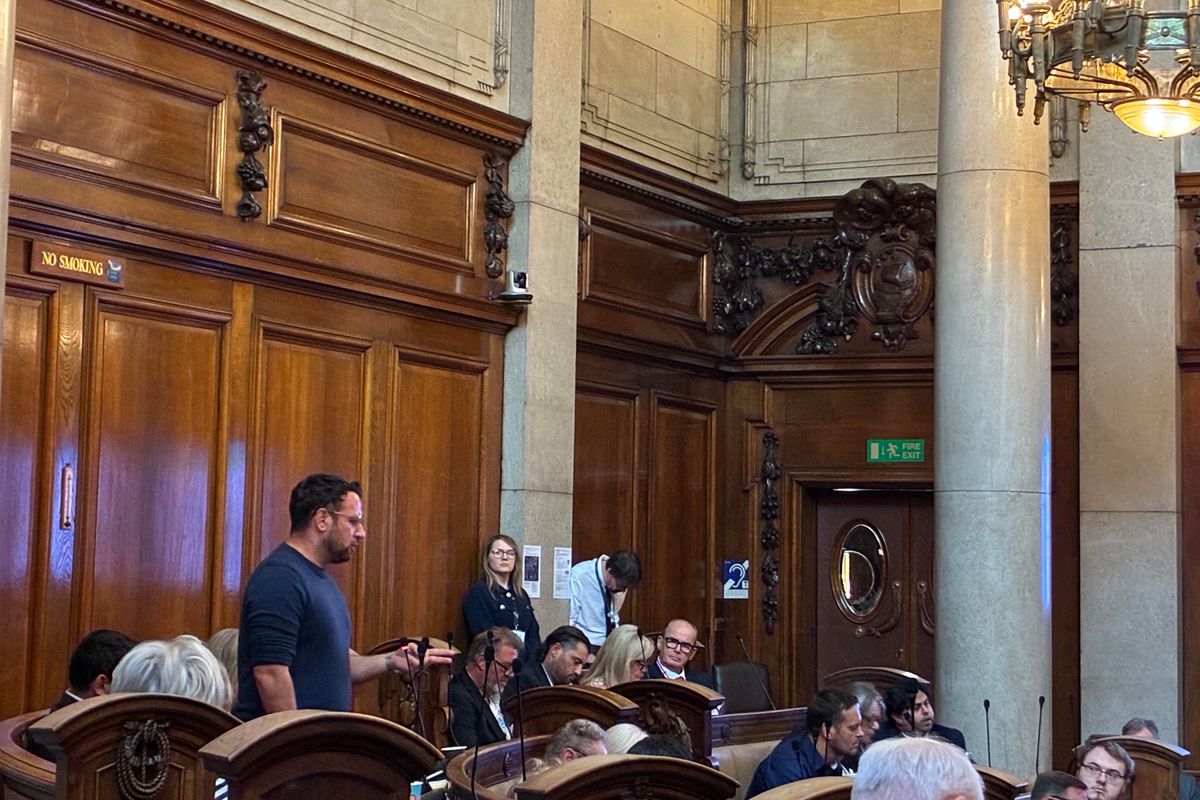
Cllr Shane McMurray put forward a motion to better regulate HMOs in Hull
A heated debate over the proliferation of shared houses divided Hull’s Guildhall, as the city’s councillors clashed over housing standards, rogue landlords, and national asylum policy. A motion to improve house in multiple occupation (HMO) regulation was eventually passed in the full council meeting, but not before a polarising debate that made clear two distinct visions for the city.
The motion was put forward by Shane McMurray (Labour – Central ward) who is campaigning for higher quality housing in the city and demanding landlords of large shared properties in Hull do far better in managing them. But Reform councillors felt his motion did not go far enough and argued for a far stronger one that would greatly reduce the number of HMOs right across Hull.
Sparks flew in The Guildhall as opposing politicians debated not only housing in Hull but immigration and the provision of services for local people. The Reform amendment pushing for stronger rules against HMOs and protection for more postcodes in Hull was not passed, with Labour and Liberal Democrat councillors voting against it.
A HMO is defined as a property rented out to three or more people who all share basic amenities like a kitchen, bathroom, or toilet. The meeting heard how there are now roughly 2,000 HMOs in Hull and some of these properties are causing increasingly significant disruption to the daily lives of local residents.
Fundamentally changes the fabric of an area
The chamber heard how concerns are regularly raised around overcrowding, anti-social behaviour, bins and waste disposal, car parking and other issues. Some residents have to deal with ‘horrific’ behaviour, admitted Cllr McMurray who wanted the debate to focus on the ‘concentration’ of HMOs in some parts of Hull.
“Some streets have 50% concentration of HMOs, and what is the impact of that? It fundamentally changes the fabric of an area. You are artificially increasing the population, so we see more flytipping, more anti-social behaviour and more noise,” he said.
“The people who live near a high concentration of HMOs are being disproportionately affected by the impact of them. A big issue is the use of HMOs by so-called ‘supported living providers’ – who are actually providing very little support.“
Cllr McMurray told the chamber that this can mean 25 people living with drug addictions next to each other on a single street which is leading to ‘awful’ conditions for local residents. One armed forces veteran told him he was regularly woken at 3am by drug addicts knocking on his door or window asking for drinks and cigarettes and even offering sex for money.
There are too many ‘dodgy’ landlords who live on the opposite side of the country and are raking in huge sums from rent, the chamber heard. Cllr McMurray also claimed the so-called ‘supported living’ organisations were making thousands of pounds per week for housing people with complex addiction needs, but too often actually doing very little to help drug users get clean.
Cllr McMurray stated he did not want the issue to be ‘hijacked’ to be about asylum. “In the years I have been a councillor I have never had a single call about a problem with a refugee. But I get complaints about these supported living providers every single day. There is a big difference between the problem and the perception of the problem,” he told the chamber.
The motion was backed by Cllr Abhimanyu Singh (Labour – Avenue) who said the issue of HMOs was not about immigration and explained: “It is first and foremost a housing issue. We should not be pretending it is an immigration or asylum problem just to score political points. We must not punch down.”
Reform state: ‘you can’t ignore the elephant in the room’
Criticism of HMOs and the allocation of housing to asylum seekers is not racist, Reform councillors stated who, in fact, agreed with the urgent need to tackle the HMO situation that is leading to some residents feeling like their streets are overrun.
Cllr Duncan Graham (Reform – Marfleet) told the chamber that absolutely no-one should be living in draughty ‘slum conditions’ in Hull and that properties should be improved. But he argued: “It is just the sheer number of people who are living in these types of properties and the housing shortage that this city has.
“Our ‘City of Sanctuary status states ‘please bring more people’ and ‘please come’. But we can’t build the houses quick enough, which means more people go into HMOs.”
He told the chamber that many people in Hull were ‘frightened’ of HMOs because they did not want to live near properties that could be full of either immigrants or drug addicts. “That’s why ten Reform councillors are sat here, we are showing the concerns that people in Hull have. People voted for us and you can’t ignore the elephant in the room,” Cllr Graham added.
The Reform councillor warned against the idea that just spreading HMOs around the city would solve the problem of them. He argued that it wasn’t the concentration that was the issue, it was the sheer presence of the problem properties and their tenants that was worrying residents.
“That’s the problem with HMOs, they are just filled with people who don’t work and exist on the system. It started with the ‘Boriswave’ [a pattern of migration stemming from Boris Johnson’s conservative government’s policies]. People coming here have to be housed and they have to go into HMOs. The quality of this housing is horrendous. We should get involved to make things better for them. It’s not about being racist, we just want to take care of the people who voted for us” Cllr Graham told the chamber.
But Reform views on immigration an ‘outrage’
But Reform’s comments were nothing more than an ‘outrage’, according to the leader of Hull’s Labour group. Cllr Daren Hale (Labour – St Andrews and Docklands) told the chamber that when Labour were previously running Hull City Council they brought in Article 4 directives to manage the number of new HMOs in parts of the city. But he admitted it now needs to go further.
Cllr Hale stood up to slam the Reform group’s forthright views as being not acceptable: “Do not divide this city based upon where you were born. It is an outrage.”
He explained he was unhappy the Portland Hotel in his ward was being transformed into a large HMO, arguing it would’ve been better being turned into flats.
Cllr Hale added the size of HMO rooms, some similar to a P&O ferry cabin, were restricting Hull’s economy as it limited what people could buy: “From a regeneration and economic point of view, we need people in flats and houses. It’s not about HMOs per se – it’s about being a regulated planning process that we can drive up.”
National asylum pressures: a limit to numbers?
Cllr Paul Drake-Davis (Liberal Democrat – Beverley and Newland) claimed the problem with Hull’s HMO lies with the 50% threshold laid down by the previous Labour administration at the city council. He made clear that Hull should learn from how other cities are successfully managing demand for accommodation, highlighting the fact that Brighton has a limit of ten per cent of HMOs on a street, a rule which has been in place since 2013.
Some cross-party agreement in dealing with HMOs did develop in the chamber. Cllr Salman Anwar (Reform – St Andrews and Docklands) argued for protections against HMOs across the whole of Hull, not just pre-determined parts of the city.
He said: “To have ten Reform councillors sat here proves people have genuine concerns about HMOs being used for asylum accommodation – particularly now The Royal Hotel has been closed. National asylum pressures shouldn’t be pushed here. Transient asylum seekers don’t make for sustainable communities.”
The chamber heard how Hull needs to have more residents with a genuine stake in the future of the city, with the regulatory framework needing to give local people more of a say in how family homes are changed into flats and HMOs.
Warning on ‘developer greed’
Cllr Karen Wood (Labour – Avenue) warned against the ‘demonisation’ of both HMOs and asylum seekers living in Hull. “We have lots of large Victorian properties in Hull, they are difficult to maintain and people want to downsize. But developers are just going for the biggest bang for their buck, often completing poor renovations,” she said.
“We are finding that developers that were originally asking for houses to be turned into three flats are now turning them into HMOs for twelve or more people. That means more rubbish, more parking and other problems. They con us by saying they are for young professionals, but they end up being properties for those who can least afford it. We really need to tackle these developers who are profiteering from our communities.”
Did you know you can make Hull Live a preferred source of Hull news in Google, which will mean you get more of our breaking news, exclusives, and must-read stories straight away? Here’s more information about what this means and how to do it – you can also do it straight away by clicking here.
The Lord Mayor, Cllr Maria Coward (independent – Boothferry) stepped into the debate to tell the chamber to ‘calm down’ as tensions boiled over. The Reform amendment did not succeed. All ten Reform councillors voted for it, but all independent councillors, Labour and Lib Dem groups were united with 39 votes against it.
Given the right of reply, Cllr McMurray finally urged councillors to remember that ‘asylum seekers are human beings’ and underlined the importance of Hull City Council moving more quickly on delivering a local plan and added: “The issue is that there are not enough houses. That’s the real crux of this.”
The motion, including the Lib Dems amendments, was eventually approved with 51 votes.
To find planning applications, traffic diversions, road layout changes, alcohol licence applications and more, visit the Public Notices Portal.