


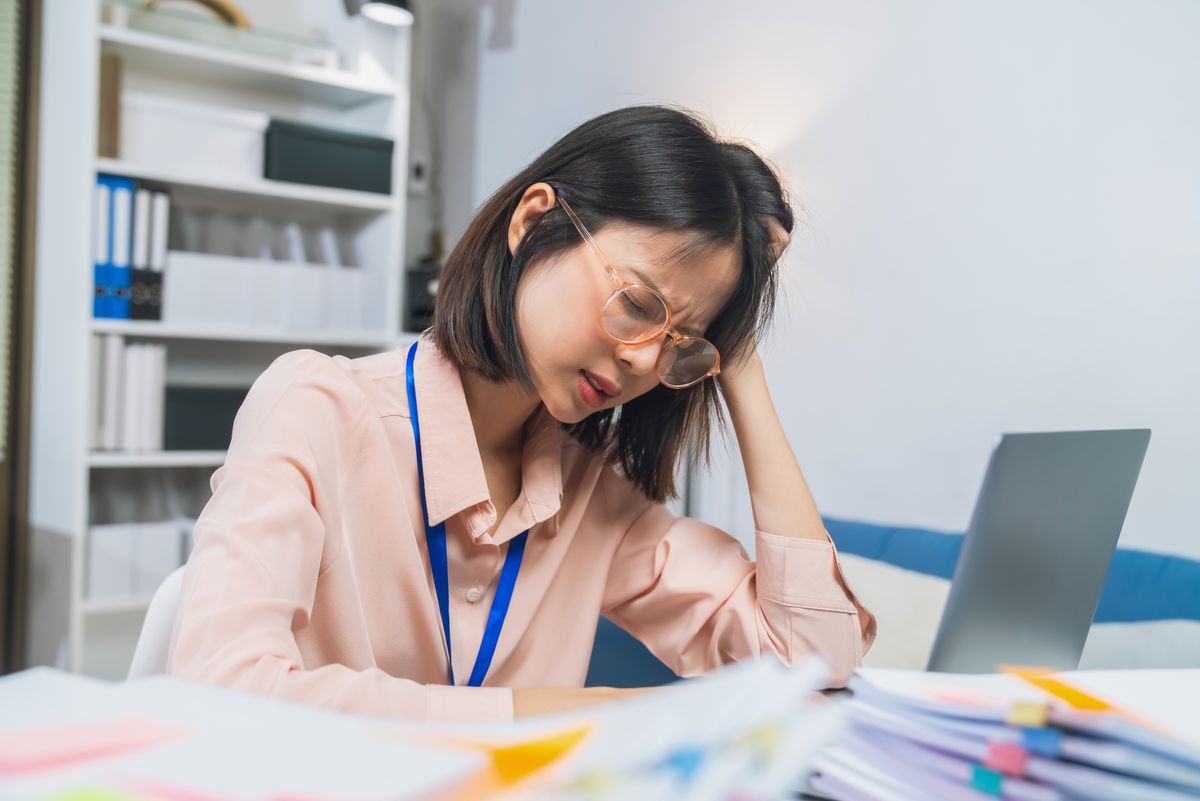

There could be a reason for feeling tired when the clock hits mid-afternoon – and there is an easy way that could help fix it
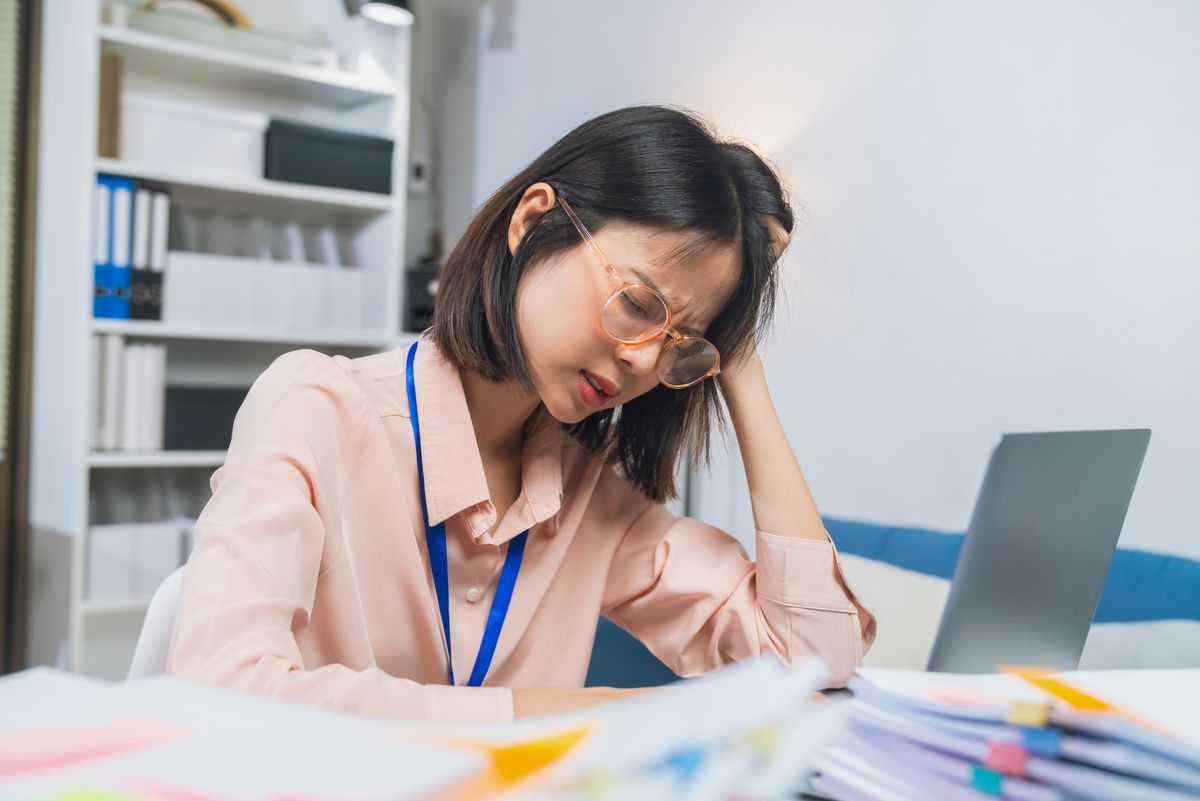
Young Asian businesswoman suffering from eye strain while working on laptop in office.(Image: Getty)
Many people find themselves facing a regular energy slump when the clock nears 3pm. While this can be down to your natural body rhythm, there can be another reason which can add to the problem.
A busy working day can make it surprisingly easy to go several hours without having a drink. By mid-afternoon, meetings, deadlines and everyday distractions may have pushed hydration to the bottom of the priority list.
While there is no scientific evidence showing that 3pm is the precise time Britons are most dehydrated, there is evidence to show that the 3pm slump is real. And hitting that time can serve as a useful reminder to check how much you have had to drink.
Why the Afternoon Is a Useful Checkpoint
Hydration levels change throughout the day as the body takes in fluid from food and drinks and loses it through urination, breathing and sweating. Research comparing individual urine samples with measurements collected over 24 hours found that afternoon samples may better reflect overall daily urine concentration than first-morning samples. However, the Bottin et al research focused on assessing hydration and did not establish that dehydration peaks at a particular time.
Yusuf Okhai, Managing Director at ION8, said: “There is no universal dehydration hour because everybody’s needs, activity levels and drinking habits are different. But 3pm is a useful time to pause and think about how much you have actually had to drink. If your bottle has barely been touched since the morning, hydration may have slipped off your list of priorities.”
Could Dehydration Contribute to the Afternoon Slump?
Dehydration is not necessarily responsible for the afternoon dip. Sleep, circadian rhythms, food, workload, stress and physical activity can all affect energy and concentration. However, controlled studies suggest that mild dehydration can influence how some people feel.
One experiment involving young women linked a body-mass loss of approximately 1.36% with increased fatigue, headaches, difficulty concentrating and a greater perception of task difficulty. The study, published in The Journal of Nutrition, found most measures of cognitive performance were unaffected.
A separate study published in the British Journal of Nutrition involving young men associated dehydration of approximately 1.59% with fatigue and changes in vigilance and working memory.
According to Okhai, these controlled experiments do not prove that dehydration causes the everyday 3pm slump. They do, however, suggest that fluid intake is one sensible factor to consider when tiredness sets in.
Your Morning Coffee Still Counts
Tea and coffee are sometimes blamed for dehydration because caffeine can increase urine production, particularly when consumed in high doses. However, moderate consumption does not automatically leave regular coffee drinkers dehydrated.
A study involving habitual male coffee drinkers found no significant difference in several hydration measures when participants drank moderate amounts of coffee rather than water. As the study involved a limited participant group, its findings should not be applied to everyone without qualification.
The NHS also confirms that tea and coffee can contribute towards daily fluid intake, although caffeine should still be consumed in moderation. (NHS) “There is no need to treat your morning tea or coffee as the enemy,” Okhai explained. “The bigger issue may be allowing the rest of the day to pass without drinking anything else.”
Five Ways to Avoid Overlooking Hydration
- Start early : Have a drink as part of your morning routine instead of waiting until you feel tired or particularly thirsty
- Keep water visible : A bottle beside your laptop provides a much stronger reminder than one hidden inside a bag
- Connect drinking with existing habits : Starting work, finishing a meeting and taking a lunch break can all become natural prompts to drink
- Refill before travelling : Topping up your bottle before leaving work makes it easier to continue drinking when appropriate during the journey home
- Use 3pm as a check : Think about what you have consumed so far without assuming that feeling tired automatically means you are dehydrated.
Don’t Try to Catch Up All at Once
The answer is not to reach 3pm and suddenly drink a large amount of water. “I would not recommend waiting until the afternoon and then trying to catch up,” Okhai said.
“A better approach is to drink regularly and build reminders into your surroundings and daily routine.” The NHS recommends drinking regularly throughout the day. Its general guidance is six to eight cups or glasses of fluid, although individual requirements may increase during physical activity, hot weather, pregnancy, breastfeeding and illness.
Make 3pm Your Reminder
Three o’clock is not the moment when every Brit suddenly becomes dehydrated. It is simply a memorable time to check whether work and other responsibilities have distracted you from drinking.
Okhai added: “Before automatically reaching for another coffee, look at your bottle. You may not need a caffeine boost—you may simply need a reminder to drink.”