


Hull City Council and East Riding of Yorkshire Council are calling for reform of death certification and explained how the system of confirming burials and cremations may have contributed to Bush’s crimes remaining undetected for so long
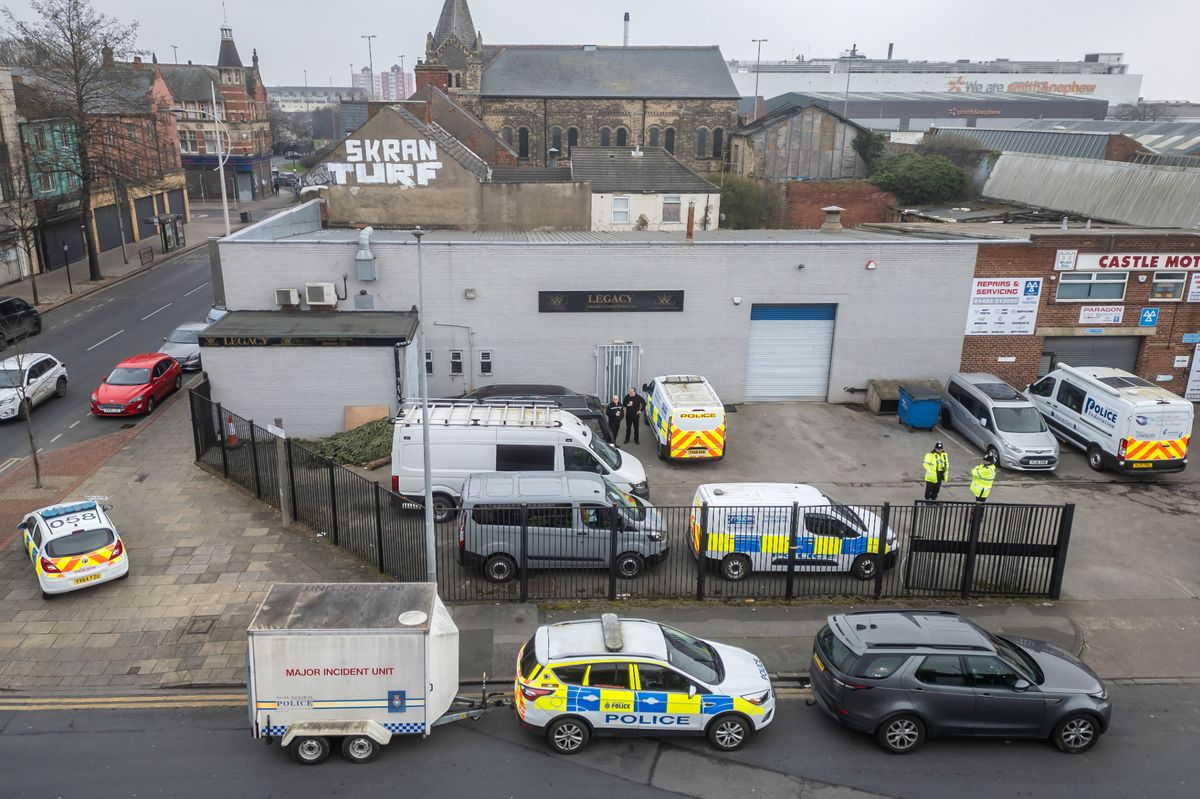
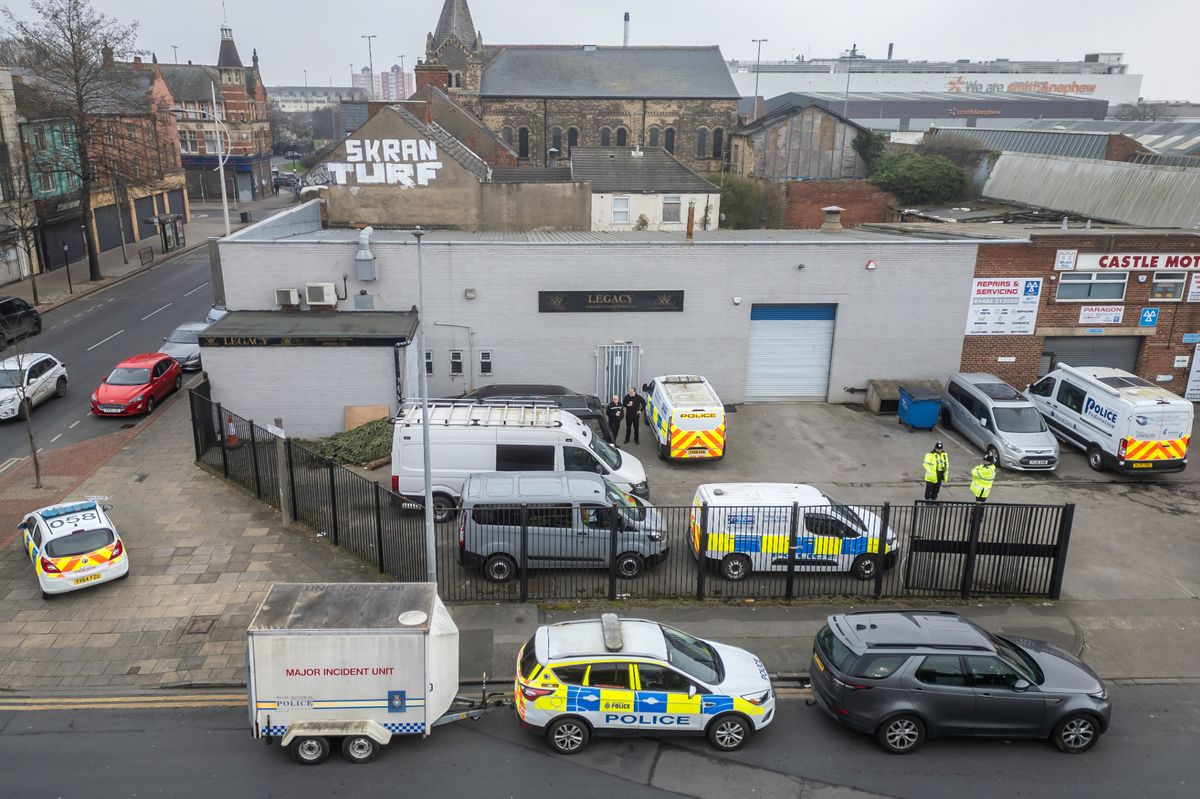
More than 30 bodies were found at the Hessle Road funeral parlour(Image: Danny Lawson/PA Wire)
The councils that were responsible for registering the deaths of the people in Robert Bush’s care have called for death certification reform as families affected by the crimes of the disgraced funeral director question how he was able to get away with storing bodies for months in his Hessle Road premises.
Following the Legacy Independent Funeral Directors scandal, in which Bush pleaded guilty to 67 offences and was given a 20-year prison term last week, Hull City Council and East Riding of Yorkshire Council have explained how an “outdated” system made it easier for Bush to get away with claiming to have cremated bodies that in reality remained in his warehouse.
During Bush’s sentencing hearing, High Court judge Mr Justice Hilliard questioned whether proper procedures relating to the Births and Deaths Registration Act 1953 had been followed, saying: “I was told that the registrar should check for outstanding returns but that in all cases here, the relevant parts of the forms were never returned to the registrar.” However, he added that he was told by both local councils that “it is not clear whether this would have changed the outcome of this case”.
When a funeral director failed to complete the necessary paperwork to inform the council a cremation or burial had happened, the authorities said that system relied on family members to confirm a cremation had taken place. In the case of bodies entrusted to Bush, many family members believed the cremation had happened.
It was only when the first allegations were raised against Bush that anyone would become aware that these cremations were not taking place. The councils said, since the investigation began into Bush in March 2024, they have been working with the General Register Office (GRO) on reforms to death certification and to understand issues.
The current process involves a three-part form, known as the ‘green form’, each part of which is handled by a different party. This form allows a burial or cremation to go ahead. Part A is kept by the registrar, while part B is given to the person arranging the funeral. Part C is given to the person organising the funeral to pass to the funeral director. The funeral director is entrusted with giving or emailing a scanned version of the document to the designated crematorium, which is not always necessarily local.
A joint statement by Hull City Council and East Riding of Yorkshire Council explained what happens next. It said: “Part C should then come back to the registrar after cremation or burial – to confirm the cremation/burial has taken place. This is normally completed by the crematorium and sent back to the local authority registrar.
“Please note, registrars are not told in advance which crematorium will be used, and due to a growing trend in unattended cremations, the body could be sent anywhere in the country. There is no separate way or digital system to track where a cremation is taking place or how far it has progressed, beyond the certification process.
“Registrars are expected, as part of the General Register Office (GRO) for England and Wales guidance, to check which Part C forms have not come back by reviewing the Part A records each registrar has kept in their book, and to notify the GRO if they cannot be confirmed/returned after being chased by phone calls/emails to the funeral director to inform the registrar/registration services.”
If Part C still does not come back, registrars should contact families to ask if the cremation or burial has taken place. “The issue here being in the case of Bush, families would have confirmed ‘yes’, having collected ashes, or even just attended a service ahead of cremation at Legacy’s onsite chapel,” the statement continued.
Families who have been affected by the scandal are also calling for stronger checks on funeral directors, to make sure it never happens again. Ron Marsh, son of Joyce Moulton whose body was one of more than 30 found in the Hessle Road warehouse, said: “Any government that thinks they don’t have to do anything about this are sadly out of touch with what’s been going on. You do not want to think of anyone else having to go through this, but that’s not to say people haven’t gone through this and don’t know. It does ask the question, if this is happening in Hull, is it happening anywhere else?”
Nigel Hotham, nephew of Mark Hotham whose body was the last to be identified in the funeral parlour, said: “It is my view had the councils intervened and wondered why they had 30 part Cs missing, it might be that my uncle might’ve been buried or cremated, and not left on the shelves. I’m not saying that would’ve stopped him. They’ve got a duty of care and why hasn’t there been a system in place that flags when they haven’t got these part Cs, and why are they all at Legacy? Why hasn’t anyone done a spot check, or rung around crematoriums?”
The councils say they are working with the national GRO office to introduce a more stringent process of registering deaths. One reason the processes were so outdated is that the average time between a death to cremation is now around 26-30 days on average, compared to 14 days when the guidance was first written. “More realistic timescales” have already been introduced, meaning both councils now report any unreturned part C forms after 12 weeks.
The councils also carried out “voluntary visits and checks at all 50 funeral directors in Hull and the East Riding” in three weeks following the Bush’s arrest to “review compliance with health and safety regulations, operational procedures and care of the deceased, and to offer support and advice to businesses”.
A joint response from Hull City Council and East Riding of Yorkshire Council said: “Recognising that these outdated processes would need modernising as part of bringing in full and proper regulation, both local authorities have been working with the General Register Office (GRO) for England and Wales, which has been considering death certification reform, including formalising the funeral sector’s role in this process.
“Since the incident first came to light in March 2024, both councils have collaborated with GRO to understand the issues, and, in September 2024, this resulted in changes to the national guidance around more realistic reporting timescales and access to data to check outstanding paperwork rather than manually, which has allowed both councils to manage the process more effectively at a local level and internally at our district offices (there are 8 offices across East Riding, and one main office in Hull). Both Hull City Council and East Riding of Yorkshire Council currently report any unreturned part C forms to the GRO after 12 weeks.”
Did you know you can make Hull Live a preferred source of Hull news in Google, which will mean you get more of our breaking news, exclusives, and must-read stories straight away? Here’s more information about what this means and how to do it – you can also do it straight away by clicking here .