



The judge praised the quality of the police investigation in ‘unusual and challenging circumstances’

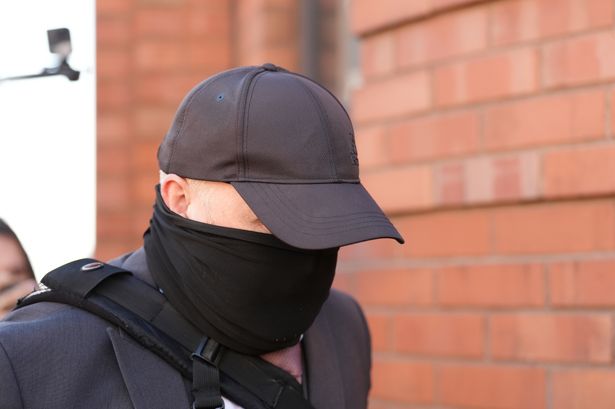
Robert Bush(Image: Annabel Lee-Ellis/PA Wire)
Crooked funeral director Robert Bush was condemned by the judge as taking “every opportunity” to “enrich himself” and callously acting with “dishonesty, deception and heartlessness” towards bereaved families.
High Court judge Mr Justice Hilliard told Hull Crown Court : “He has caused anguish and pain on a scale beyond comprehension. I do not think that I have ever known offences affect so many people and so many people so deeply.
“No sentence I pass can put right the harm that the defendant has done, particularly where so many deceased persons and bereaved relatives are concerned. The pain that is still being suffered cannot, I am afraid, be remedied by a sentence of imprisonment.
“They are two different things. I have very much in mind all those who suffered in a variety of ways as a result of the defendant’s crimes. What he has done has had a profound effect on the whole of a close-knit community.
“The defendant ran a funeral directors business in Hull and Beverley. His work meant that a considerable degree of trust was placed in him by bereaved family members to behave respectfully and responsibly towards their loved ones who had passed away.
“It might be thought that that could be taken for granted. Unfortunately, we now know that Mr Bush took any and every opportunity that presented itself in the course of his work dishonestly to enrich himself at the expense of those who used his services and at great cost to the dignity of some and the peace of mind of others.
“In their personal statements, many family members have asked why the defendant behaved in the way he did? In some ways, it might be more comforting if the answer waa a complex one.
“In fact, I have no doubt that the defendant behaved in such a deceitful way because of financial greed. He must, unfortunately, have a heartless side to him too, which enabled him to treat the living and the dead in the way that he did.”
Mr Justice Hilliard said: “And he was very confident that he would get away with what he was doing. He saw no reason, therefore, to moderate the scale of his offending.
“How did he get away with it? It is not my task to answer that question, but I have sought at least to explore it because it is of such concern to the families.
“As far as I can see, there were no checks over many years of the way in which he conducted his business. There was no oversight at all, for example, of the conditions in which the deceased were kept in his premises.
“A single visit might have been enough to bring some of what he was doing to a halt. Or even the prospect of a single visit might have meant that some of what he was doing never started in the first place.”
The judge added: “The proper procedures under the Births and Deaths Registration Act 1953 do not, on the information I have been provided with, appear to have been followed.”
When a relative reported a death and the registrar issued a certificate for burial, one part of it should be returned to the registrar confirming when and where burial or cremation took place. That part should be completed by the person responsible for burial or cremation.
When there was a non-return, the registrar should contact the General Register Office. “That did not happen in this case,” said Mr Justice Hilliard.
“The defendant was so preoccupied by his own enrichment that he behaved in a shocking and disgraceful way towards the deceased entrusted to his care, and his behaviour towards their living relatives was characterised by dishonesty, deception and heartlessness.
“If he could reuse a coffin that somebody had already paid for, he would do so. If it was cheaper not to keep the deceased in refrigerated conditions, he would do that too. The premises at Hessle Road were in an appalling state.”
The judge told the court: “Hard though it is to believe, so little was the regard that he had for the deceased, or for the feelings of their relatives, that he would provide them with what purported to be the ashes of a particular person at a time when that person had not, in fact, been cremated at all.
“Whose ashes he provided, or indeed what he actually provided at all on some occasions, we cannot know. It is not always clear which deceased person was even in the coffin at the time of what purported to be their funeral service at Legacy.
“Imagine the feelings of someone who scattered the ashes they were given, at what for them was a particularly meaningful location, perhaps because they would be mingled with the ashes of another relative, only to find out after the police investigation that they had not scattered the ashes of their loved one at all. It must have been someone else’s ashes.
“Imagine the feelings of someone who had some of the ashes they were given made into a trinket of some kind to wear as a comfort and a remembrance of a departed relative, only to find that they had been given the ashes of a completely different person.
“Imagine the feelings of parents on discovering that they had not been given their baby’s ashes but an unknown person’s ashes or something else altogether. And now they have nothing.
“These are examples of the harms the defendant has done. Unfortunately, we do not have to imagine how anyone would feel in the circumstances I have outlined.
“I have heard from the people who these things have happened to, over and over again. I have them all very much in mind. Every one.”
Mr Justice Hilliard said: “What the deceased lacked in dignity whilst they were in the care of Legacy is more than made up for by the dignity with which their relatives have conducted themselves on their behalves in these proceedings and the way they have spoken about their loved ones. Each one brought to mind for all of us, not as a count in an indictment, but for the precious individual that they were.
“Many of the relatives have expressed feelings of guilt about what happened. That is not unusual in criminal cases. People who bear no responsibility at all for a crime can sometimes wrongly blame themselves, perhaps in an effort to try to understand what has happened.
“In this case, I hope that, as a result of what they have now heard, they will realise that they are not to blame at all. All those who went to Legacy after a bereavement were taken advantage of at a time of extreme vulnerability.
“Few people know anything about funerals or about what is involved. They were entirely dependent on what the defendant told them.
“I hope they do not mind me saying that, if they continue to blame themselves, they only divert the blame from where it truly lies.”
The judge added: “It was on March 6, 2024 that the state of the Legacy premises in Hessle Road, Hull, became known. Thirty bodies were found in varying states of decomposition.
“The defendant was to tell the police that the bodies had not been cremated because of cash flow problems. I reject that entirely and without hesitation.
“There was no problem with the flow of cash as such. The only problem was with the direction in which the cash was flowing.
“It should have been funding what the defendant’s customers had understood they were paying him for, namely the proper care of the remains of a deceased person in accordance with the normal and expected practices of a competent funeral director – for cremation to take place straight after, or soon after, the conclusion of the funeral service, and to be provided with the correct ashes.
“The families of the deceased whose bodies were recovered in March 2024 had been told that cremations had been carried out when they had not. And some of the bodies had been kept at Legacy for a long time.”
The people involved had died in 2023 and 2024. “Families had been presented with ashes which could not have been those of their deceased relatives, who were still on the premises,” said the judge.
“Making that discovery has been traumatic in the extreme for all of them. And hearing of the conditions in which their loved ones were kept, and for how long, has been similarly traumatic.
“Most of the bodies were uncovered and on racks on both sides of a cold storage area within the premises. There was a naked body lying on a stretcher on the floor. Two people were lying on the floor of the cold room.
“Some of the bodies had hospital identity bracelets on wrists or ankles. Some had no identifying markers. The conditions were dreadful.”
Mr Justice Hilliard said: “There was no evidence of any form of mortuary register to show who was even there. A large quantity of unidentified clothing had been accumulated.
“No doubt it had been the wishes of relatives that the deceased should be dressed in this clothing when cremated. There was a large quantity of family photographs which had evidently not been placed in coffins as intended.
“The premises did not meet industry standards for the provision of adequate facilities and equipment for keeping deceased persons. The conditions in the cold room appeared to contravention health regulations.
“Non public-facing areas at the premises were in a lamentable state. Many of the rooms were suffering from damp and mould. Some had ceilings that were collapsing.
“Boxes of ashes were found in many areas of the premises. There appeared to be no systematic method of recording, storing or identifying where ashes were.
“The majority of cremated remains were stored in an undignified manner. The identification of the cremated remains was wholly inadequate.
“The defendant told the police that he had been having issues with the refrigeration equipment at the premises and that he had saved money by not running all of the available units. I have no doubt whatsoever that there was plenty of money available to repair or run units if he had only chosen to apply it in that way.
“He acknowledged to the police that a body should be cremated or buried within three to four weeks of death.”
The judge told the court: “The defendant had obtained money for his services on the basis that he would take proper care of the remains of the deceased in accordance with accepted standards, that he would arrange cremation immediately or soon after the funeral service, and that the ashes to be provided to a customer were the ashes of the deceased person.
“The total value of the funeral payments was £48,890 but the harm caused is far greater than that and measuring it in financial terms hardly seems appropriate.”
The judge said of the “appalling” care that Bush provided over cremations and ashes: “These discoveries have caused unimaginable heartache and distress.
“No ashes were returned in 11 cases of the 57. In 46 cases, relatives were given the wrong ashes. How betrayed they now feel.
“Husbands and wives, partners, parents, children, grandchildren, now discovering that they are left with nothing, or in some cases we heard, an empty plastic bag or a teaspoon of ash, which the police managed to recover for them.
“The total value of the funeral payments made to the defendant was £86,868 but again, it hardly seems right to mention that. The principal harm was caused in different ways.”
Other frauds by false representation related to babies of between seven and 18 weeks gestation who were brought to Bush for cremation. Ashes were presented in each case. They were not the correct ashes.
“The awful truth is that anyone whose loved one went through Legacy at any time when it was operating can now have no confidence as to how they were treated or as to whose ashes they have, unless, of course, they were one of the 30 bodies recovered in March 2024,” said Mr Justice Hilliard.
“I am satisfied that, in order to maximise his dishonest profit, the defendant paid as little attention as he thought he could get away with when dealing with those who were entrusted to him. He saw, for example, no need to pay for adequate refrigeration.
“He spent other people’s money on improvements to his own home while the Hessle Road premises were in a deplorable state. There was obviously a cost to carrying out a cremation but he would only pay that when it suited him to do so or when personal expenditure permitted, rather than when he had agreed to, or when proper practice or common decency demanded.
“He was in Arizona on holiday when these offences were discovered. He must have chosen not to spend the cost of his holiday on cremating some of those who were at Legacy.”
The judge said: “The offending was against a very large number of people. Each offence was part of a planned scheme of offending. None of the funeral plans was transferred to a third-party insurer and monies from the pre-paid plans were transferred into the personal accounts of the defendant and his wife.
“The defendant used paperwork purporting to show that funeral plans were with legitimate providers but no money was ever received by them. Some banks have refunded money to some of the victims of this fraud to a figure of just less than £60,000, as far as the police know.
“It might be more than that. Perhaps others will follow suit. The victims had used their limited means to pay for these plans to allay anxiety in the future.
“They have ended up with precisely the opposite result and lost their money in the process. The fraudulent trading took place over almost 12 years, from about a year after the defendant started running the business.
“In many cases, it would not have come to light for years until someone died and wanted a funeral and if, for any reason, the defendant was no longer in business or was unable to provide the service.
“The defendant was also in a position of trust and responsibility, which he abused because he was supposed to keep the money for funerals safe and secure until a funeral needed to be paid for in the future.”
There was “very slender mitigation” apart from the pleas of guilty. Families had been told that donations at funerals would be sent to the charities requested.
In the same period, just over £3m was received in Legacy bank accounts and Bush’s personal accounts between March 2017 and April 2024. In the same period, £369,000 was transferred from those accounts to Bush’s wife’s accounts.
“It is clear that the defendant benefitted very substantially from his fraudulent conduct,” said Mr Justice Hilliard. “He lived very well, enjoying expensive holidays and the like. There is financial harm here and emotional harm.”
The judge praised the quality of the police investigation in “unusual and challenging circumstances” and he said that they were to be commended for their work. He also drew attention to the work and “considerable involvement” of Victim Support as well as the help of the court staff, barristers and legal teams.