


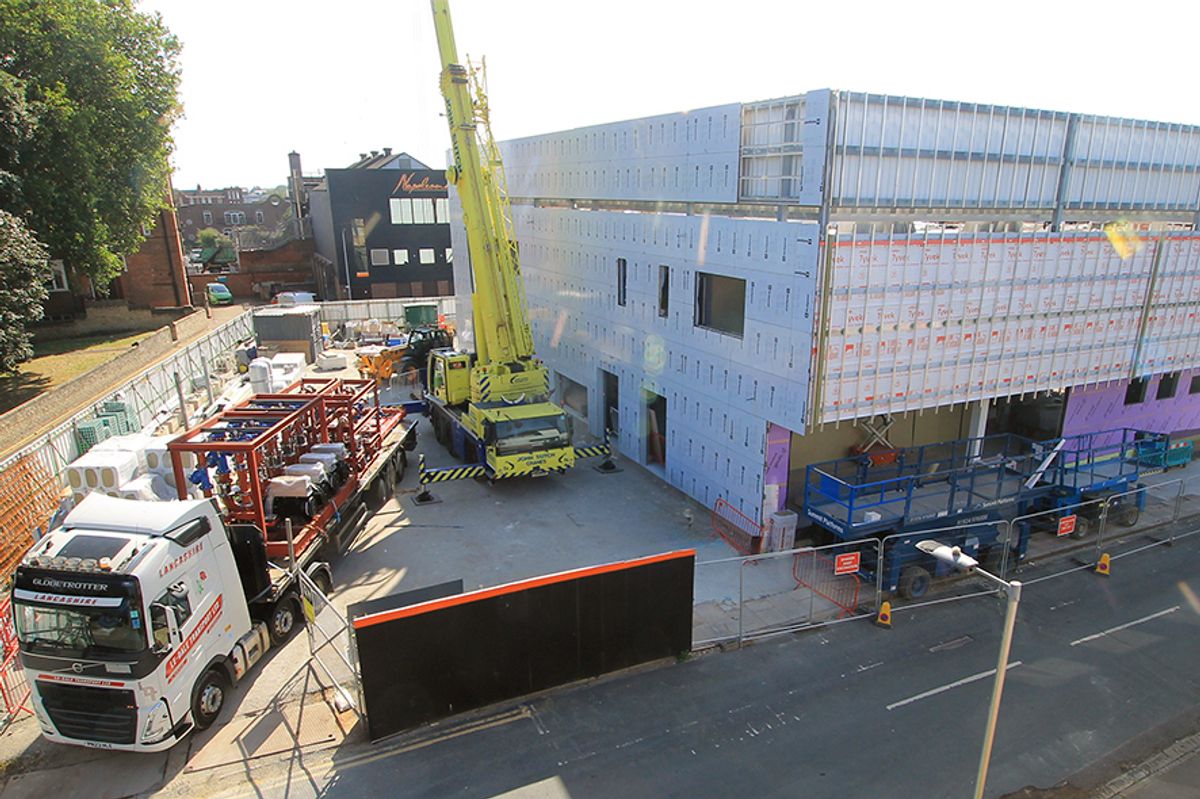
Modules set to play a part in Hull’s network were so large that a brand-new prefabrication facility had to be created to manufacture them
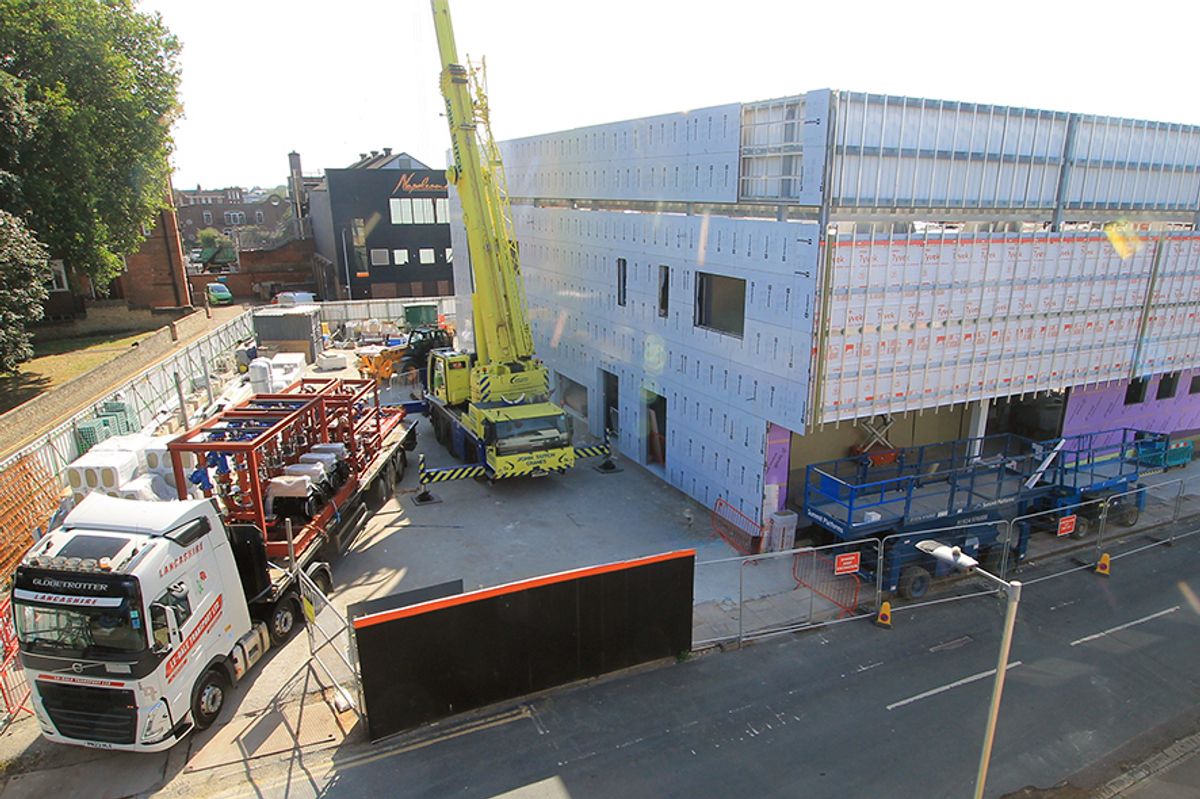
One of the skid modules arriving at the Hull Energy Centre.(Image: Vital Energi)
One of the UK’s biggest city decarbonisation projects has taken a major leap forward after essential components made their journey to the region. A number of modules vital to the new Hull District Heat Network this week completed the 111-mile journey from Blackburn to Hull, marking a major milestone for the city-wide scheme.
District heat networks consists of a series of pipes, used to transport heated water to buildings connected to the network. By tapping into energy from waste heat, the network will provide resilient, low carbon heat. Water within the network is heated by a heat source and then completes a loop of the district heat network, providing heat to connected buildings before returning to the heat source.
The Hull network will save an estimated 110,000 tonnes of carbon dioxide equivalent over 40 years. A number of UK cities, such as London, Glasgow, and Manchester already have similar systems in place, with many others keen to follow suit.
The modules set to play a part in Hull’s network arrived this week – and were so large that Vital Energi had to invest in a brand-new prefabrication facility to manufacture them, allowing off-site construction to take place alongside the build of the new energy centre.
Some assemblies measure more than three metres in height, while individual boiler skids weigh up to 11 tonnes.
Andrew Wightman, Vital Energi’s regional director, said: “One of the conditions of the Green Heat Network Funding was that certain buildings had to receive heat by extremely challenging deadlines. A traditional construction approach would not have met them. Instead of altering the engineering solution to fit our facility, we invested in a new facility.
“This allowed us to build the modules in tandem with the energy centre construction, ensuring the key dates are met.”
The modular plant assemblies include backup boilers, dirt separators and distribution pumps, all of which will play a key role in bringing heat to the city’s new heat network. Manufacturing the equipment off-site also brought other benefits, the firm said.
Bosses said that, by building the assemblies in Blackburn whilst construction progressed in Hull, project teams were able to reduce programme risk, improve quality control and minimise activities such as on-site hot works.
The heat network will play a key role in decarbonising buildings across Hull while providing a more resilient heating infrastructure for the city.
Last month, businesses and organisations were invited to help shape Hull’s low-carbon future. Hull City Council was seeking responses from potential suppliers of waste or surplus heat to the Hull District Heat Network (HDHN).
Early connections to the system, meanwhile, will include major residential developments alongside landmark institutions such as the Guildhall, Hull City Hall and Hull New Theatre.
Did you know you can make Hull Live a preferred source of Hull news in Google, which will mean you get more of our breaking news, exclusives, and must-read stories straight away? Here’s more information about what this means and how to do it – you can also do it straight away by clicking here .
To find all the planning applications, traffic diversions, road layout changes, alcohol licence applications and more, visit the Public Notices Portal .