


National Highways says completing the £355m project has been ‘one of the most complex engineering challenges in the UK’
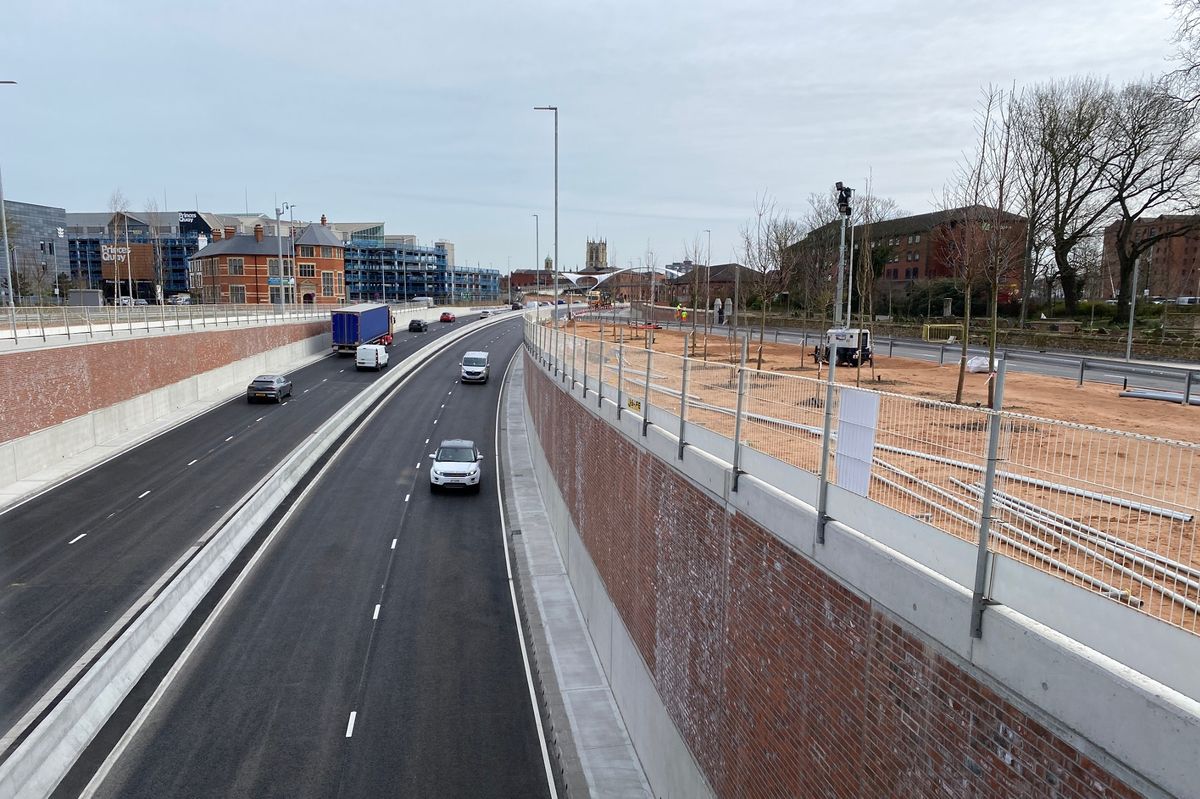
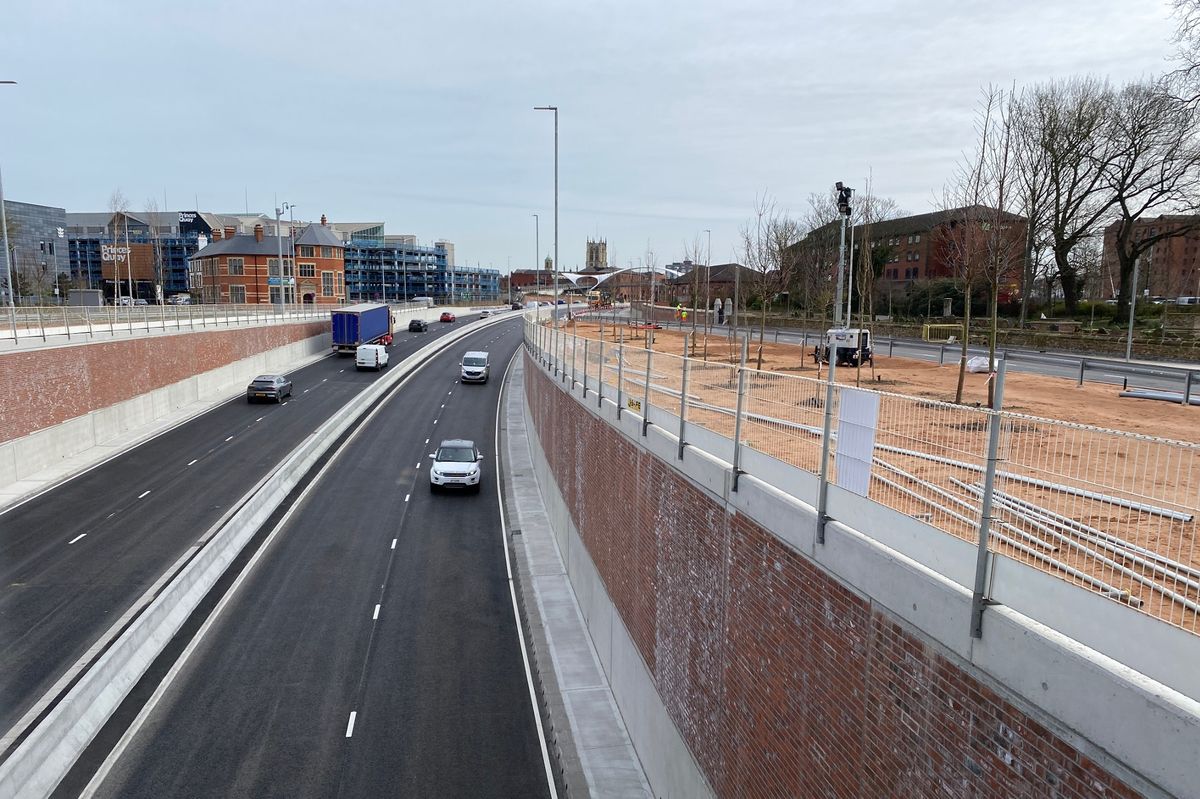
The new underpass on the A63 Castle Street in Hull(Image: National Highways)
After six years and “one of the most complex engineering challenges in the UK”, the “transformative” new split-level junction on the A63 Castle Street has been completed. Following the opening of the underpass last weekend, engineers have finished work on the connections of the entry and exit slip roads and Commercial Road to Ferensway, ready for the full opening to traffic this morning (Thursday, March 26).
It marks a significant milestone in the £355m scheme that National Highways says will help to boost the local economy and tourism. Representing a new era for road travel in the city centre, the upgrades should speed up journeys between east and west Hull.
As well as lowering the level of the A63 at Mytongate junction so traffic can continue moving without stopping at traffic lights as was the case previously, a new connection has been made above it between Ferensway and Commercial Road. The project has also seen the eastbound carriageway widened to three lanes between Princes Dock Street and Market Place.
National Highways is advising road users to follow the updated road signs, stay in lane, and take extra care while getting used to the alterations. The new changes will also allow the two eastbound lanes and the two westbound lanes to run either side of the new underpass that lead up to the new junction.
Frances Oliver, senior project manager at National Highways, said: “This eagerly anticipated new road layout will increase connectivity between the centre of the city and the port and other leisure activities, boosting the local economy and tourism.
“Construction of the A63 underpass has been one of the most complex engineering challenges in the UK. We appreciate everyone’s patience and understanding as we’ve worked to get to this significant milestone, and we know how excited everyone is to have this section open.
“Technical design played a key role in overcoming the extremely challenging ground conditions near the Humber.”
Emma Hardy, MP for Hull West and Haltemprice, said: “The completion of this project will come as a real relief to local residents and it’s great to see it finally opening. People have put up with a lot of disruption for a long time, but I hope that as journeys become quicker and more reliable, they’ll feel that the wait has been worth it.”
National Highways says the project has also unlocked funds for the local area with more than £103,000 charitable donations made through National Highways’ Community Legacy Fund and through contractor Balfour Beatty.
After a long planning phase, work began on the site in early 2020. Along the way, this included the largest scientific excavation of a post-medieval burial ground in northern England at the Trinity Burial Ground to make way for a new slip road. A team of 90 archaeologists sensitively excavated an estimated 10,000 bodies which were subsequently re-buried within the boundaries of the burial ground.
The scheme was originally due to be completed in Spring 2025 but a one-year delay was announced in December 2024 after contractors encountered unexpectedly “challenging ground conditions”.
Did you know you can make Hull Live a preferred source of Hull news in Google, which will mean you get more of our breaking news, exclusives, and must-read stories straight away? Here’s more information about what this means and how to do it – you can also do it straight away by clicking here.