


Seagrass restoration project shows ‘promising results’
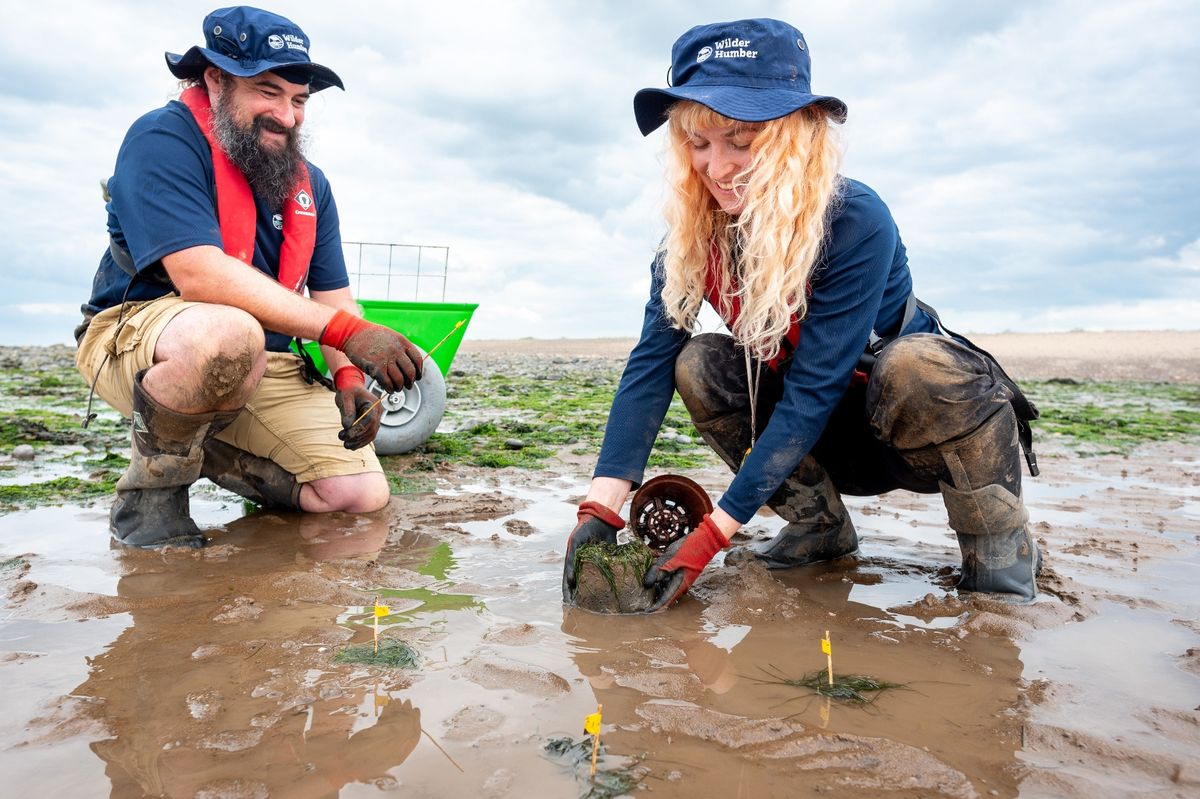
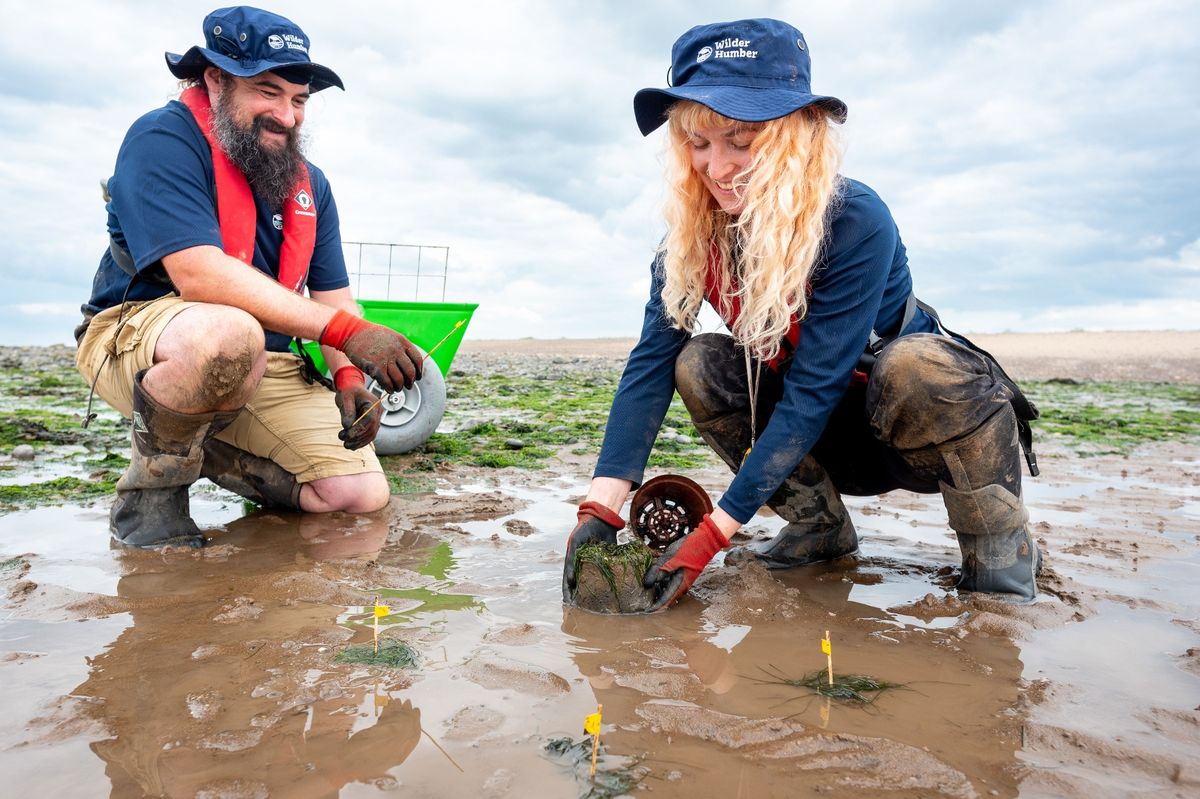
Seagrass core transplanting at Spurn Point(Image: Finn Varney)
One of the UK’s largest seascape restoration projects taking place in the Humber Estuary has shown “promising results”, according to the team behind it. Findings from the Wilder Humber seagrass restoration trial will help shape how seagrass is restored across the UK in the years ahead.
Led by Yorkshire Wildlife Trust and Lincolnshire Wildlife Trust, with support from Ørsted, ReMeMaRe and the Water Environment Improvement Fund, the project aims to plant ten acres of seagrass each year across the estuary. The latest trial, monitored over a full growing season, tested three planting techniques to identify the most effective methods for re-establishing this vital underwater habitat.
Seagrass is the only flowering plant that can live entirely in seawater and is one of the ‘world’s most powerful natural tools for tackling climate change’. Globally, it captures carbon up to 35 times faster than tropical rainforests, helps protect coastlines from storms and erosion, and improves water quality by absorbing pollutants.
In the UK, seagrass meadows act as crucial nurseries for young fish, including bass and sand eel, and support important bird species such as brent geese. There are four species of seagrass found in the UK, two being tasselweeds and two commonly known as eelgrass, with Wilder Humber reintroducing dwarf eelgrass.
Although the Humber once supported vast seagrass meadows – historical maps suggest they covered around 1,100 acres – this habitat declined dramatically during the 20th century to just 12 acres. This rapid loss has been attributed to industrialisation, water pollution, disease and the loss of natural coastal space.
Today, restoration work is essential to bring this vital habitat back to the estuary. In this new trial, Wilder Humber compared three planting approaches: direct injection of seeds into the seabed using Dispenser Injection Seeding (DIS); seeds placed in hessian “seed bags”, and the transplanting of small intact patches of seagrass, to find out what works best in the Humber’s challenging conditions.
The results showed that DIS and transplanting delivered by far the strongest recovery, with DIS creating the highest number of new patches. Andy van der Schatte Olivier, marine programme manager at Yorkshire Wildlife Trust, said: “These results are hugely encouraging for the future of seagrass in the Humber.
“They show that, even in a dynamic estuary like this, we can successfully restore seagrass at scale when we use the right methods. By combining fast-spreading seeds with established transplanted cores, we’re giving these meadows the best possible chance to recover, thrive and deliver real benefits for wildlife, climate and coastal communities.”
Based on these findings, the Wilder Humber team will now focus on a combined approach, using transplanting alongside DIS, to rebuild healthy meadows. Samir Whitaker, biodiversity lead specialist at Ørsted, said: “At Ørsted, we believe that the offshore wind industry has a role and responsibility to be a force for nature recovery as well as providing clean electricity.
“We are committed to going beyond minimising impacts by creating measurable, positive outcomes for nature wherever we work. The findings of the Wilder Humber seagrass restoration trials represent an important step forward in understanding and restoring vital coastal habitats.”
Wilder Humber is seeking to restore marine habitats and species throughout the Humber Estuary. As part of a five-year programme, the partnership aims to restore and enrich nearly 40 hectares of protected habitats and rebuild the Humber’s lost native oyster population to over half a million.
Of the 40 hectares ambition, 30 hectares focuses on restoring lost seagrass meadow at Spurn Point. Wilder Humber works with local communities to tell the story of the restoration journey and provide opportunities to contribute to wildlife conservation in the Humber estuary – visit wilderhumber.org.uk for more information.