


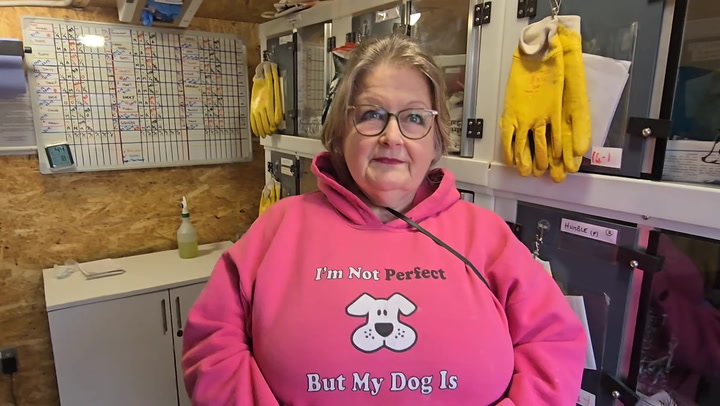
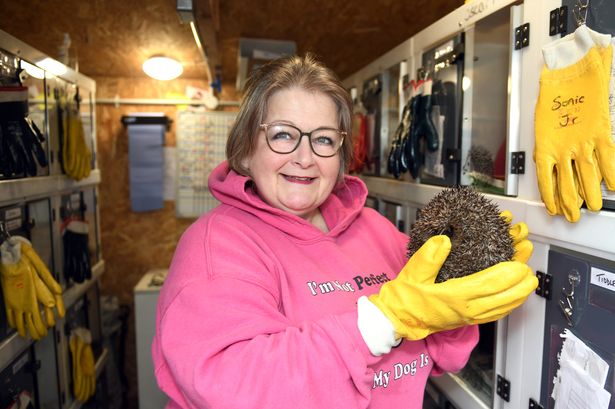
Lucky Hedgehog Rescue can get up to six poorly hedgehogs admitted daily
Lucky Hedgehog Rescue CIC
A hedgehog rescue has warned of a “collapsing system” as access to veterinary care for wildlife rapidly declines across the UK. Lucky Hedgehog Rescue has been established for 12 years and moved to its home in the Holderness village of Grimston in 2019.
In its early days, founder Lucy Felgate-Baumberg ran the rescue from her home, the bedrooms filled with 85 cages for sick and injured hedgehogs. “I slept on a two-seater sofa on a concrete floor for two years,” Lucy said.
Since then, Lucky Hedgehog Rescue has sucessfully expanded out of the house, has a team of committed volunteers, and is kitted out with specialised units and incubators, where it currently cares for 57 hedgehogs. In the busy summer months, the rescue has up to six poorly hedgehogs admitted daily.
The rescue, originally based in Kent, evolved naturally over time. Lucy said: “I went into the vets with my dog and I came out with a disabled hedgehog and my dog.
“Because I had an enclosed garden, the vet trusted me. I took in this disabled hedgehog, so it couldn’t escape the garden, and fed it, watered it, and maintained it, so it could live out its life.
“From there, I started doing three-hour round trips to other rescues, picking up disabled hedgehogs and doing the same for them.
“That is how I started, I rescued disabled hedgehogs and then the public realised I knew what I was talking about with hedgehogs, and I ended up opening a rescue because people kept turning up on my doorstep.”
Since moving from Kent to Holderness, the rescue’s work has been hindered by a lack of vets who will provide medicine and care for wildlife. Despite hedgehogs being endangered, Lucy said it is “horrendous” trying to find local vets who will treat them.
She said the problem is complex; some vets are not staffed to cope with wildlife, or don’t have time. The legal grey areas surrounding medications not officially licensed for wildlife also puts off many veterinarians from providing help.
Lucy said some vet practices are charging “tenfold more” for wildlife than they would for regular pets. She said this makes it a much greater challenge to run a wildlife rescue than it would a cat or dog rescue.
Lucy added: “Not only do pet rescues receive public donations, but also adoption fees. Wildlife rescues are often forgotten until they are needed, and get nothing if, you, the wonderful public do not donate.
“We work tirelessly 24/7, seven days a week, and don’t just need money for the food, vet fees and medications, we have insurances to pay, waste disposals to pay, heating and water, vehicle expenses, masses of PPE, rents, leases, equipment and the list goes on.”
Lucy said it was “more than the managing of household bills and more like business expenditure”. She added: “Without donations, rescues close down.”
Lucky Hedgehog Rescue’s team of volunteers help with cleaning out, monitoring and weighing each hedgehog, sterilising food and water bowls, preparing bedding, and working on building maintenence and IT and health and safety.
Lucy added: “If you are a veterinarian that is passionate about wildlife, and would like to be involved with us, then please do get in touch. We would also welcome a veterinary nurse RVN preferably with advanced qualifications CertVNES/APVN.”
If anybody wants to help the rescue with a donation, they can visit the Lucky Hedgehog Rescue website. Lucky Hedgehog Rescue is available 24/7 on 07507791665.