


There are certain things you don’t order here unless you’re a tourist.
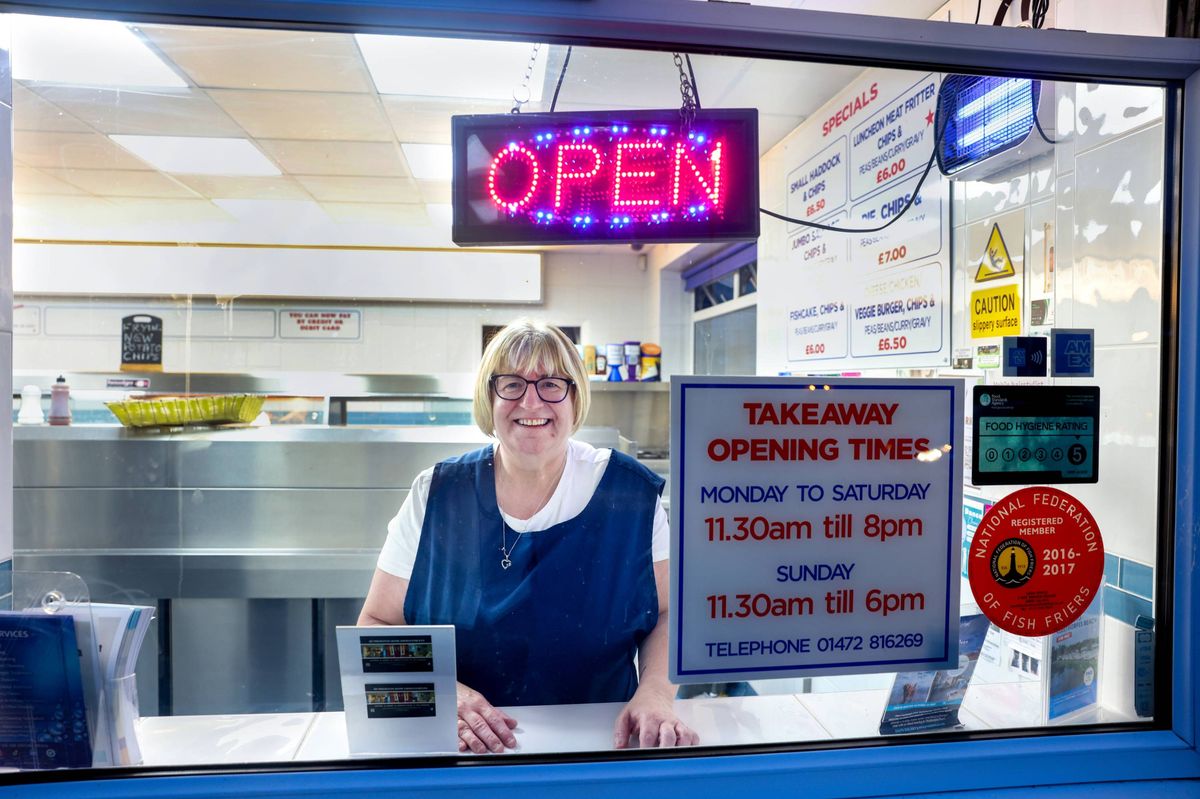
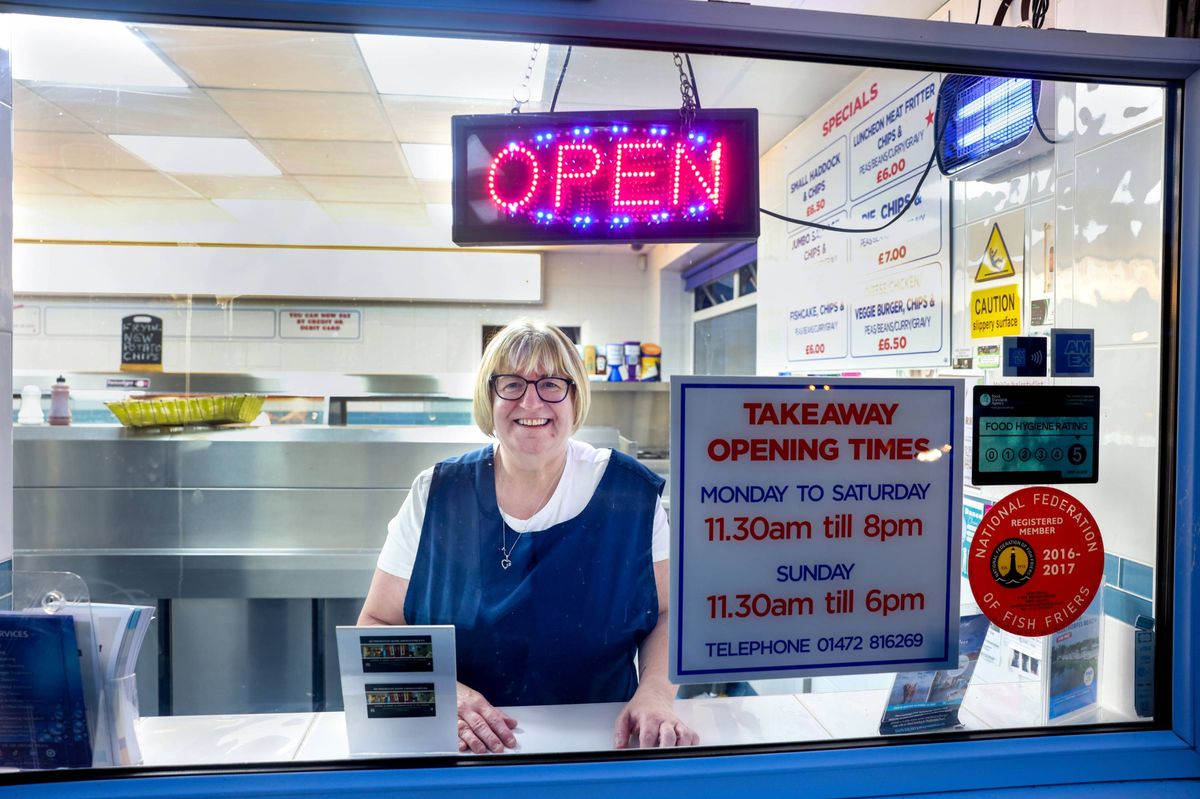
Sarah Jenny at Sea Lane Fisheries confides a secret ingredient in their fish and chips that keeps customers coming back(Image: Humphrey Nemar)
You would never make the mistake of ordering gravy on your chips here — they eat it only with a side of mushy peas. Nor would you ask for cod — that is for tourists.
“It’s a bit of an old wives’ tale, but the trawlermen from the olden days wouldn’t eat cod, because they feed off the bottom of the sea,” explains Ian Stead, who runs Steels Cornerhouse Restaurant, a local favourite just a few minutes’ walk from the beach, which is surprisingly busy for 4pm on a Tuesday.
The jumbo haddock meal barely fits on the plate for £17.95, and the paper-thin batter keeps the chunky fish as the star of the show — all the better since it was bought fresh that morning just 10 minutes away at the Grimsby fish market.
Some consider Cleethorpes the UK’s symbolic fish and chip cap ital. Ian explains: “It was the biggest port in the world. The whole town was based on the fishing industry, so I think it kind of grew from there, the idea that most were selling fresh fish rather than frozen.”
When Harold Steel opened the shop in 1946, there wasn’t even a menu because he would sell what landed at the docks that day. However, Ian says Steels is now in “survival mode” as it battles rising costs alongside reduced footfall due to roadworks to pedestrianise Market Street, which several locals say was a waste of time.
He supports Tom Kerridge’s campaign to slash VAT, to help ease pressures such as national insurance contributions and his £12,000 weekly wage bill.
“But we’re still doing 2,000 meals a week,” says an optimistic Ian. “We’re still hopeful for the future. We’re still fully intent on being here.”
“We’re just a little chippy, a little seaside town, but it’s quite well known across the world,” Ian smiles, recalling meeting a customer while on holiday in Kenya.
We also visit Sea Lane Fisheries, known as the best chippy near the town’s popular Cleethorpes Beach Holiday Park, one of Haven’s largest camping resorts. A beaming Sarah Jenny, 53, reveals the secret to enticing customers again and again.
She confides: “Around here, we use beef drip ping. A lot of people prefer vegetable oil but, personally, I think when you have beef drip ping, it doesn’t leave an aftertaste in your palate. People travel quite far, a lot of our customers are from Scunthorpe. If you come on a Good Friday, you’ll definitely see a queue.”
Back along the seafront, Papa’s Fish and Chips uses a ‘secret batter’. Its iconic pier venue, propped up on stilts above the water, used to be a concert hall and a nightclub, but now people flock for a different tradition altogether: trying the national dish.
Barman Jason Bennett says of the restaurant’s popularity: “I think it’s mainly because of his tory, because customers’ parents have brought them here, their grand parents, or they came here when they were children. They come back for nostalgic reasons.”
However, he noticed their customers are usually older, as competition from international food markets and ordering apps entice the younger generation, who may have not grown up with the staple dish.
Changing tastes are not the only challenge. Haddock has risen to £90 a stone (6.3kg), as cod scarcity pushes more buyers onto other white fish.
Grimsby fish market tells a story in itself. While a merchant could previously spend two hours there, they were out in 20 minutes that morning, a sign of how much the industry has changed.
Once the world’s busiest dock, the reduced quotas mean there is less fish to sell, and white fish boats no longer land here. Instead the fish is shipped in through Immingham, 20 minutes away.
But when you taste fish and chips like the ones in Cleethorpes, it’s hard not to fall in love with the dish all over again. It is clear that change, perhaps a VAT cut, is needed to sup port the industry’s longevity.
Our appetite is another challenge altogether. I urge any sceptics to try the dish just once with fresh fish, so you can see how it should taste.
North East Lincolnshire Council said: “The works to Market Place have been progressing in various areas to make sure that the works progress in a timely manner. The contractors have been engaging with businesses directly on a regular basis, to understand their needs, and adjust work phasing on site to help, for example, working in specific areas when a business is closed for the day, or outside of their business hours.”