


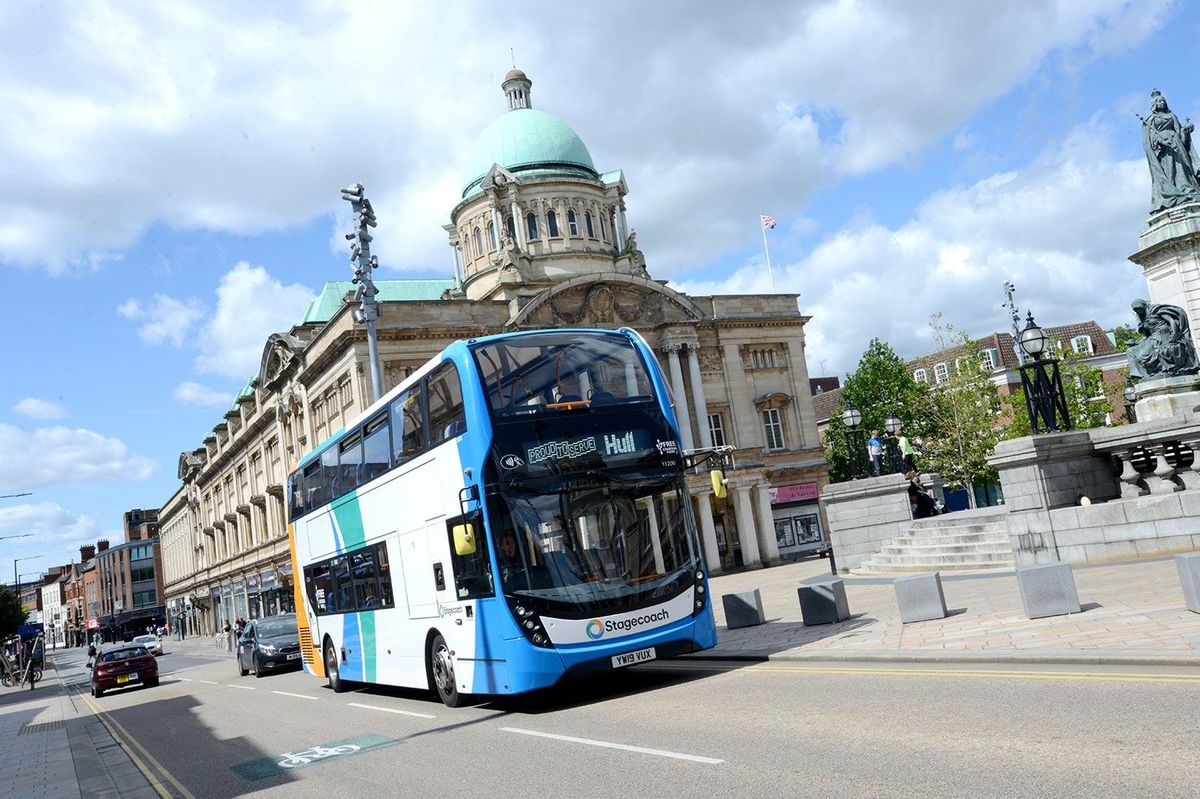
It was argued that ‘transport doesn’t have to be municipally owned, but it should be municipally controlled’
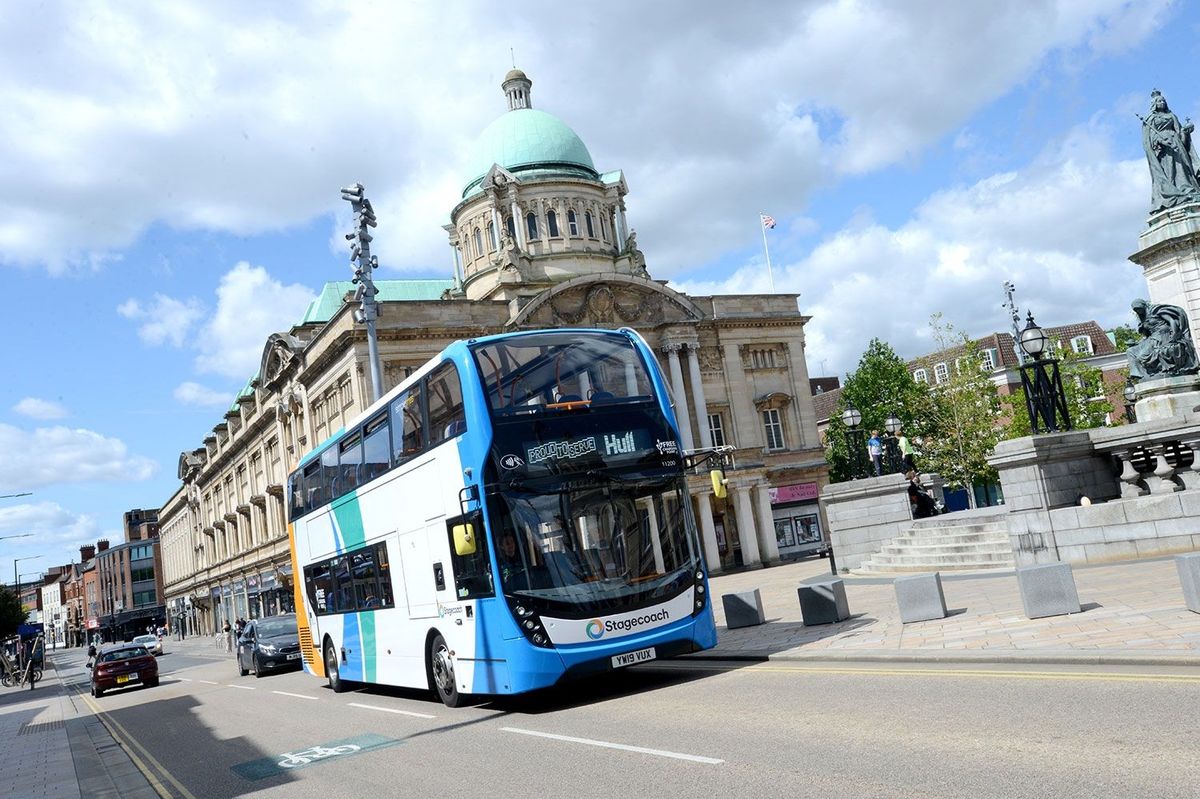
A franchised public transport system delivered Hull and East Yorkshire’s combined authority could mean changes to routes, timetables, fares, and service standards(Image: stagecoachbus.com)
Hull councillors have voted to push Luke Campbell to consider taking control of the city’s bus network. A motion has moved forward asking the Mayor and his Hull and East Yorkshire Combined Authority (HEYCA) to confirm that it will carry out its transport authority functions from March next year.
The Hull City Council chamber heard how around 40 per cent of households in the city do not have a car, with some wards seeing 70 per cent of households not having a vehicle. With only one train station in the city, it is argued boosting bus travel through better service intervals and improved reliability has to be a priority.
The opportunity for HEYCA to franchise buses and bring decisions around routes and pricing in-house is a moment not to be missed, Cllr Daren Hale (Labour – St Andrews and Docklands ward) told the chamber.
“We don’t need to reinvent the wheel,” he said. “Transport doesn’t have to be municipally owned, but it should be municipally controlled.”
He explained the city’s bus routes are not just important for getting to work, school and appointments. Buses are also vital for local people to get to the coast, Cllr Hale explained. Since Dr Beeching’s cuts to the railways in the 1960s, Hull residents without cars cannot get to places like Hornsea and Withernsea unless there’s a reliable bus.
“This is a chance to take control of our own destiny. If we can control and improve the services to places like North Bransholme it will only make the area better connected and more appealing to live in”, he added.
A chance for Mayor to make a real difference
Cllr Denise Thompson (Labour – Ings) agreed with her group leader’s comments and told the chamber: “Bus services in Hull should work for the people of Hull, and be under the control of the people of Hull.
“Why should we let Hull be a poor relation? This is a chance for Luke Campbell to make a real difference for the people of Hull.”
Cllr Mark leronimo (Liberal Democrats – Pickering) moved an amendment to the motion and explained Hull’s buses were actually performing well compared to many other cities. He said: “The Hull Bus Alliance and existing Enhanced Partnership have delivered some measurable improvements, with Hull ranked in the national top ten for bus patronage growth in 2022/24.
“Alongside increased frequencies and new routes there has been an investment in around 100 bus stops in Hull and almost £10-million of government funding towards 82 electric buses in the region.”
He admitted there was ongoing dissatisfaction with some of Hull’s bus services, particularly in regards to delays, cancellations and some overcrowding. But he told the chamber that any move towards franchising should be analysed carefully from a cost-benefit perspective because what worked for Andy Burnham in Manchester won’t necessarily work in Hull.
Cllr Aaron Pickering (Reform UK – Longhill and Bilton Grange) welcomed the motion to further analyse the plan before making any decision. He told the chamber: “Franchising might prove to be a good answer but we need to understand the cost and benefits. It will have such a big impact on fares, service, reliability and staff so the decision needs to be subject to proper scrutiny before any decision is made.”
It is important any decision reflects the cost of living for local people, Cllr Haroldo Herrera-Richmond (Labour – St Andrews and Docklands) told the chamber. He said: “The price of my weekly bus pass has almost doubled in the past ten years.
“And we have lost the small buses that have served pockets of communities, particularly elderly people. Franchising is the only way to deliver a proper planned system that will serve people here.”
Did you know you can make Hull Live a preferred source of Hull news in Google, which will mean you get more of our breaking news, exclusives, and must-read stories straight away? Here’s more information about what this means and how to do it – you can also do it straight away by clicking here.
After a lengthy debate, an amendment to the motion was agreed. It calls for a full risk-and-cost assessment of both franchising and enhanced partnerships and was passed with 32 votes for to 18 again with one abstention.
The amended resolution calls on Mr Campbell to undertake a formal options assessment and requests a summit between the Mayor, council portfolio holders from Hull and East Riding, and the region’s six MPs. According to the amended motion, the new model for Hull’s transport must ‘demonstrably provide the best outcome for passengers and taxpayers’.
The Mayor franchising a bus service would mean taking planning power away from private transport operators and placing it under the control of a local public transport authority. Instead of private companies deciding where to run buses and how much to charge, a franchised delivery by HEYCA would set the routes, timetables, fares, and service standards.
Private bus companies would then bid for competitive contracts to operate those specific routes on behalf of the public authority. Hull City Council currently influences bus routes and strategy through collaborative partnerships, infrastructure investment, and long-term planning rather than operating the buses directly.
Franchising of public transport is considered a success in Greater Manchester thanks to the ‘Bee Network’. It centres on the creation of a more integrated and inclusive ‘TFL London-style’ system that joins up of buses, trams, rail, cycling and walking under one brand. The key benefits for passengers are simpler fares and better coordination of joined-up journeys.
To find all the planning applications, traffic diversions, road layout changes, alcohol licence applications and more, visit the Public Notices Portal.