


Holidaymakers are being warned that drinking alcohol abroad could leave them at serious financial risk and even invalidate their travel insurance. The warning comes from an expert who addressed the situation on BBC Morning Live.
Rebecca Wilcox said: “Insurance is a good idea for everyone”. But many people don’t know that insurance policies often don’t cover incidents that happen while you’re under the influence of alcohol.
That means if you’re injured, lose your belongings, damage property, or need medical treatment after drinking, your insurer could refuse to pay out. You could then be left with a large bill for medical care, legal costs, or lost items.
Warning to anyone who drinks alcohol on holiday
Rebecca revealed that alcohol can be classified as a “risky activity”. So if you are planning a party, or even just one glass of wine, make sure you are covered.
She explains: “One of the things that you may not realise is that a risky activity, which may invalidate your insurance, is also alcohol. It is a grey area for travel insurance. If it is listed as a reason for an accident or an incident on a medical report or a police report, then your insurance may be invalidated.”
What is a risky activity?
Be careful with activities that might not seem risky. For example, quad biking is often seen as a typical holiday activity, but many travel insurance policies don’t cover it as standard.
In most cases, you need to declare it in advance and pay for extra cover. If you don’t, you could invalidate your policy and be left to pay for any medical treatment or damages yourself.
Other activities to be aware of are jet skiing, horse riding, banana boating, snorkelling, hot air ballooning, scuba diving and road cycling. Always check what activities are included in your policy before you travel.
When should I book travel insurance?
The expert is also reminding travellers to take out insurance as soon as they book a trip. Calling this a “really important point”, she shared: “One in four of us will buy travel insurance on the day that we travel, which is for me a bit of a no-no, because travel insurance covers you from the point of booking” so long as you purchase insurance on the same day you book your travel.
“What happens if you suffer a bereavement, or you fall ill, or there’s a home emergency like a break-in, which means you cannot travel? Booking your travel insurance early gives you the most value because it protects the holiday from the very start.”
You could be slapped with a £150k bill
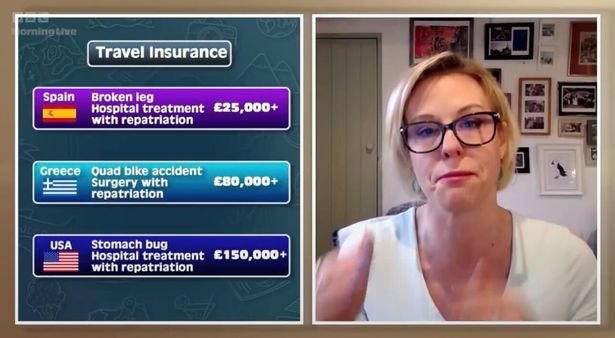
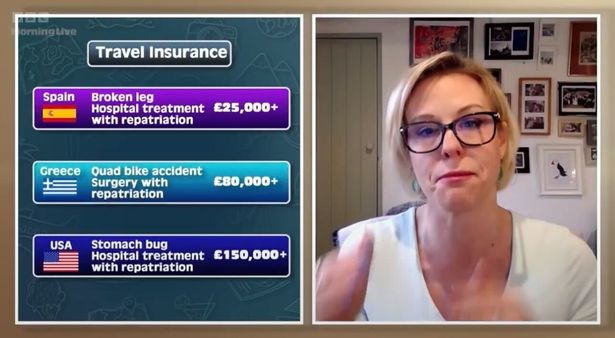
Looking at stats from the government website, she explained that if you’re in Spain and you break your leg, it could cost you around £25,000 if you don’t have insurance.
If you have a quad bike accident in Greece, it could set you back £80,000. And in the USA, you could be slapped with a bill of more than £150,000 for just a stomach bug.
Rebecca stressed: “Looking at that, I would always say travel insurance is a must-have.”
What type of travel insurance should I buy?
(Image: BBC Morning Live)
You should break your holiday down into “three options in terms of what your policy is going to cover”. Think of who is going, how long you want the policy to be and where you’re going.
How many trips are you doing?
If you are doing one trip a year, a single policy is the best option. However, if you’re doing upwards of three, the expert says you may want to “consider one of the multi-policy annual coverages.”
Who is going?
After this, look at who you want to cover. Is it just you, a couple, a whole family, or a group? The type of cover you choose will affect the price.
Family or group plans can sometimes offer better value. However, consider if there’s one person who is at a higher risk or likely to cost more to insure, as they could increase the overall premium.
In some cases, it may be cheaper to take out a separate individual policy for the higher-risk person and a group policy for everyone else. Compare your options to find the setup that gives you the best value, the expert suggests.
Where are you flying to?
You also need to think carefully about where you’re travelling, as your destination can affect both the cost and level of cover. Policies are usually split between European and worldwide coverage.
The USA is often treated separately, even on worldwide policies, because medical treatment there is extremely expensive. In many cases, you may need to add specific coverage for travel to the United States.
Check your bank
Before buying a new policy, check whether you’re already covered. Some bank accounts – particularly packaged accounts – include travel insurance as a benefit. It’s worth reviewing what you already have to make sure you’re covered and not paying twice.
Compare
The expert further urges travellers to shop around before buying insurance. Not all companies appear on comparison sites, and some sell policies only directly. It’s worth contacting them, especially if you need specialist or tailored cover.
Travel insurance and medical conditions
Rebecca stressed to viewers to remember the following: “Make sure all your needs are covered. If you have a medical condition or specific needs, make sure you declare it when you book your travel insurance. It may not be covered if you then reveal it later when you need it.
“Phone the company directly if it’s a specific, bespoke need that you think you have. If you’re going to be doing activities on holiday or you’re going on a cruise, you’re going to need specific cover to include that.
“Make sure it covers cancellation as sometimes they don’t. Have a look at the cheapest option because it isn’t always the best fit, so make sure if you’re going for that option, it covers everything.
“For instance, if you’re doing a winter sports one, don’t just get your bog-standard one. You need a specific skiing, snowboarding or curling one.
“Don’t overpay is the last thing. If they have as standard that your baggage is £3,000, make sure that it actually covers what you’re taking and that you can afford any excess payments that are included.”
Do I need to declare if I’m having medical investigations?
Yes. Once you have a policy, you must keep your insurer updated about any changes to your health, new diagnoses, or medical needs before you travel. This is called an “ongoing duty of disclosure.”
If your health needs make the policy more expensive, you might consider splitting the cover. For example, the rest of your group could have a standard policy, while you take out a separate, tailored policy to cover your specific medical requirements.
In these cases, it’s best to call the insurer directly, explain your situation clearly, and they can help you find the most suitable and cost-effective cover.
The key message is simple. Get travel insurance early, read the small print carefully, and be responsible when drinking on holiday, or you could end up paying a heavy price.