


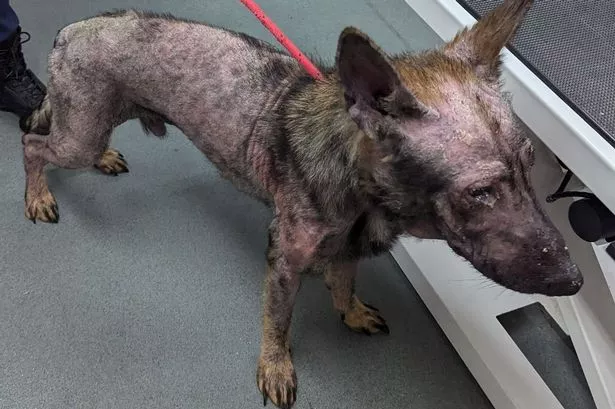
At just 10 months old, poor Simba was put to sleep
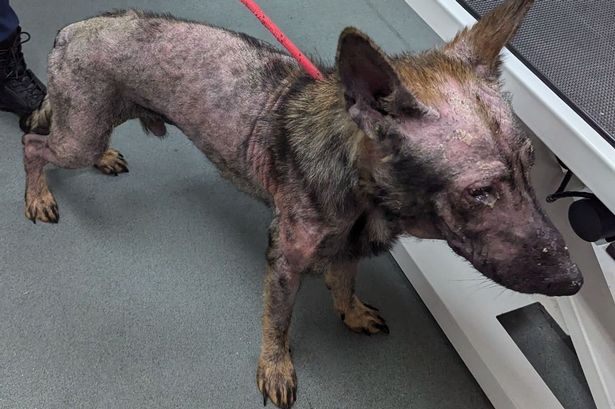
A Hull man has been banned from keeping dogs for life after letting his German Shepherd puppy suffer a skin condition so severe he resembled “a hyena in a zoo”. The RSPCA said it had been called to reports of a “skinny” dog.
Paul William Crooke, 61, of Axminster Close, was also given an 18-week jail term suspended for 18 months. Hull Magistrates Court was told he failed to get veterinary treatment for Simba despite the painful “red raw” skin, weight loss, conjunctivitis and fleas.
A vet who examined Simba described him as a “lovely dog” whose “bad condition was quite shocking”. She said he was so hungry, he tried to eat inedible objects around the surgery.
Her report added: “It was actually a little challenging to be able to tell this dog was supposed to be a pedigree German Shepherd. The dog was missing so much fur, and had such sore, infected skin, that it would not have looked entirely out of place if presented as a hyena in a zoo.”
Crooke admitted causing Simba unnecessary suffering by failing to investigate his weight loss. He also admitted he failed to provide veterinary care for his skin disease, eye condition or parasites.
Sadly, despite vets helping Simba regain weight and treating his other conditions, they discovered a pelvic problem which would have seriously compromised his quality of life. They felt it was in his best interests to be put to sleep.
RSPCA Animal Rescue Officer Mollie Masters said in a statement that she went to the defendant’s address in November last year. She added: “Simba had severe fur loss, one of the worst cases I’d seen. He did not resemble a German Shepherd and it was difficult to determine his breed.”
The ten-month old pet was “red raw” with scabs, there was pus coming out of his eyes. She said his “hip bones and ribs were clearly visible”.
Simba’s claws were also long and overgrown, suggesting he had not been taken for a walk outside for a long time. Mollie took him in her van to a nearby vet’s practice where Simba was fed, examined and then certified as suffering under the Animal Welfare Act 2006.
She added: “His skin was so raw that he got blood all over the consult room and myself.” Simba was so “desperate for the food he kept trying to rip the bowl” out of the vets hands and “ate every last scrap that he dropped onto the floor”.
Mollie told Crooke Simba had been taken into police possession pending investigation. He refused to sign the pet over to the RSPCA, saying his sister had bought him for £900.
The vet who examined him said in her report that Simba had a “friendly but lively temperament” with “no signs of aggression” and was “excessively keen on food”. He had “excessively long nails” which suggested he had not been walked outside regularly and skin which was “severely alopecic”, conjunctivitis and fleas.
“He freely and ravenously ate any food offered and was actively looking at objects in the room and trying to get hold of them, seemingly in the belief they too might be edible. Overall, the patient was in a very poor condition, and seeing such a young dog in such a bad condition was quite shocking.
“Simba was a lovely dog, although he did display some reactivity towards other dogs and was very boisterous and appeared very unsocialised.” She said he had suffered for a minimum of eight weeks with “itching, very painful skin” which could have been prevented with the right care.
In mitigation, it was said Crooke was an “inexperienced pet owner” who had not set out to harm Simba. He was his first dog and he had “overestimated his own abilities”.
The defendant had suffered personal trauma with the death of his partner. He had now “stepped up to the mark” in caring for his 13-year-old son.
After the case, RSPCA Inspector Dan Richardson said: “It’s a shame because Simba was such a lovely, bouncy dog, and, as the vet said, these untreated medical issues had caused him to suffer. We hear a lot about people being worried about taking their pets to the vets, with the cost of living on the rise.
“That may be true, but when animals are sick they must get the right treatment. Financial support for pets’ care is available through charities. But people should also remember when getting a pet that the cost of ongoing care – food, vets’ bills and other unplanned emergencies – is a big expense.”
At a sentencing hearing on 11 September, he was ordered to pay £400 costs and £154 victim surcharge. He was also ordered to complete 15 Rehabilitation Activity Requirement days.