


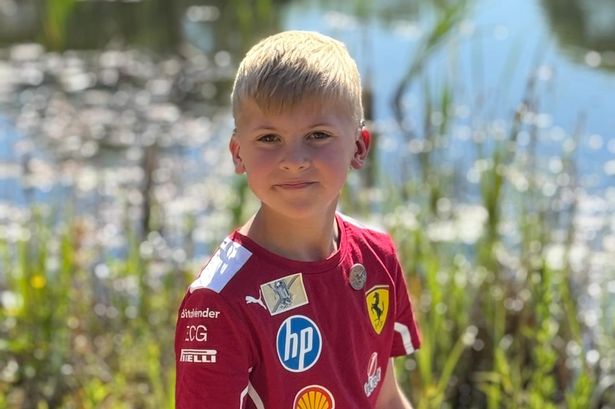
Parents launch legal action against hospital trust after son’s ‘profound deafness’ was missed
The parents of a young boy whose severe hearing loss went undetected by doctors for three-and-a-half years from birth – despite repeated tests – say they fear hundreds of other children’s lives will have been ‘forever affected’ by failing testing centres.
Tommie Denman’s parents say they were repeatedly reassured by numerous specialists at Northern Lincolnshire and Goole NHS Foundation Trust that his hearing was fine from birth, and were told his lack of development was more likely a result of being prematurely born at just 29 weeks.
They claim specialists even told them, despite raising repeated concerns over his hearing, not to worry as ‘boys are lazy’ and often take longer than expected to develop compared to girls. The Trust has now admitted that Tommie was born with his hearing loss and was displaying other ‘red flag’ signs in his testing, which should have been picked up.
Despite this, it was not until his eighth hearing test, when he was three-and-a-half years old, that he was diagnosed as being ‘profoundly deaf’. Even then he was not immediately fitted with Cochlear implants and was instead given hearing aids which fitted poorly and made little impact.
Such was the level of failings, Tommie’s parents Kirstie and Gavin were advised to seek legal advice, which they have done in instructing medical negligence specialists Hudgell Solicitors, to enable Tommie to access the support, therapy, and continued support he needs.
Tommie, now 10-and-a-half, was assessed in his early years by paediatrics specialists at Diana Princess of Wales Hospital in Grimsby. It’s audiology department, along with that at Scunthorpe General Hospital, was investigated in 2023 as part of a national audit after the Newborn Hearing Screening Programme flagged concerns over test results.
The findings of the British Academy of Audiology (BAA), which reviewed cases between April 2018 and January 2023, were damning, and have been shared with Tommie’s parents. It found services at centres to be ‘high risk’, with poor facilities, with paediatric test rooms incorrectly set up.
The review said this could lead to testers ‘inadvertently giving cues to children being tested causing incorrect responses being recorded’. At the Diana Princess of Wales Hospital, the facilities were affected by ‘intermittent high ambient noise levels and incorrect placement of equipment which could introduce error into hearing aid measurements’, and paediatricians were supported by the Assistant Audiologists with no training in paediatric audiology.
It said there was a ‘lack of scientific knowledge, leadership, and enquiry’ at both sites, leading to ‘poor practice being overlooked, a lack of standardisation within clinic appointments and no critical appraisal of current practice’. It added that staff made clinical decisions and carried out diagnostic tests without sufficient training or external validation of clinical skills.
The Grimsby facility was immediately closed and a number of services were paused in Scunthorpe as a large-scale patient recall for testing was launched.
Tommie’s mother, Kirstie, 33, of Ulceby, says his life has been ‘forever affected’ by the failures, and fears other children, who were born prior to the period covered in the review and therefore may not be recalled for testing, may never be correctly diagnosed. In meetings with the Trust, they say they have been told that Tommie should have had cochlear implants between the age of six months and a year old, and had he done so, he would not have some of his development issues.
They were also told that babies fitted with a cochlear Implant before the age of 18 months go on to have normal speech and normal development. “If we hadn’t been so insistent and had accepted what we were being told, Tommie wouldn’t have been recalled for testing following the national review until he was nine-and-a-half years old,” Kirstie said.
“I repeatedly said to paediatricians from Tommie being less than a year old that he couldn’t hear, and that I could stand behind him and bash pans, or turn the television off, and he wouldn’t react. They said it was probably because he was focussed on playing and I was made to feel like I was being an over-protective first-time mum. It was awful, nobody took our concerns seriously.
“Even when he was diagnosed, he was given hearing aids which were pretty much useless, causing more delay. Then, a language and speech therapist we paid for Tommie to see put us in touch with private specialists who wrote to the NHS saying he needed cochlear implants.
“When he got them, they were transformational. All of a sudden, he could hear and begin to learn, but he effectively started school four years behind his classmates and today he is still a couple of years behind where he should be in his development.
‘Their chances in life are being taken away from them’
“I fear other children’s lives will have been forever affected by being wrongly diagnosed. The impact on development is huge. We’re possibly talking of children needing to be in special education settings and needing round the clock care because their hearing issues were not identified and treated when they should have been. Their chances in life are being taken from them.”
In a letter to Mrs Denman, Northern Lincolnshire and Goole NHS Foundation Trust said the British Academy of Audiology (BAA) review team had identified ‘a number of things that have sadly gone wrong within the audiology department over many years’.
It said a ‘theme seen through the investigation’ was newborn hearing screen tests ‘not being performed in line with the instructions’, leading to parents being told their children had normal hearing when they had not. It added that, when later referred to the audiology department for a diagnostic hearing assessment, tests were again not being performed in line with the instructions.
The Trust said a number of results should also have been sent to other organisations for an external assessment, but this was found not to have been happening, with only one person trained to do so. “If we had more than one person trained, if we had used the mechanism for peer assessment that was in place, if the management hierarchy asked for evidence, then Tommie’s hearing loss would have been identified sooner, and he would have received treatment,” the Trust said.
It added: “Every child is different. There is research that suggests that the earlier we manage a hearing loss, the better the outcome for children in terms of speech and language.
“The late management or investigation of your child’s hearing loss is why you’re receiving this report as we feel your child has come to harm and their speech and language acquisition may have been affected.”
Kirstie and Gavin have instructed Hudgell Solicitors to represent them in a legal claim against the Trust. Medical negligence specialist Ronke Bain, part of the legal team representing the family, says the poor standards of testing, training and review are ‘unforgivable’.
“The investigation by the British Academy of Audiology found a shocking lack of procedure, and a catalogue of errors over what are life-affecting tests,” she said. “It identified poor standards of equipment, testing, training and reviews, making the tests unreliable. Children also had no clear treatment pathways, which ultimately leads to issues being missed.
“It is truly unforgiveable for this to have been the case for so long, causing potentially lifelong development damage to many children. As Kirstie says, Tommie was eventually diagnosed at three-and-a-half years old, but only as a result of their continued persistence and insistence as parents that something was wrong. Their concerns were dismissed many times.
“Delays in diagnosing hearing loss at an early age impact on children’s development, and for many it could have serious consequences on how the rest of their lives now unfold.”
‘We are so proud of him’
Now preparing for a move into secondary school next year, Kirstie and Gavin say they are ‘immensely proud’ of how Tommie has coped. “He’s doing well and he’s happy,” said Kirstie.
“If he takes his implants out, he can’t hear at all, but with them he hears well, and he has a microphone for teachers at school which connect straight to them. His speech has come on very well with the support of a specialist therapist, and he is understandable when he talks to people for the first time.
“He’s obviously been left playing catch-up in life and we are so proud of him because he works so hard and is making amazing progress. He is naturally determined to learn.
“Making the step up to secondary school is a big moment, and we do worry about whether he will have the same opportunities as the other into his adult life. He was so badly let down, and his life will be forever affected by this, as we are sure so many others were too.”
A spokesperson for NHS Humber Health Partnership said: “We’d like to apologise to Tommie’s family. However, we’re unable to comment on individual cases because of ongoing legal proceedings.
“We commissioned an independent review of paediatric audiology services in 2023 from the British Academy of Audiology and subsequently carried out a comprehensive recall of children who may have required further assessment. All families identified by the review were contacted and offered follow-up appointments, and support continues to be provided if required.
“All recommendations from the independent review have now been implemented, including strengthening clinical governance, enhancing staff training and investing in improved facilities and equipment, as part of our aim to deliver safe, high-quality audiology services.
“A team from NHS England visited the service in October, reporting that it demonstrated significant improvements in all areas and is now deemed safe.”