


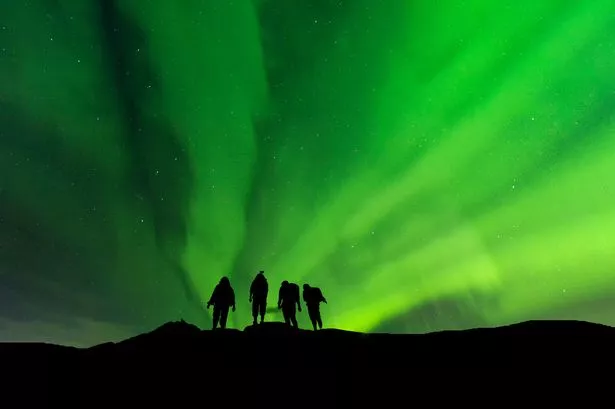
A major space weather event means that parts of the UK could see an aurora in the skies tonight
Stargazers across the UK will be treated to an opportunity to see the Northern Lights tonight (Tuesday, November 11) due to a current solar radiation storm. According to predictions from the Met Office, a ‘Coronal Mass Ejection’ (CME) will arrive on Earth today, which brings with it the possibility of an aurora being visible in the sky.
It comes after the Met Office highlighted in its Space Weather forecast that solar activity reached high levels across a ‘long duration Strong flare’ yesterday. This strong flare resulted in the CME, which is expected to hit earth.
The Met Office also highlighted that a geomagnetic storm will continue from 6pm on November 11 until midnight on November 13, maintaining the chances of the Northern Lights appearing during this period. The length and intensity of the storm may also mean that projections towards Earth could continue in the near future.
In its aurora forecast for the Northern Hemisphere, which covers the UK, the Met Office said: “The expected arrival of two Earth-directed Coronal Mass Ejections (CMEs) later on Tuesday and into Wednesday (UTC) is likely to bring the potential for visible aurora across parts of northern UK and similar geomagnetic latitudes given clear skies.
“Visible aurora perhaps possible further south given ideal viewing conditions and equipment. Activity then becoming more generally restricted to higher latitudes Into Thursday and Friday (UTC).”
When and where to see the Northern Lights
The optimal location for viewing the lights is somewhere elevated and as dark as possible. Your best chance is in remote areas, far from any light pollution.
The lights can be seen any time after darkness falls – but, statistically, the most likely time to spot them is between 10pm and midnight. According to AuroraWatch UK, this is when aurora substorms generally tend to peak.
The Northern Lights frequently appear in parts of the country, but it requires a great deal of luck to turn up and spot the Northern Lights with the naked eye – this holds true even in Scandinavia. Many photographers utilise a tripod and long exposure length to capture images of the Aurora, resulting in the lights appearing brighter and more spectacular in photographs.
The Met Office itself has hihglighted that a ‘visible’ aurora will be more likely in southern parts of the UK this time around, due to better weather viewing conditions.