



Many of us have been loading the appliances wrong for years, according to an expert
Loading the dishwasher often causes household arguments when someone ‘gets it wrong.’ You might assume it makes little difference where items are placed, as everything should come out spotless and gleaming – but it turns out it does matter.
Grace Forell, a consumer expert and journalist, is often seen on ITV’s This Morning. She has shared which items belong where in the dishwasher to achieve the best results – and most of us have been making the same mistakes for years, it appears.
During a recent This Morning segment, she showed viewers the most effective areas of the dishwasher for various common items. Beginning with the upper rack, Grace explained that “anything you drink out of” belongs here, including glasses and mugs.
She continued: “I would put these to the side if possible. That’s because the spray arms and the temperature are a little bit weaker at the sides, so then you’re not going to be damaging delicate glassware.”
She also mentioned that plastic items – such as tupperware or particular utensils – belong in the dishwasher’s upper section for similar reasons, reports the Express. She explained: “The temperature is a little bit lower at the top.”
Small plates can also be placed on the upper rack, Grace claimed, but warned against putting them “too close” together. The concept focuses on maximising space, and keeping the machine’s larger section for bulkier items like dinner plates, trays and other cookware makes perfect sense.
The dishwasher’s bottom section reaches the highest temperatures and delivers the most powerful water jets. Grace, therefore, recommended placing particularly dirty items in this area.
Host Ben Shephard interrupted Grace as she positioned a Pyrex dish above the cutlery rack. She pointed out: “It’s propped up with plenty of room for cutlery to go underneath.”
Most dishwasher owners develop habits about what should and shouldn’t go inside, based on their most frequently used kitchen items. But, certain widespread myths could actually be complicating our efforts to achieve spotless plates and cups.
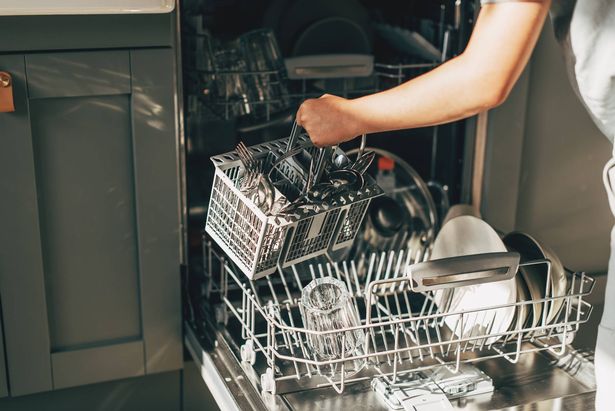
Should you pre-rinse dishes before loading them into the dishwasher?
Whilst this might seem more efficient to some, rinsing plates beforehand actually wastes both time and water. Grace said: “My answer [to this question] is generally no.
“Scrape large debris into the bin by all means, but you don’t need to rinse your dishes before you put them in because most [dishwasher] cycles have a pre-rinse feature as part of the program.”
This is the most common error that people with this appliance tend to make. Most modern dishwashers have turbidity sensors, which measure dirt levels in the water and modify the cycle appropriately. Pre-rinsing can trick these sensors into picking a briefer, less thorough wash, resulting in dirtier dishes.
Though it seems contradictory, dishwasher detergents actually perform more effectively on dirty dishes as opposed to slightly rinsed ones. The enzymes in soaps are engineered to latch onto dirt particles and be washed away. But, if dishes are excessively rinsed, these enzymes have nothing to cling to, rendering your expensive cleaning products less efficient.