


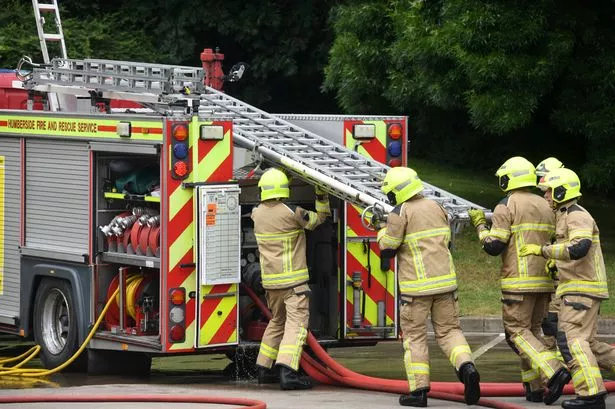
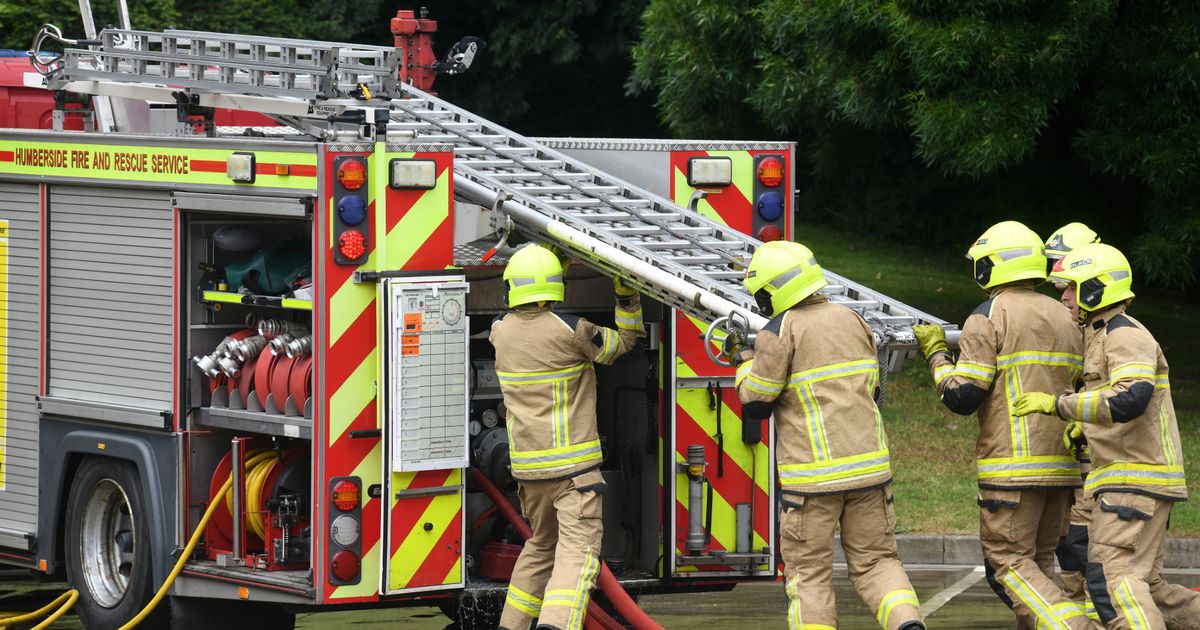
A senior officer at Humberside Fire & Rescue Service has highlighted the impact of climate change on fire service call-outs.
The number of external fire call-outs – where they occur outside of properties in the likes of woods and grassland – shot up by 62 per cent this June compared to June 2024. Humberside Fire & Rescue’s deputy chief fire officer, Niall McKiniry, highlighted the data in a verbal update at the conclusion of the latest Humberside Fire Authority meeting.
The fire authority includes councillors from across the region and fire service senior officers, and decides the service’s yearly budget. Mr McKiniry stated the service is having to review its policy and procedure due to climate change.
‘We have had a particularly busy summer’
Mr McKiniry said climate change was “manifesting itself really impactfully on our statistics”. “Last weekend was the third heatwave of this British summer,” he said, referring to July 12-13.
The hosepipe ban in the Yorkshire Water area did not have a direct impact on the fire service’s handling of incidents as it has arrangements with water companies to divert water. It caused a “visible and tangible impact” in more minor ways, such as restricting times when fire engine vehicles are washed.
For training drills and exercises, a recycling tank is used, meaning water used is not lost. Earlier in July, the fire service carried out a significant training exercise at Craven Park, in east Hull, without running water to protect reserves during the drought.
“We have had a particularly busy summer,” said Mr McKiniry, and a “particularly busy June” for fire service call-outs. There had been a number of fires that involved the call-out of four to eight engines. “We have had about ten of these between June and July, which is highly unusual.”
These recent incidents included two significant terraced house fires in the Grimsby area, and the Altay ship fire in Albert Dock, Hull. “These incidents I’m alluding to have not been directly related to the weather,” Mr McKiniry stated, but he expressed the view that such incidents can be “compounded by the weather”.
All incidents were up five per cent in June compared to the three year average, and up 14 per cent compared to June 2024, which was a lot wetter. “Where we do see a direct correlation is the external fires,” he said, such as fires on grassland. External fires were up on the three years average for the time of year by 23 per cent. External fires this June compared to last June were up 62 per cent.
“It’s not guaranteed to be every year but it is certainly becoming more frequent,” Mr McKiniry said of the prevalence of climate change-impacted hot summers. The fire service was reviewing policy and procedure in light of this, including staff wellbeing. He noted it was “significantly challenging” when firefighters are trying to firefight in 30 degree heat.
Get all the Grimsby news as it happens sent straight to your phone
Get all the latest stories, sent straight to your WhatsApp – all you need to do is click the link.
We also treat our community members to special offers, promotions, and adverts from us and our partners. If you don’t like our community, you can check out any time you like. If you’re curious, you can read our Privacy Notice.