


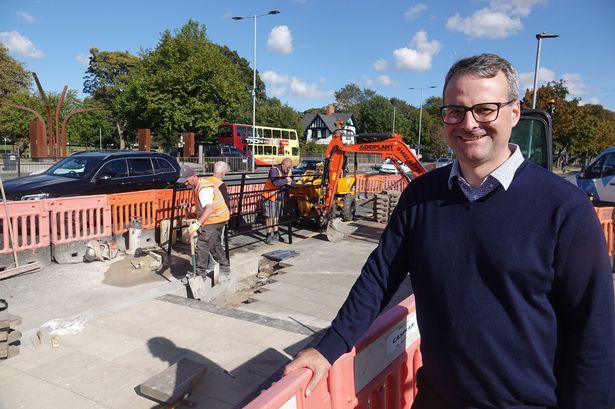
Hull City Council aims to complete the improvements before the end of the financial year
Hull City Council is investing more than £900,000 to improve around 100 bus stops across the city. The scheme will aim to make stops safer, more accessible and more convenient for passengers while they wait for their bus.
Following an audit of 1,108 bus stops and bus shelters in the city last year, the council has worked alongside local bus operators, Stagecoach East Midlands and East Yorkshire Buses, through the Hull Bus Alliance, to devise a programme of works to address various issues at locations all over Hull. Improvements will include accessibility changes like raising kerb-lines, the installation of safety barriers and up to 30 new bus shelters.
The improvement works are being undertaken as part of the Hull Bus Alliance’s Bus Service Improvement Plan (BSIP), which is funded by money allocated from the Government’s Department for Transport (DfT). In addition to improving bus stops on Anlaby Road near the MKM Stadium, works have also been completed at bus stops near Hull Royal Infirmary as well as at Boothferry Road/North Road, inbound, which was moved slightly back to improve access.
In Sutton Village, new kerbing and paving has been installed at the bus stop on Church Street, which previously had no footpath, and the bus stop at Sutton Village Post Office (Lowgate) has been moved away from a bend in the road to improve safety. A raised kerb has also been installed at the Barham Road bus stop, opposite Griffin Primary School.
Cllr Mark Ieronimo, cabinet portfolio holder for transport and infrastructure at Hull City Council, said: “By proactively investing in our bus network, and its infrastructure, our aim is to provide our residents with the type of service they expect and demand and make catching the bus an easy and convenient choice for people, whether it is for their daily commute or to visit the city centre for leisure. While these works seem small in nature, they have a huge impact on the lives of our residents day-to-day and are often the types of things people want us, as a council, to get on and deliver.”
The programme will take a pause later this month to ensure the smooth running of bus services for Hull Fair, and will restart at end of October, with the aim of being completed before the end of the financial year. Initially the city’s main travel corridors are being prioritised, with improvements to bus stops in residential areas to follow.
Earlier this year, the Government’s Local Transport Minister, Simon Lightwood MP, visited Hull to announce £3.9 million of funding for 42 new zero-emission buses which will arrive in the city by 2027. Upon his visit, Mr Lightwood told Hull Live that in time all the buses in Hull will be zero-emission however “this will not happen before 2030 as it’s important we give operators and manufacturers time to make the transition, but places like Hull are really leading the way”.
Mr Lightwood also praised the role Hull plays in the UK’s wider journey to decarbonisation, which includes the work done at Siemens Gamesa’s wind turbine factory. Mr Lightwood said: “I think it’s fantastic, it’s a shining beacon here. This is an example to the rest of the country by really pioneering and leading the way when it comes to decarbonising.”
Do you feel safe on the roads? You can have your say by completing the poll below or by clicking here.